Septic Tank Bacteria: What You Should Use (and Skip)
Beneath your lawn, a small, steady community keeps everything running. Septic tank bacteria work daily to digest waste and keep the drain field from clogging. Support them, and you sidestep blockages, backups, and repair bills you do not want to pay.
This is the tricky part. Not all additives are conducive to the action of these bacteria, and some slow them down. The claims are made that a package or a pill will take care of all ills. Then, too, there are enthusiastic stories told of yeast, baking soda and vinegar. It is confusing, when you want to keep your system healthy.
You are not alone. I remember once when I tried some cheap additives one time after a statement of “Foul odor,” but it turned out that they were mostly fillers. What did act promptly, was to give the bacteria what they needed, and leave out what threw them out of balance. Well taken steps promptly soon made things right.
In this article, you will see what helps, and what not to use, and when to use the bacteria-based additives at all. You will get good common sense directions for daily habits that go toward the keeping of a healthy tank, and also a straight talk about the use of the homemade remedies. We will also touch on the vinegar. Its ordinary household use will be tolerated, but large amounts should not be poured in the system.
You will come away with a handy list that you can trust. What to get, what to keep away from, and what to do if your system shows signs of strain. And above all, you will learn what to do to help the bacteria in your septic tank do what they do best, and live in peace. Your home will be worry free.
Key Takeaways
- Bacteria in a septic tank help break down waste and allow for a healthy functioning septic system.
- Inside the tank anaerobic bacteria function. The bacteria in the aerobic environment (aerobic) assist with treating wastewater through the soil in the drain field.
- Adequate levels of bacteria will help keep sludge from building up, scum from forming, odors to a minimum, clog the drains and improve the rate of water draining.
- Chemicals that are harsh enough may damage the internal components of the septic system and will also disrupt the function of the bacteria by causing harm to it. Grease, wipes and other items used as cleaning agents that were designed to dispose of them down a toilet or drain pipe are examples of items which could possibly cause some disruption.
- Household practices are typically a better way to provide an adequate amount of maintenance compared to using additive products for bacteria in a septic system.
- Only consider purchasing additive products if you have identified an area of concern with the functionality of your septic system.
- Typically household grade vinegars are acceptable in small quantities however adding excessive quantities into the septic system will likely result in adverse effects.
- Potential signs that your septic system has been strained include slow draining, sewage smells, clogging of the filter, backup’s or drainage issues.
- Products marketed as “septic” additives do not take place of scheduled inspections, pump out services for the tanks, or repair service’s performed by licensed professionals.
- Help maintain healthy bacteria within your septic tank, which helps prolong the longevity of all of the parts including; tank, pipes, drainfield, etc.
What Are Septic Tank Bacteria and Why Do They Matter for Your System?
Your septic system relies on septic tank bacteria to break down everyday waste. These little creatures eat and digest solids, and convert them to liquid and gas. Think of them as your unpaid cleaning crew who prevents your tank from turning into a sludge mass. Everything is just fine and running smoothly when the conditions are right.
There are two main types at work:
- Anaerobic bacteria: These live without oxygen, and do most of the brute work in the tank, breaking down solids and generating methane and carbon dioxide.
- Aerobic bacteria: These are the kind that have to have oxygen. You will find them in the soil in the drain field, or in an aerated system. These are the bacteria that polish the effluent, making it a better product for the soil.
Here is why this is important to you. Healthy bacteria will reduce sludge, keep scum from forming, and provide a steady outflow of effluent from the system. This means fewer stoppages, fewer odors, and a greater longevity to your system and drain field. When the bacteria are not functioning well, solids tend to accumulate, filters become clogged up, and drainage slows down. Minor inconveniences become back-ups, which are very evident by sight and smell.
You do not have to babysit them. You simply have to protect them. Avoid harsh chemicals, don’t put wipes and grease down the drains, and only add a bacterial product when there is a definite need. A natural and steady equilibrium will provide you with financial savings, and save you time and trouble. When you can keep the bacteria healthy and thriving, they will support the needs of your domicile.
The Role of Natural Bacteria in Breaking Down Waste
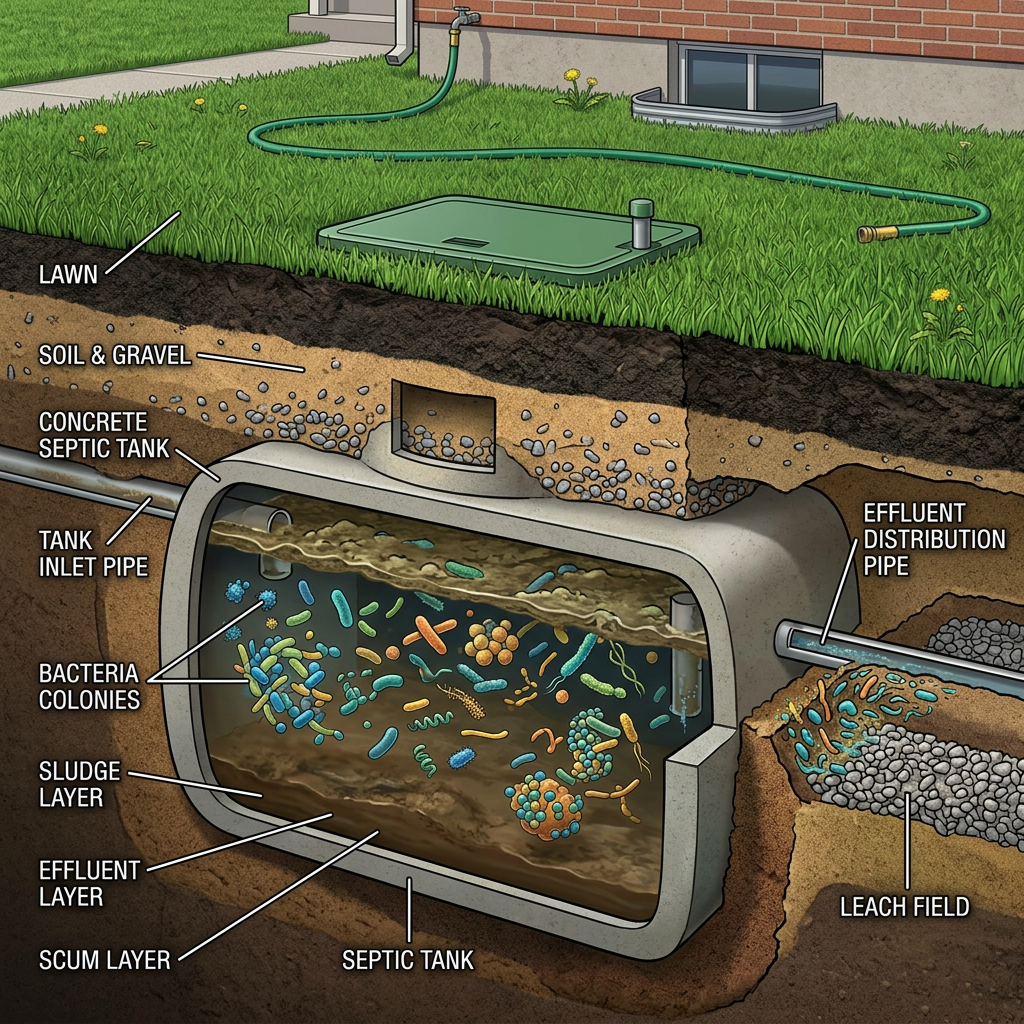
The bacteria in a septic tank are tiny cleanup squads. First, solids settle into layers. Scum sits at the top, sludge is on the bottom, and liquids are in the middle layer. The bacteria begin to digest the solids immediately, changing them to simpler liquids and to gas.
Next, the liquid portion, called effluent, flows to the drain field. In the drain field, the soil, and aerobic bacteria act as a last stage of filtering or cleaning by taking out anything that “might remain before the water returns to the ground. This is the careful procedure that takes place, step by step, so that doing so keeps everything moving and eliminates blockages.
A proper balance of the bacteria keeps the sludge contents low, the pipes free, and the odors slight. When the bacteria are healthy, the drains make a rapid exit and the owners have no worry about the tank doing its work without friction. You will be interested in this, because it helps to protect the yard, the pocketbook, and the soul at ease. Keep the microbes in good condition, and they will maintain your system stoically, day by day.
Signs Your Septic Tank Bacteria Levels Are Low
You can spot early clues before problems snowball. Watch for these signs of a septic tank bacteria imbalance:
- Slow drains that linger even after basic snaking
- Gurgling toilets or sinks after flushing or laundry
- Sewage odors near drains, the tank lid, or the yard
- Wet, spongy patches or bright green grass over the drain field
- More frequent need to pump than your normal schedule
- Effluent filter clogging sooner than expected
- Backups during heavy water use, like shower plus laundry
Do not panic if you notice one sign for a day or two. Check for patterns over a week, cut back on water use, and avoid bleach-heavy cleanups. If two or more signs stick around, call a septic pro, and ask about pumping and a targeted bacteria boost. Early detection puts you in control, keeps costs down, and helps your system recover fast.
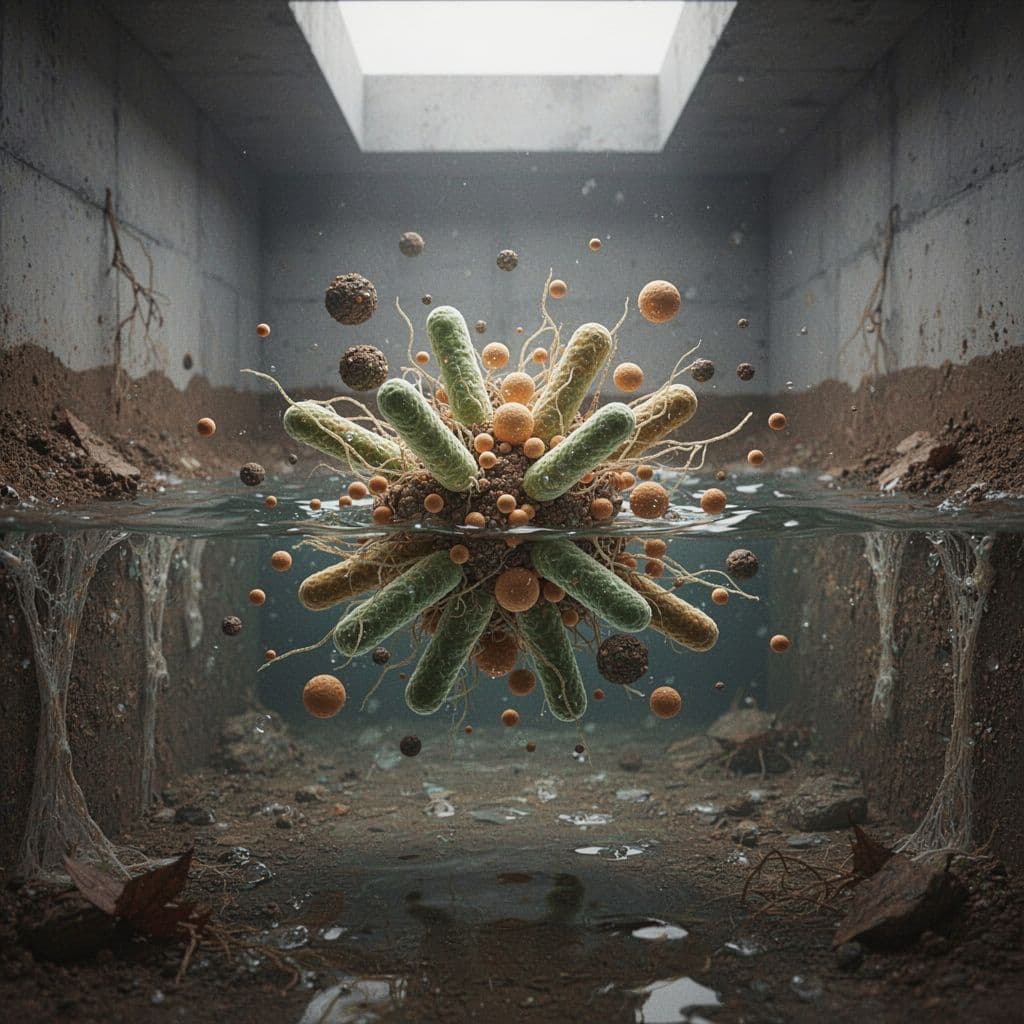
Proven Septic Tank Bacteria Treatments That Actually Work
You can supercharge your system with these options. The right moves help your septic tank bacteria recover after heavy bleach use, a course of antibiotics, a long vacancy, or a pump-out. Think of it like reseeding a lawn after a hard season. You add what is missing, then protect it so it can grow.
Best Commercial Additives for Boosting Septic Tank Bacteria
The most useful products fall into two camps: live cultures and enzymes.
- Live cultures: Look for multi-strain Bacillus blends with clearly listed CFUs. These introduce hardy microbes that wake up fast and start digesting fats, proteins, paper, and waste.
- Enzymes: Protease, amylase, lipase, and cellulase help break solids into food for native bacteria. They are a jump-start, not a full replacement.
What to look for:
- Ingredient list and strain names, not vague “proprietary blend”
- Labels that state septic-safe and meet state rules
- EPA-registered microbes where required by local regulations
How to apply:
- Dose after a pump-out or at night when water use is low.
- Flush the packet or liquid, then avoid bleach for 48 hours.
- Repeat on a monthly schedule if the label calls for it.
Pros: faster breakdown, calmer odors, fewer filter clogs, fewer emergency pump-outs.
Cons: does not fix a failed drain field, and you still need routine pumping.
Natural Ways to Support Your Septic Tank Bacteria Without Additives
Daily habits make the biggest difference. Keep it simple and steady.
- Use septic-safe toilet paper that breaks down fast.
- Spread out laundry, showers, and dishwasher cycles to prevent overload.
- Fix leaks and install low-flow fixtures to reduce hydraulic stress.
- Skip harsh chemicals, large bleach dumps, and antibacterial cleaners.
- Scrape plates, limit garbage disposal use, and never pour grease.
- Plant grass over the drain field, keep trees away, and keep cars off.
- Divert roof and sump water away from the field.
About “homemade septic tank bacteria”: baking soda plus vinegar cleans a trap, but it does not boost microbes. It is fine in small amounts, not a treatment. Yeast has mixed evidence and is not needed, though a tiny monthly spoon is usually harmless. Skip coffee grounds entirely. They add solids and clog laterals. Stay consistent with habits, and your septic tank bacteria will handle the rest.
What to Skip: Ineffective or Harmful Options for Septic Tank Bacteria
You want a steady, low-stress system, not guesswork. Some popular shortcuts waste money or upset the balance that septic tank bacteria need. Skip the traps below so you protect your tank and your budget.
Why Homemade Septic Tank Bacteria Recipes Often Fall Short
DIY mixes sound thrifty. Sugar and yeast in warm water, a splash of milk, maybe a pinch of cornmeal. You pour, you hope. The problem is power and predictability.
- Too few strains: Yeast is just yeast. Your tank needs a diverse team to break down fats, proteins, paper, and grease. Single-strain brews cannot match that.
- Weak CFUs: Home mixes have unknown microbial counts. Commercial products list strains and CFUs so you know what you are adding.
- Short shelf life: DIY brews lose strength fast, especially with heat or time. Many end up inactive by the time they hit the tank.
- Contamination risk: Kitchen-made mixes can introduce the wrong microbes that compete with helpful ones.
- No proof: There is little evidence they reduce sludge or prevent clogs.
If you want real support for septic tank bacteria, choose a reputable, multi-strain product or work with a septic pro. Save the pantry for baking, not bacteria management.

Does Vinegar Kill Septic Tank Bacteria? The Truth Revealed
You asked, and it is a fair worry. Vinegar is acidic. In high concentrations, it can lower pH inside the tank and stress or kill beneficial septic tank bacteria. Their enzymes and cell walls do best in a stable, near-neutral range. Large dumps of vinegar can disrupt that balance, slow digestion, and invite odors.
Small, diluted amounts are different. A little vinegar helps cut soap film and tame smells in drains. Keep it measured and spaced out.
Safe use tips:
- Use 1 cup of white vinegar in a drain, followed by hot water.
- Do not pour large volumes into the system. Skip mop buckets of vinegar rinse.
- Never mix vinegar with bleach. Toxic fumes form, and both hurt bacteria.
- Spread cleaning days apart so the tank can buffer pH swings.
Bottom line, keep vinegar occasional and modest. Your bacteria stay happy, and your drains stay fresh.
Conclusion
You have what it takes to maintain your system. Trust natural processes and support them through basic practices. Use known stimulants only when the tank is lagging. Avoid hype, pantry cures, and floodings of chemicals. Your pocketbook, your lawn, and your peace of mind will be the better for it.
Complete your education by way of a simple prescription. Space out water usage, use less cleaner, and use a clean, multi-strain product when recovery makes sense. If signs of distress persist, schedule a professional inspection and follow a routine that protects flow and maintains sludge. You are pursuing no miracles but a course of decency.
For others’ benefit, pass this on. Let neighbors who are worried about odors or sluggish drains have this handy checklist. A few clean choices today can save a call tomorrow and increase the years of healthful service of the system. Good septic tank bacteria keep the whole system quiet, clean, and worry-free.
You commenced this study to avoid surprises and ill-considered costs. Stick to the practical, avoid the side-shows that do not pay a return, and be alert to detect when a slight irregularity crops up. Small corrections, if on time, guard your home and check costs.
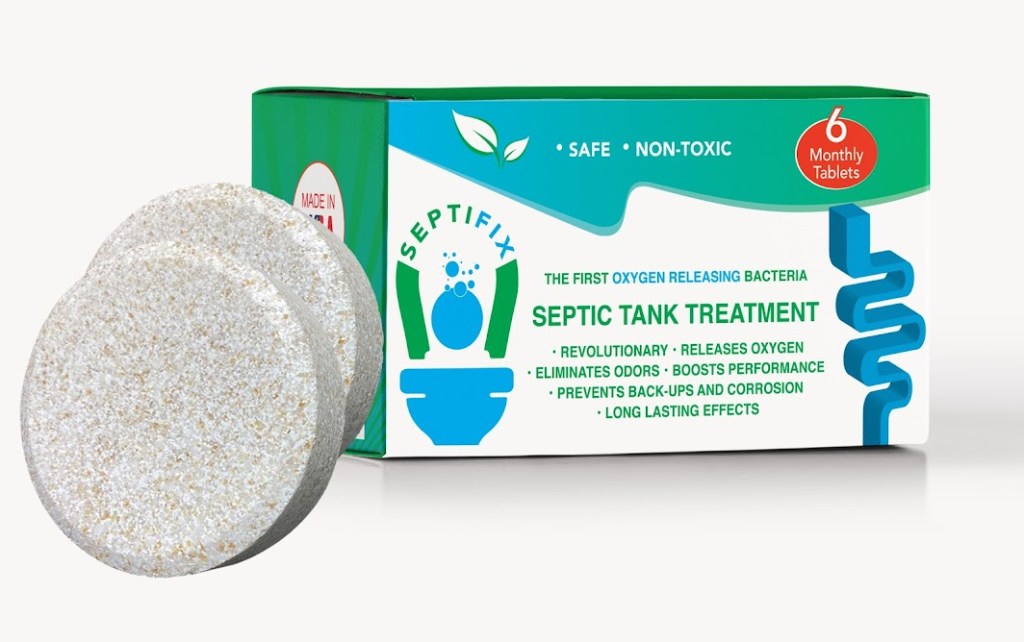
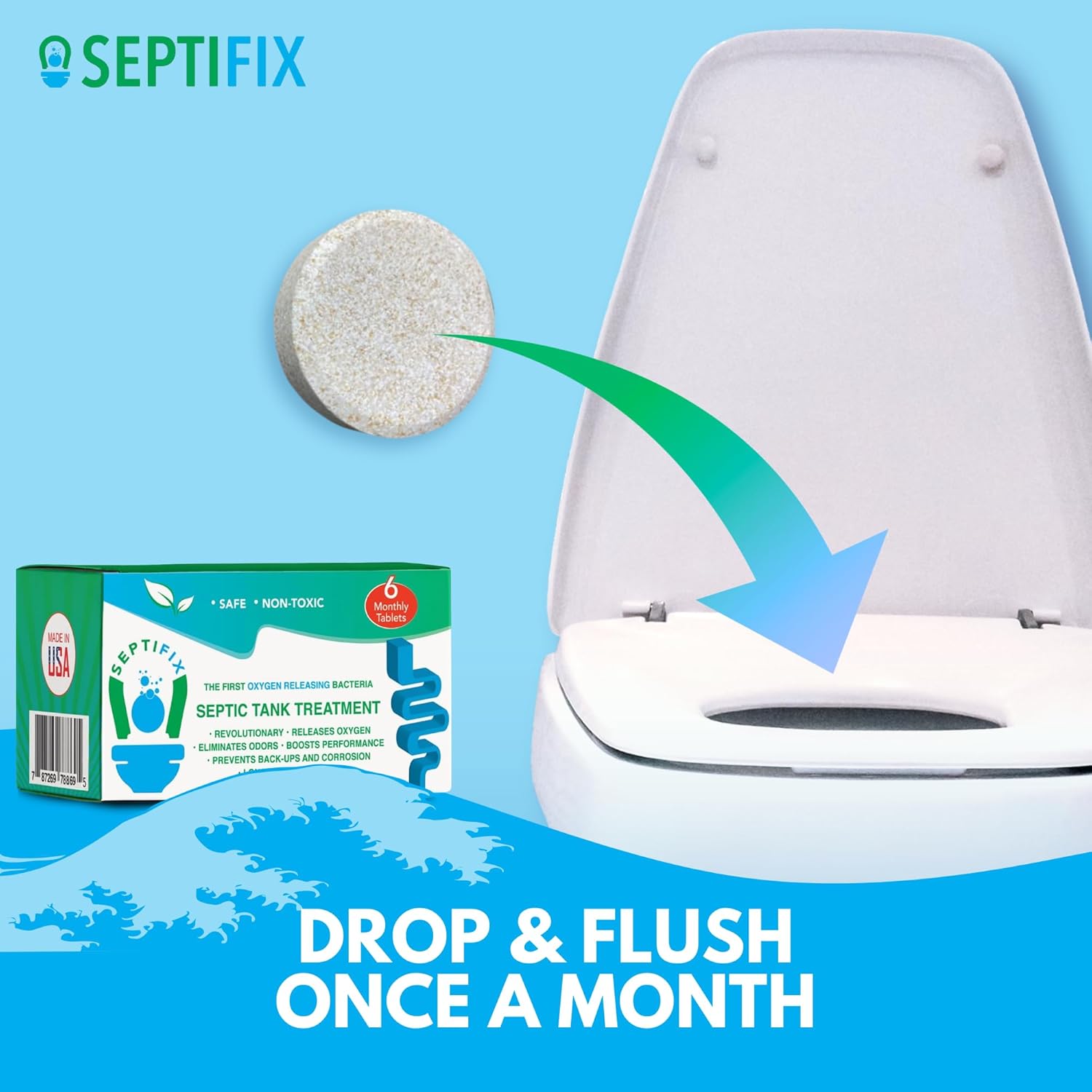
Give your septic system extra support with SeptiFix, an easy-to-use monthly tablet designed to help maintain a cleaner, healthier tank between professional inspections.

Affiliate Disclaimer
Some links in this article may be affiliate links. If you click a link and make a purchase, we may earn a small commission at no additional cost to you.
We only recommend products and services that may be useful for septic system maintenance and care. Affiliate relationships do not affect the information or recommendations in this article.
Additional Septic Tank Resources
More From Our Blog
- Septic Tank Additives: What Works, What to Skip
Learn which septic additives may be unnecessary and which products to avoid. - Natural Septic Tank Additives: What Works and What’s Hype
Explore common natural treatments and the claims made about them. - Septic Tank Treatment Options You Can Actually Trust
Compare bacteria, additives, and everyday septic care habits. - Septic Tank Care and Maintenance Made Simple
Follow practical steps to protect your tank and drainfield. - Septic Tank Maintenance Checklist
Use these simple monthly habits to help prevent backups and costly repairs. - How Often Should You Pump a Septic Tank?
Learn how often septic tanks should be inspected and pumped. - Septic Drainfield: How It Works, Warning Signs, and Care Tips
Understand the role of the drainfield and how to spot trouble early.
Trusted U.S. Resources
- Frequent Questions on Septic Systems, U.S. Environmental Protection Agency
Find answers about septic bacteria, additives, pumping, inspections, and drainfields. - Septic Tank Additives Fact Sheet, U.S. Environmental Protection Agency
Review the EPA’s guidance on bacteria-based and chemical septic additives. - How to Care for Your Septic System, U.S. Environmental Protection Agency
Learn how water use, waste disposal, pumping, and drainfield care affect your system. - Septic System Maintenance, University of Illinois Extension
Get practical maintenance advice for household septic systems. - Care and Maintenance of Residential Septic Systems, University of Wisconsin Extension
Review guidance on inspections, pumping, drainfields, and septic-safe habits. - Operation and Maintenance Tips for Your Septic System, University of Arizona Extension
Learn how to protect the soil treatment area and reduce system problems.
Related Posts