Best Septic-Safe Bathroom Cleaners for Sinks, Tubs, and Showers
You can use these to help clean your bathroom while following your septic system’s guidelines, from cleaning your sink, tub, and shower to tile and grout, and even countertops. There is just a little more to know when picking out a septic-safe bathroom cleaner. Make sure it will work on the surface you are trying to clean and the mess or stain that you have. Also, read what the product will do for you.
Some products may say they will work on glazed tile but not natural stone, or some may not work on your countertop if it’s coated. Just because a product says it’s natural, green, or biodegradable does not always mean it’s septic-safe. Make sure you read the labels and what the manufacturer states the product will do for you. If it does not specify, ask them before you purchase the product.
Below, I will show you how to determine if a product’s claim is true and how to pick out a septic-safe bathroom cleaners. This includes removing soap scum and hard water spots from your bathroom surfaces, but not toilet cleaner, septic products, or homemade solutions.
Always make sure to read if the product is safe for your septic system. Then make sure it’s safe for your surface. It’s always best to know what you’re working with when it comes to cleaning your bathroom.

Key Takeaways
- Refer to product labels and manufacturer information to see if a product can be used with your septic system and what surfaces it can be used on.
- If a product claims to be “natural,” “green,” or “biodegradable,” that doesn’t necessarily mean it’s safe for your septic system.
- Clorox states that their Disinfecting Bathroom Cleaner Spray can be used on septic systems. Again, this is specific to the product and a claim by the manufacturer, not certified by the EPA.
- Just because a cleaner can be used on your septic system does not mean it’s safe for all surfaces or can remove all types of stains.
- Always follow label instructions. Never dump large quantities of toxic cleaning supplies or unused products down your drain.
What “Septic-Safe” Means for Bathroom Cleaners
As mentioned earlier, there may be a claim on a product that it can be used on your septic system. There is no universal claim that a product is septic-safe when it comes to bathroom cleaners.
You can refer to product labels and the manufacturer. See if they make a claim about being able to use their product on your septic system. Make sure the product is meant to be used on your sink, bathtub, shower, or whatever surface you want to clean. If there isn’t clear information, reach out to the manufacturer.
This claim does not mean you can use unlimited amounts of product. It does not overrule the label instructions or any local regulations or your type of septic system. It also does not let you know if a product is safe for your surface.
According to the EPA, there are bacteria and microorganisms in your septic system that help break down waste from your home. They recommend that you do not dispose of large amounts of toxic cleaning supplies down your drain. This does not mean that using bathroom cleaners as instructed will harm your septic system, but it does mean don’t use your drain to get rid of chemicals you aren’t using. EPA Information About Septic Systems
How to Choose Septic-Safe Bathroom Cleaners
When looking for a product to use in your bathroom, always look up if it can be used on your septic system and if it’s safe for the surface and type of stain you want to remove.
Read the label and product page
Always read the label on a product. If it doesn’t mention it can be used on your septic system, check the manufacturer’s website. Products that claim to be “eco-friendly” or contain “natural” ingredients are not always safe for your septic system.
Also, pay attention to the product name. A company can have multiple bathroom sprays that all contain different chemicals and instructions on how to use them.
Match the cleaner to the surface
There are many surfaces you can clean in your bathroom. Some may not be safe for certain cleaners to come into contact with.
Look at what surfaces the product is safe to use on the label. If you have a delicate surface or aren’t sure what you can use on it, look up what the manufacturer recommends for your surface. You can also do a spot test if recommended on the label.
Use the product as directed
Use the product as it instructs on the label. Using more product will not clean your surface better. It can leave a film or ruin your surface, and it will add more chemicals to your wastewater.
Do not mix products together. Some chemicals can react with each other and become hazardous. Always follow label instructions on how to safely use a product.
Do not confuse environmental claims with septic claims
There are many claims that products make that have nothing to do with your septic system, such as being “natural,” “green,” “biodegradable,” “nontoxic,” and “antibacterial.”
The EPA Safer Choice seal is not a claim that a product can be used on your septic system either. It’s a separate seal that looks at a product’s impact on humans and the environment.
Best Cleaner Types by Bathroom Surface
Sinks and countertops
Use a cleaner that says it is made for your sink or countertop. There are many types of sinks: ceramic, acrylic, and enamel, just to name a few. Your countertop could be made of many materials: laminate, engineered stone, granite, and more.
A general bathroom cleaner could work on some of these hard surfaces that aren’t porous, but not all. Just because a cleaner works on a porcelain sink doesn’t mean it will work on your natural stone countertop. Read what surfaces the cleaner is made for and use instructions provided by your countertop/sink manufacturer.
Tubs and showers
Your tub and shower walls will accumulate dirt, oils, and watermarks. Make sure the cleaner states that it is made for your tub/shower material. Fiberglass, acrylic, glazed tile, and porcelain are some examples. It may not work on all of them.
On Clorox’s US website, they state their Clorox Disinfecting Bathroom Cleaner Spray is a bleach-free cleaner that works on soap scum and watermarks. They state that it is safe to use on septic systems if used according to instructions. Here are some of the surfaces listed on their website that this cleaner is safe for: glass shower doors, glazed ceramic tile, plastic, chrome, fiberglass, glazed porcelain, and synthetic marble. View the product’s website to see more.
Always make sure to read the surfaces it is safe for on your bottle. This only applies to Clorox’s Bathroom Cleaner Spray, not all cleaners that they make. Also, the manufacturer’s statement about being safe for septic does not mean it is approved by the EPA.
Tile and grout
There are many types of tiles that require different cleaners. Porcelain tile may not be the same as ceramic. There is also a chance your grout is sealed or unsealed.
Find a cleaner that states it will work on your type of tile/grout. Do not use a bathroom spray on your tiles just because it states that it is made for your sink or tub. Read how long to let it sit, what type of scrub brush to use, etc.
If you are unsure what type of tile or grout you have, look at your installer’s instructions.
Hard-water stains
You may have noticed that your shower doors and around your faucet have white cloudy marks on them. When finding a stain remover, make sure it is safe to use on your septic system and what surface you are using it on. There are certain stain removers that can damage certain surfaces.
Just because a cleaner says it works on “watermarks” does not mean it will remove your hard water stains. The Clorox cleaner mentioned above states it works on soap scum and watermarks. It does not say that it will remove hard water stains. If you are not sure what cleaner to use, find one that will work on your septic system and surface.
Quick comparison
| Cleaning need | What to check | Important limit |
|---|---|---|
| Sink or countertop grime | Surface compatibility and septic-use statement | Materials and finishes vary |
| Soap scum in a tub or shower | Intended surfaces and rinsing directions | A tub-safe product may not suit every shower surface |
| Tile and grout | Tile type, grout condition, and label warnings | Natural stone may need different care |
| Hard-water deposits | Septic and surface compatibility | “Watermarks” does not necessarily mean mineral-scale removal |
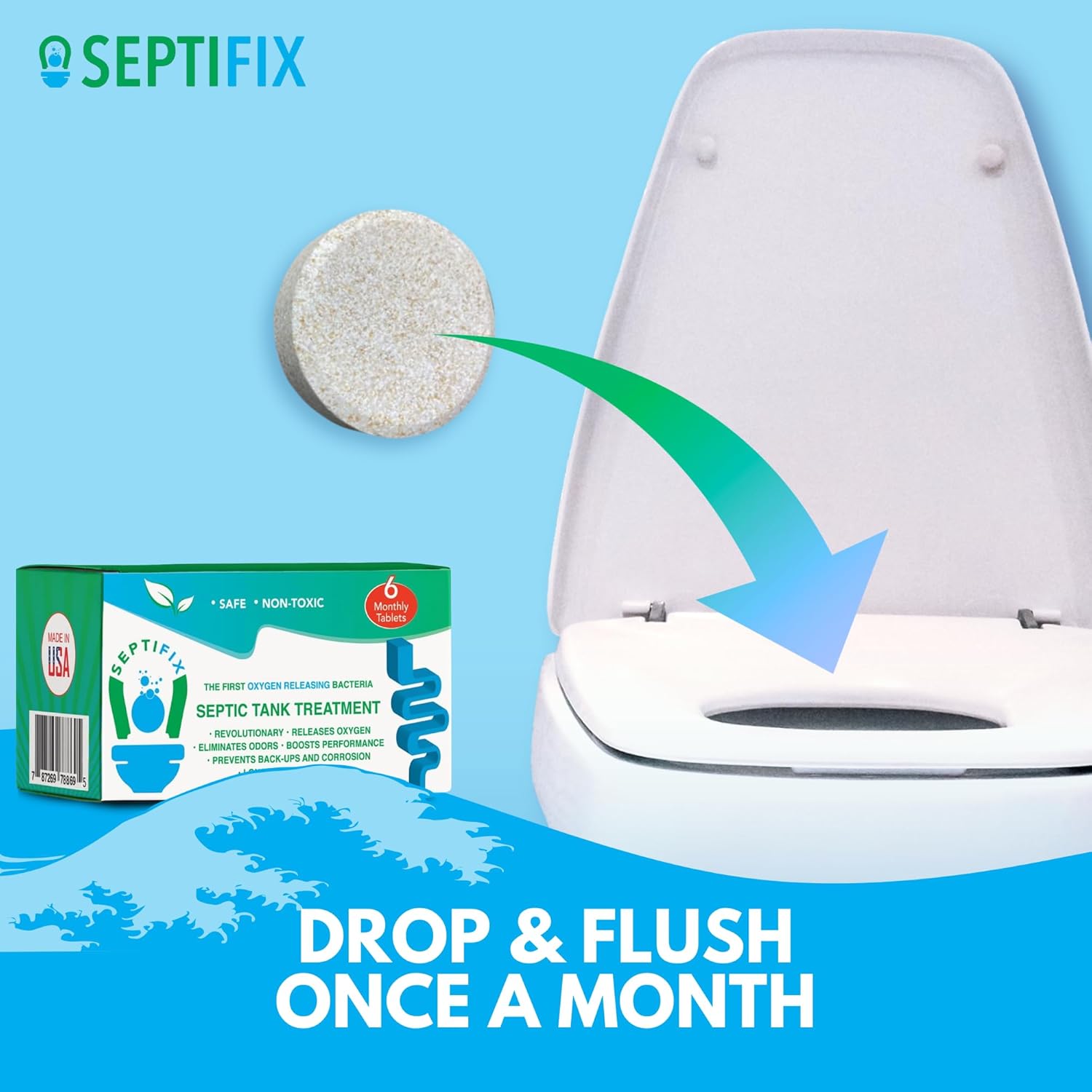
Looking at septic treatment products too? Review the product details and directions for Septifix Tablets.
Septic-Safe Bathroom Cleaner to Consider
Clorox Disinfecting Bathroom Cleaner Spray
Here is an example of a product that has a statement on its U.S. manufacturer’s website about using it with a septic system. It is described as a spray that will remove soap scum and watermarks without using bleach and is safe for your septic system if used according to directions.
Surfaces the manufacturer states it can be used on are Glass Shower Doors, Glazed Ceramic Tile, Plastic, Chrome, Fiberglass, Glazed Porcelain, and Synthetic Marble. Directions will differ depending on what you are trying to do. To disinfect, spray all hard, non-porous surfaces until they are wet and let sit for 10 minutes. Then scrub the surface and rinse with water. Wipe dry. To clean and deodorize, allow the product to penetrate soap scum by letting it sit on the surface for several minutes. Scrub the surface and rinse with water. Wipe dry. Always go by what the label states because directions may change.
These are just the manufacturer’s information and what they claim will happen when using their product. You can assume this product will remove soap scum and watermarks based on the manufacturer’s website. It does not tell us that this product will remove buildup from heavy water scale. Go by what is stated on the bottle. Make sure not to use the product on any surfaces that are not listed on the label.
I only listed one product because I was able to find this information on the manufacturer’s website. There are most likely more bathroom cleaners that will work on your septic system; you just have to research them with the manufacturer.
How to Use Bathroom Cleaners With a Septic System
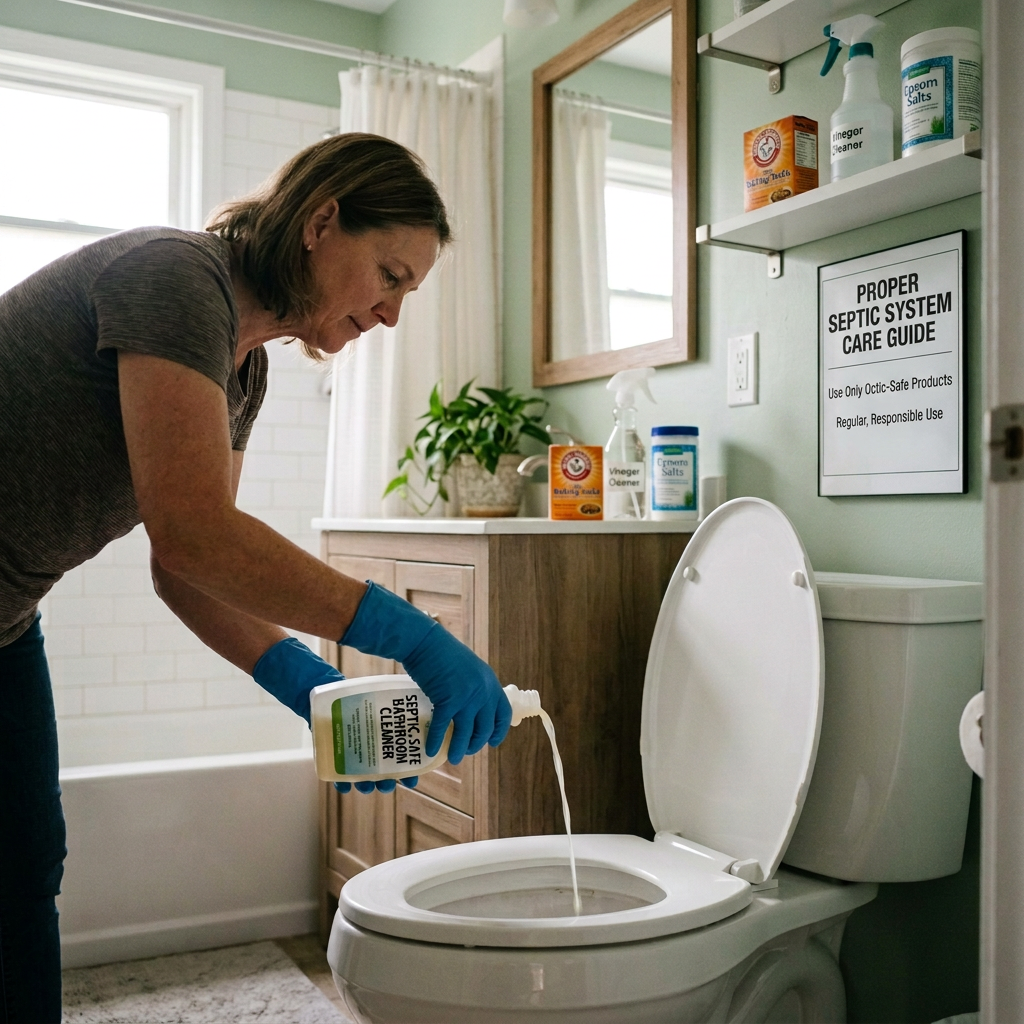
Make sure to follow all instructions that come with the cleaner: how much to use and if you need to rinse. Never dump your leftover concentrated cleaner or chemicals into a drain. If there are any questions regarding a product or your septic system, consult the manufacturer or local septic system agency.
There are many products that can be used to help maintain your septic system. They are made specifically to break down certain waste that enters your system. Learn more about these products at Septic Tank Chemicals: Safe Choices, Smart Habits That Work. As mentioned above, that article will go into more detail about the different types of products that can be used in your home and around your septic system.
Frequently Asked Questions
Are bathroom cleaners labeled septic-safe suitable for every septic system?
If it says so on the bottle, then it should. Make sure to read the directions on how to use it and if there are any limitations that may apply to your system.
Can I use a septic-safe cleaner on a shower or bathtub?
If the product says that it can be used on that material, yes. Just because it’s safe for your septic system doesn’t mean it will be safe for all materials in your bathroom.
Does “natural” mean a cleaner is septic-safe?
No. Natural, nontoxic, and antibacterial do not mean the product is safe for your septic system. Always make sure to look up the product on the manufacturer’s website.
What should I do if a product does not clearly state whether it is suitable for septic systems?
Look up the manufacturer’s website or call them directly. If you can’t determine whether the product is septic-safe, don’t advertise it as such.
Where can I find septic-safe toilet cleaners?
We do not review toilet cleaners. If you need assistance unclogging your toilet, check out our article on Septic Safe Toilet Unclogger. If we have an article that covers toilet bowl cleaner, we will link to it here.
Always make sure to double-check if a product is safe for your septic system. Just because something is advertised as natural or septic-safe doesn’t always mean it is. Read the instructions on how to properly use it and reach out to the manufacturer if you have any questions.
Conclusion
Remember, when buying a septic-safe bathroom cleaner, make sure to research if the product will be safe for your system. And make sure that it will be safe for whatever material you are using it on. Some products may work well on glass tile in a shower but not natural stone or grout.
Avoid using any products that may harm your septic system. Don’t assume that if a product is labeled as natural it will be safe. Make sure to read the directions on how to properly use the product and never dispose of any extra concentrated cleaner or chemicals down a drain. If there are any questions about a product’s ability to be used in a septic system, reach out to the manufacturer or local septic system agency.
Keep your septic system clean and healthy with our SeptiFix product. Use one tablet a month to help your septic tank stay cleaner and healthier.
Related Posts