
Septic Tank Maintenance Checklist (Simple Monthly Habits That Prevent Backups)
Your Septic System Is Like Your Stomach. It Will Stay Quiet If You Give It The Right Stuff & Don’t Overload It. But If You Overload It, It’ll Complain In Ways You Can’t Ignore.
The idea behind this Septic Tank Maintenance Checklist is to make checking on your septic system a simple, easy, and monthly process, so you won’t have to worry about backups, odors, or those surprise septic service bills that pop-up when you least expect them.
I used to over-think my own septic maintenance needs, but I’ve since come to realize that the most effective maintenance plan for me would be the one I’d actually use regularly.
For all of these monthly septic system checks, you will generally not require specialized equipment. Most checks are quick (only taking minutes), and will allow you to identify potential issues with your septic system early on, so as to prevent an expensive repair bill that could end up being a major problem on the weekend.
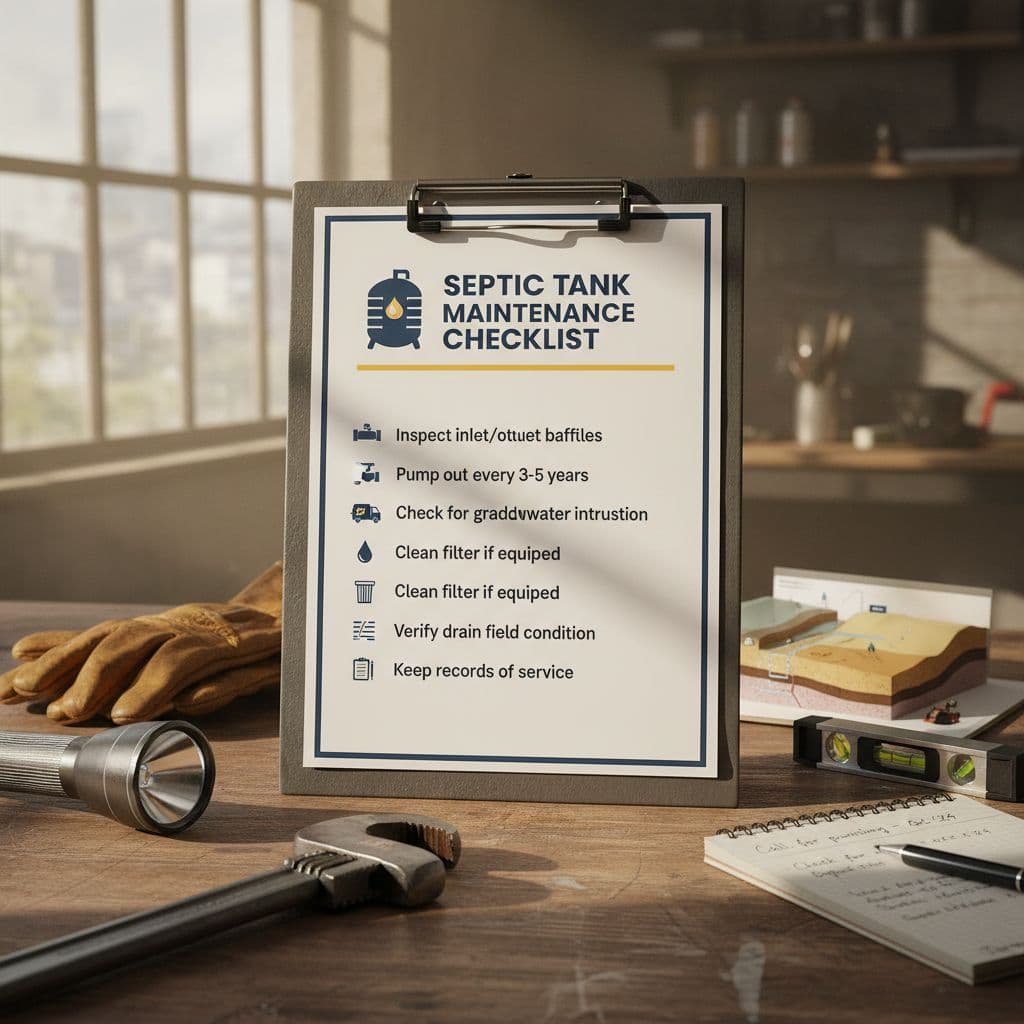
Septic Tank Maintenance Checklist: The 10-minute monthly routine
Consider this a checkup. It’s similar to checking your smoke detectors, replacing the air filter in your HVAC system, etc. All you are trying to do with septic maintenance is find warning signs early, maintain consistent use of water throughout the home, and help to protect the drain field.
I have created a Septic System Maintenance Checklist that is linked to a habit I perform every month when I pay bills. I perform all of my tasks on the same day at the same time, so there will be no guesswork involved.
The monthly schedule is as follows. At least perform the following:
- Listen for running water after toilets flush, and after faucets turn off.
- Notice drain speed in the sink, tub, and shower, slow changes matter.
- Sniff check near bathrooms or the laundry area, sewer smell is a clue.
- Look under sinks for damp cabinets, drips, or warped wood.
- Scan the yard for soggy spots or extra green strips over the drainfield.
- Confirm lids are secure and nothing heavy is parked over the septic area.
- Watch your water use after guests, parties, or long holiday weekends.
- Keep “no-flush” items out of the toilet, even if the label says “safe.”
- Do a quick mental review of anything unusual this month, storms, power outages, plumbing work.
- Write one note if anything felt off, even if it seems small.
This isn’t about pumping schedules or deep inspections. It’s about using a simple Septic Tank Maintenance Checklist to stay aware, month after month, without stress.

Quick indoor checks (toilets, drains, and water use)
Indoor indicators typically come before outdoor signs; most indoor indicators are related to water (too much, too quickly) in relation to water flow into the tank. When there is excessive water entering the tank quickly, the tank does not have enough time to “settle,” which allows for solid material to be displaced from its position within the tank and move toward the drain field, an area in which solid material should not be present.
Here are some items I look for as potential indicators inside of homes:
1. Running Toilets: Even running “a little” can waste a large amount of water over time. Each month I perform a 2-minute toilet dye test. The dye is placed in the tank, and I let it sit until I see the dye turn up in the bowl (usually within minutes). If I see the dye appear in the bowl without having flushed the toilet, the flapper is leaky.
2. Slow Drains: Usually, if there is only one slow drain in a home, it indicates a localized clog. However, if multiple drains in a home are draining slowly at the same time, it could indicate a larger problem such as with the line going to the tank, the tank itself, or other components of the septic system.
3. Gurgling Sounds: Gurgling sounds coming from drains or toilets are usually indicative of trapped air within the plumbing. In many cases, gurgling sounds are simply due to a lack of adequate ventilation (vent pipe issues), while in some instances, it may be caused by a partially blocked drain or pipe.
4. Sewer Smell: While it is possible to experience a slight odor after heavy use, consistent sewer smells inside of a home can be a warning sign. Sewer smells can be a sign of a dry trap, inadequate ventilation through the vent pipe, or problems with the septic system.
5. Leaks Under Sinks: Any type of leak is significant. Not only does a slow drip add up to extra water flowing into the tank and beyond, but a leak can also hide mold and damage to cabinets.
6. A Sudden Increase in Water Bills: If you have experienced a sudden increase in your water bills and you know that your water usage has remained consistent, it is likely that you have a leak somewhere in your home. Excessive water can cause additional stress to the drainfield causing it to be unable to absorb the additional volume of water being sent through the system.
Outside checks (yard, lids, and warning signs)
The Yard Tells the Truth The truth about your septic system happens above ground. You may not have an idea of what’s going on with your septic tank below ground, however the topsoil may show signs of problems.
Go walk around the septic tank and drain field and check for:
Soil that is spongy or wet: Even though you haven’t had rain recently, if the topsoil is damp, you may have a situation where there is “back-up” from the drain field to the topsoil.
Greener than usual grass: If you notice a band of extremely lush green grass, this could indicate that liquid is making its way through the soil and up to the surface. This is NOT good fertilizer…it’s a problem!
Depressions (sink holes) or Settling: Sinkholes and depressions are possible indications that the soil is shifting, a pipe is broken or a component of your septic system has failed. Be very cautious if you find either of these conditions.
A Sewage Odor Near Your Septic System Drain Field: A strong sewage odor near your septic area does not necessarily mean that you have a problem inside your home; however it is a red flag and should be investigated as soon as possible.
Also check the basics:
- Keep lids secure and visible, not buried under new landscaping.
- Keep heavy vehicles off the tank and drainfield area.
- Redirect roof and surface water away from the drainfield if you notice runoff pooling there.
This section addresses safety concerns in regards to this septic tank maintenance checklist. Do not touch or open your septic tanks. Stay out of any enclosed spaces where you can be trapped by a lid. Do not let children or animals near any lids or in any wet areas. The purpose of this Septic Tank Maintenance Checklist is to help you observe your septic system without exposing yourself.

What to avoid each month (the mistakes that shorten septic system life)
Septic systems work for two reasons; (1) bacteria break-down organic waste material, and (2) the tank provides sufficient time to allow separation of scum, liquid and solid materials within the tank. However, the greatest number of failures occur when either non-biodegradable substances enter the system or too much water enters the system at once (floods).
If you only have to change one habit in terms of septic maintenance, it should be the first item on this checklist which will help prevent “small” decisions from leading to costly repair of your system.
Additionally, there are other silent killers of septic systems including treating household drains as a garbage can. Remember that toilets and sinks also contribute to this problem as they do retain memory of past actions.
Finally, many people misinterpret how their drain field functions. It is designed to treat effluent, not serve as a disposal site. That is why protecting the drain field through proper septic maintenance using the checklist provided is so important since drain field repairs can be very expensive.
The do not flush, do not pour list (and safer alternatives)
If it didn’t come from your body or toilet paper, it shouldn’t go down the toilet. If it can clump, harden, or kill bacteria, it shouldn’t go down the drain.
Don’t flush:
- Wipes (even “flushable” wipes)
- Paper towels
- Feminine products
- Condoms
- Diapers
- Cat litter
Don’t pour down sinks or drains:
- Grease and cooking oil
- Coffee grounds
- Medications
- Harsh chemicals in large amounts (bleach, drain openers)
- Paint or stain
- Solvents
What to do Instead
Trash Can Lid : In both bathrooms place a trash can with a lid on it to eliminate temptation.
Jar for Grease : Once your grease has cooled, pour it into a jar or can and throw it away.
Use a Paper Towel to wipe down the pan after cooking with grease to clean off as much as possible prior to cleaning.
Old Med Drop Box : The majority of pharmacies and some community programs have old med drop boxes available for collecting unwanted medications.
Small Amounts of Cleaning Solutions : “Septic Safe” cleaning solutions may be helpful, however the real key is to use the least amount of cleaner possible, rinse thoroughly, and avoid using large quantities of heavy chemicals repeatedly. Many additives are simply a marketing trick. My preference is to take a straightforward approach: good habits first, if something seems off, call a professional.
This section of the Septic Tank Maintenance Checklist will protect you from clogs which seem to pop up out of thin air.
Water habits that protect your tank and drainfield
Imagine your septic tank as a snow globe. When you shake the globe vigorously, all of the components float in the air. Similarly, excessive water flow will disrupt the sedimentation process at the bottom of the septic tank causing solids to float upwards towards the drain field. Once the drain field becomes clogged, additional issues will occur.
Water usage that can impact monthly maintenance:
Spread out your laundry throughout the week: Five loads of laundry on a single day (Saturday) may overwhelm the septic tank system. Performing two loads of laundry on Tuesday and another two loads of laundry on Thursday is less stressful for both the tank and surrounding soils.
Repair leaky faucets quickly: Running toilets, dripping faucets, and leaky shut-off valves continuously add to an overabundance of water into the system; which reduces the system’s ability to rest.
Take longer showers with caution: Space out consecutive showers when guests are visiting, as this may have more of an impact than you might expect.
Install low-flow plumbing fixtures if necessary: Upgrading to new toilets and/or low-flow shower heads can decrease the amount of strain placed upon the septic tank system, while having little to no negative impact on daily life.
Avoid using garbage disposals frequently: The addition of food particles to the septic tank adds to the overall amount of sludge present within the tank. When possible, composting is preferred to utilizing a garbage disposal. Also, scraping plates before placing them in the trash will also help to minimize the amount of debris entering the septic tank.
If you choose to adopt one habit from this section, let it be steady beats sudden. This represents the heart of the Septic Tank Maintenance Checklist.

Keep simple records and know when to call a pro
Septic maintenance checklists will capture trends or patterns in how you are using the system, but cannot substitute for the need to inspect and/or perform repairs on your system when necessary.
A checklist cannot “see” inside your tank and therefore cannot tell you if there is a layer of solids forming at the bottom of your tank (sludge). However, what a checklist can help you identify, is if there are changes happening that may be indicative of problems developing in your system.
To me, the Septic Tank Maintenance Checklist represents the “calm and boring” side of septic maintenance. When used properly and in conjunction with basic tracking and a defined point for calling for assistance, I believe the checklist will serve as a tool to support making good decisions regarding your septic system’s operation and maintenance.
If your system has an alarm (and many systems have them, especially those with pump tanks) then you should be taking it very seriously. Alarms and backups require service, not speculation.
A one-page log anyone can keep (dates, changes, and photos)
You don’t need a binder. You need a breadcrumb trail.
I keep a note on my phone called “Septic,” and once a month I add a line or two. It takes less time than scrolling social media.
What to record:
- Monthly check date
- Any smells (where, when, how strong)
- Slow drains (which ones, how often)
- Leaks fixed (toilet flapper, faucet drip, washing machine hose)
- Heavy water weeks (guests, extra laundry, big cleaning day)
- Major rain events (especially if your yard stayed wet)
An added smart step: Take at least one wide shot annually, from the same position, of the entire drainfield area. This way, if you see any unusual coloration (odd green) or wet strips in that area later on, you’ll be able to reference this picture for comparison.
You will then turn your Septic Tank Maintenance Checklist into an actual checklist for maintenance as opposed to simply a wish.
Red flags that mean call service now (before a backup)
Some signs are “keep watching.” Others are “stop and call.”
Call a licensed septic professional if you notice:
- Sewage backing up into a tub, shower, or floor drain
- Strong sewer odor indoors that doesn’t go away
- Multiple slow drains at once, especially with toilet trouble
- Wastewater surfacing in the yard near the tank or drainfield
- An alarm sounding on a pump or control panel (if you have one)
What to do while you wait:
- Stop or cut water use right away, no laundry, no long showers.
- Keep people and pets away from wet areas outside.
- Don’t try to open the tank or “poke around” near lids.
This is where the Septic Tank Maintenance Checklist protects you by helping you act fast, before a small issue becomes a full backup.
Conclusion
In general, a well-functioning septic tank is silent and this is part of its operation. Spending ten minutes each month to identify possible leaks; to protect the integrity of your drain field and to prevent potential disruption to your morning, will be time well spent.
Save and/or print your Septic Tank Maintenance Checklist. Set a monthly reminder for yourself to perform the check-up. If you have identified any red flags in the past week, do not delay scheduling an inspection to confirm and receive a definitive diagnosis.

Related Posts



3 thoughts on “Septic Tank Maintenance Checklist (Simple Monthly Habits That Prevent Backups)”