Concrete vs Plastic Septic Tank: How Does Fiberglass Compare?
When determining what type of septic tank you need, you will need to look at many factors: groundwater on your property, access for the truck to deliver it, ground that can hold a tank, and what is allowed in your area.
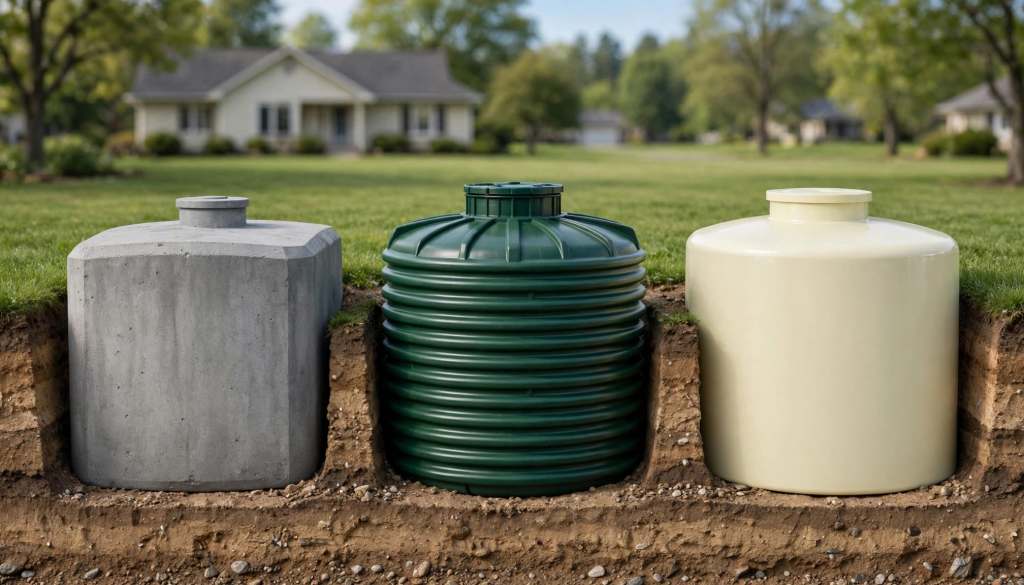
There are some pros and cons when looking at a concrete vs. plastic septic tank. Concrete is heavier and a more solid product. Plastic is lighter and can be easier to work with. There are also fiberglass septic tanks available to homeowners. Each has its pros and cons.
But that doesn’t mean that just because it’s a concrete septic tank it will work for your property. There is a certain model number that will be allowed on your property, so make sure you know what your contractor will be installing.
We will go over how each compares in strength and weight, what they will require from your property, and how big of a tank you will need. Check out our septic tank size calculator guide. You will still need to verify with your local permit office what size tank you will need.
In my opinion, when selecting a septic tank, you should base your choice off of your property, not if you think plastic or concrete is better. I would want someone to come out to my property and tell me why that tank would work for my soil.
Key Takeaways
- Concrete, polyethylene, and fiberglass can be suitable septic tank materials when the specific product meets local requirements.
- If your concrete septic tank is too heavy, you may run into issues with getting it to your site. Some plastics may need to be braced or supported as well.
- If you have groundwater on your property, it can affect any material you choose. Heavier tanks are not immune from flotation.
- Always compare the full cost of the install. Digging, hookups, groundwater, etc., should all be factored into your decision.
- Look at what specs your tank will be built to instead of trying to sell you on the lifespan of a material.
Concrete vs Plastic Septic Tank Options at a Glance
When we say plastic, we are referring to Polyethylene tanks. Fiberglass tanks are built a little differently, so they are mentioned separately.
| Factor | Concrete | Plastic, usually polyethylene | Fiberglass |
|---|---|---|---|
| Weight | Heavy; usually requires substantial lifting equipment | Lightweight compared with concrete | Lightweight compared with concrete |
| Main durability concerns | Cracking, deterioration, and leaking joints | Deformation, handling damage, and connection leaks | Cracks, impact damage, and connection leaks |
| Installation priorities | Stable support, safe placement, and sealed joints | Model-specific bedding, backfill, and filling instructions | Protection from concentrated loads and correct support |
| Groundwater | Weight helps resist uplift but does not eliminate risk | Flotation and external pressure need assessment | Flotation and external pressure need assessment |
| Cost considerations | Delivery distance, lifting equipment, and access | Backfill requirements and any groundwater measures | Supplier availability, delivery, and specialist support |
| Useful comparison point | Availability of suitable local precast products | Easier transport to restricted sites | Lightweight alternative where an approved model is available |
Learn more about our optional Septic Product. Septifix is an Affiliate Link. We will receive a commission if you buy from us.
Concrete Septic Tanks: Pros and Cons
It offers strength but is dependent on the quality of manufacture and installation. If manufactured properly, you will need an adequate base and seals.
Advantages of concrete
Heavier weight can combat groundwater trying to lift your tank out of the ground. There may still be a need for your installer to determine your flotation.
May be a good option if you have a local vendor that carries precast tanks that meet your specifications. This will make it easier to obtain the needed information about the product and arrange delivery.
If you can get a truck near the site, there shouldn’t be any problem with the machinery needed to set your tank in the hole. Make sure to have your installer check the access before giving you a quote.
Drawbacks of concrete
As stated above, if you cannot get your truck near the excavation, this will become a negative. You may have a narrow entry, power lines, or soft soil that will hinder getting your tank into the hole.
Your concrete tank can crack when being placed, and if it does not have even support, it can cause failure. Overloading the tank with more than it was designed for can also cause it to fail.
Concrete is subject to chemical degradation. In the Kansas Dept. of Health and Environment septic tank book, they explain how the acids created in your tank can degrade the upper portion of your tank above the waste line.
This will not happen to all concrete tanks and will depend on the quality of concrete used and what it’s subjected to.
What to check
How your tank is made and where it will need to be sealed. You should know what your access risers and connections will look like.
What is the maximum depth you can bury it and what weight it can support on top. Your concrete tank may not be suitable under a driveway.
Plastic Septic Tanks: Pros and Cons
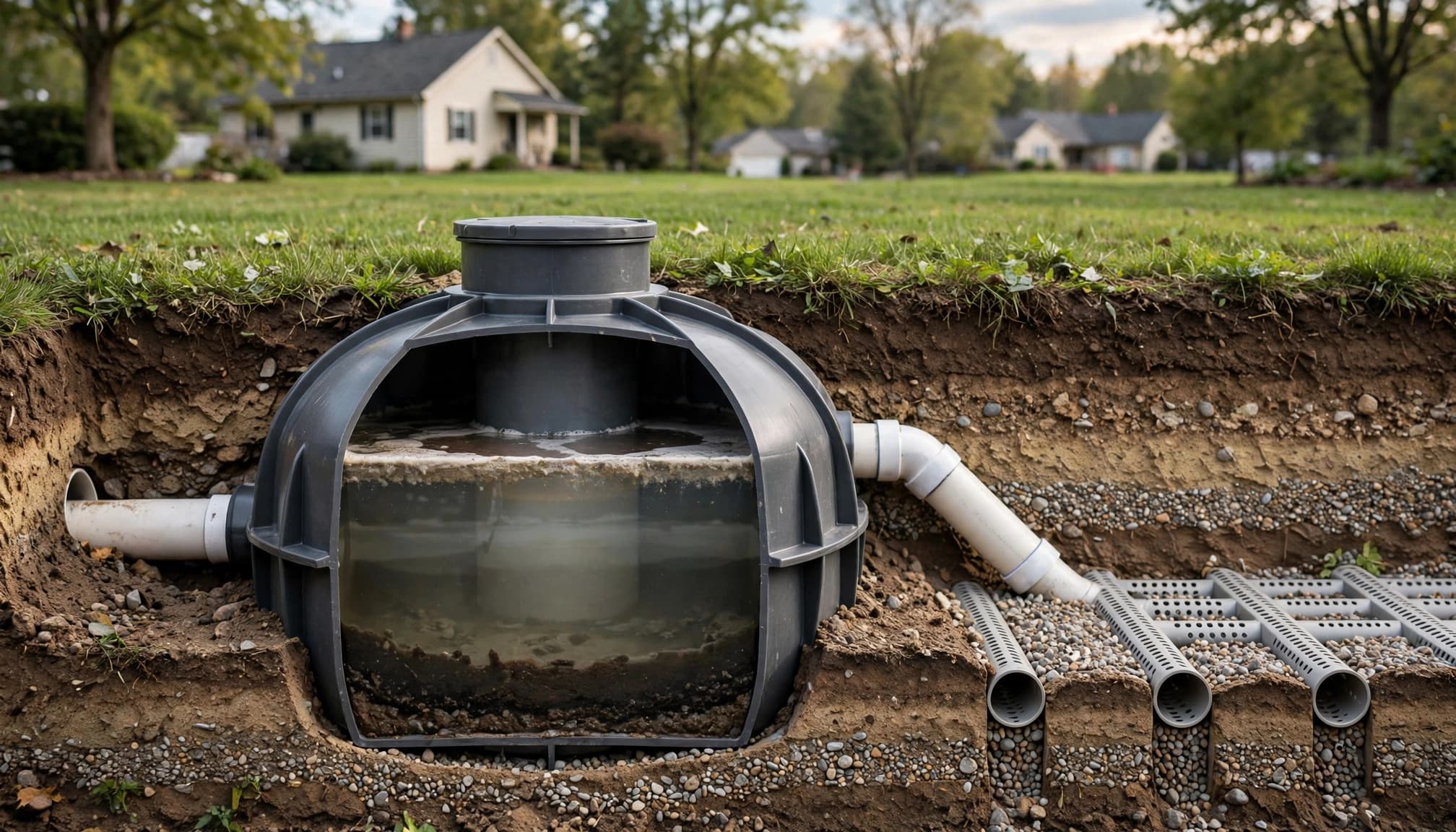
They can be a cheaper alternative to concrete. Just make sure they are made for septic purposes and not just holding water.
The design of the plastic tank and the ribs around it will provide its strength. So comparing plastic tanks by how thick their walls are isn’t a true comparison.
Advantages of plastic
Lighter in weight and can be transported closer to your excavation site. If your property doesn’t allow larger trucks to get close, this could be beneficial.
Will not be affected by the previous example of concrete breaking down. It won’t keep your tank from failing or leaking.
Can be an easy option to get delivered and set. Just make sure the hole is prepared by someone that knows what they are doing. It doesn’t mean that just because it’s lighter your average homeowner can do this job.
Drawbacks of plastic
Will need to be installed with the proper bedding to withstand the pressure from the surrounding soil and water. Improper installation can cause your tank to fail.
Your installer’s instructions will tell you how to place the backfill, and whether to put water in the tank while backfilling.
Always make sure to follow the instructions that came with your tank. Different plastic tanks may require different procedures when installing.
What to check
What brand and model number are you quoting me for? Get a copy of the installer’s manual and make sure your site will fall within those parameters.
Is your tank rated for the amount of groundwater you have? How will your risers and lid attach to your tank?
All these factors will play a role in how your system is serviced and kept sealed.
Where Do Fiberglass Septic Tanks Fit?
Fiberglass should be discussed as its own product and not grouped with plastic tanks.
A fiberglass tank is reinforced with glass fiber. As mentioned earlier, plastic tanks are constructed differently. There will be differences between the products.
Advantages of fiberglass
Similar to plastic, they will be lighter than concrete. This could be an asset if your site won’t allow larger equipment to set your tank in the hole.
Like plastic, they won’t break down from the acids mentioned above. But don’t assume all fiberglass tanks will last longer.
You may find that your local vendor can provide you with a fiberglass product that meets your needs. Find an installer that knows that product.
Drawbacks of fiberglass
Just like any other material, it can be dinged or cracked. You will want to know how your contractor plans on checking your tank for damage. Don’t assume it will be okay and backfilled.
Find out what options you have if your tank is damaged. Is it repairable? Will your installer stand behind that repair? Some companies will only install your septic system.
Again, this could be an issue with finding the correct product for your area. Make sure you can find the parts to service your tank.
When fiberglass belongs on your shortlist
If your site allows for the installation of a fiberglass tank and you find an installer that knows why you should choose it, then compare it to your other options.
As always, compare apples to apples. Get a price that includes all your connections and groundwater needs.
Don’t assume because it’s a lighter product it will be more expensive than concrete or plastic.
Which Material Costs More?
As you can see, there isn’t a definite order that will give you a national average on cost. It will depend on many factors.
Remember, your tank can be less expensive at the vendor but more to install.

Separate purchase price from installed cost
Make sure the quote breaks down these items:
- Tank brand, make, material, and size that will meet your needs.
- Cost to deliver, unload, and set the tank.
- Digging the hole and preparing the ground.
- Bedding and backfill.
- Pipe connections, risers, and lids.
- Any groundwater precautions.
- Permits, inspections, and restoring the yard.
If replacing an existing tank, make sure pumping and removing or abandoning, if allowed, is included.
You also want to know what will happen if unexpected conditions are encountered. Rock, poor soils, or changing conditions during excavation may increase your cost.
Compare Similar Quotes
They should all provide an approved size and meet your needs. One company may include permits and restoring the area, and another may only provide the tank.
The concrete quote may include a crane, whereas you may not need that for a lighter-weight tank. Alternatively, your poly or fiberglass quote may have additional items needed at your site, making the cost savings seem lower.
Have the contractor break this down for you. You do not want to buy a cheap tank only to find out that it does not meet your needs.
Check warranty responsibilities
Warranties for the product and the installation can be different. If the shell fails, a pipe connection is compromised, or it settles, you may have multiple warranties to work with.
Who will coordinate that for you? Is there any labor, digging, delivery, or replacement that is not covered? You could still be on the hook for quite a bit.
What Type of Tank Will Work On Your Property?
Once you have your site evaluated, you can begin looking at which tank may work for your home. Here are some considerations that may help you understand why there is not one answer that works for everyone.
High or seasonal groundwater
What will the groundwater level be for your site? Just because you were able to dig it and it was dry does not mean it will remain that way.
Kansas has information in their book about not placing your tank in the groundwater table and discusses flotation. These rules may vary from state to state as there is no national code for septic installation.
Even if you have an existing tank and the groundwater is high, be careful. The Michigan EGLE states that when pumping out your septic tank, it can cause a concrete tank to float, and your plastic tank can cave or be crushed.
You should always have someone that knows about septic systems evaluate this. Never pump your septic tank to see if it will stay put.
If your site will require precautions due to groundwater, make sure the installer shows you what will be done and what your product is rated for. There are many ways to cheat on this, and it will not last.
Restricted delivery access
What will your contractor need to get onto your property? Lighter-weight tanks may be easier to install, but your contractor will still need to be able to dig and backfill.
Make sure your installer can tell you what they will need to get to your property: gates, hills, overhead objects, and how far they have to move the truck from where they will be digging.
When your septic needs serviced, you want to make sure they can get to it.
Soil support and settlement
Your septic tank needs proper support under it. If it settles, it can compromise your tank and connections.
Make sure you know what will happen if your contractor encounters something that is not suitable. You want them to follow the guidelines that are provided for the tank and not just install it on what is there.
This is different from having the proper soil for your drain field. Switching to another tank will not allow you to have a drain field that can treat waste if it does not meet standards.
Burial depth and surface loads
Make sure you know how deep your tank can be buried. Just stating that you cannot bury a plastic tank too deep is not going to help you pick the right one.
Let your designer know what is around your tank and what you plan to have in the future: driveways, patios, sheds, etc. If you want to drive over your tank, you need to know what is safe.
Some materials may be able to withstand driving on them, and others will not.
Local approval
Always check with your health department before ordering. Some use a list of products that are pre-approved, and others may need to look at your tank.
Just because you found it on the internet does not mean your local health department will allow it. Make sure your tank is approved for your application.
Questions to Ask Your Installer
Here are some questions to ask your contractor when they come out to give you a quote.
- What tanks do you have approved for my situation? Concrete, plastic, or fiberglass?
- Why do you feel this product will work for my situation and not others?
- How much groundwater will my site have?
- Will my tank need any precautions to keep it from floating or shifting?
- Can your equipment get onto my property to dig and install the tank?
- What are my burial depths?
- Will your quote include all the items listed above?
- Who will take care of me if my tank is defective or installed incorrectly?
You want to know how they will prove your tank is watertight and make sure all inspections are met.
If they cannot give you a straight answer, then they most likely are not the right person for the job. “We install them all the time” is not a good answer.
When you are ready to pay your final invoice, make sure you have all your papers: plan, information on your tank, warranty, inspections, and who to call.
It is nice to have a map of where everything is located on your property. When someone needs to come service your tank, they will appreciate knowing.
Durability: Compare Evidence, Not Lifespan Promises
Do not buy into the sales pitch that your tank will last X years. There is no number that can be given to all types of tanks. Concrete, plastic, or fiberglass will all last different amounts of time.
Depending on the quality of the tank, how it is installed, and the environment it is placed in. Your warranty does not dictate how long your tank will last.
If you have an existing septic system, have someone look at it. Do not assume it is bad because it is old or made of a certain material.
Look at the whole system when inspecting your tank. Just because the tank looks good does not mean your connections are watertight or the inside is in good condition. Your lid may also not be safe to use.
Always maintain your septic tank. We have an article about how to maintain your septic tank here.
Never go into your septic tank or try to fix anything inside. If your lids are damaged, keep people away from them. Have a pro come look at your tank if you think something may be wrong.
Frequently Asked Questions
Do plastic septic tanks last as long as concrete tanks?
There is no definitive answer. It depends on the quality of the product and how it is installed, as well as what it is exposed to and how you maintain it.
Can a plastic septic tank float?
Yes, they can. If the groundwater is high enough, it can lift your tank out of the ground. This can happen to fiberglass and concrete tanks as well.
Can a concrete septic tank crack?
Yes, concrete can crack from mishandling, not having proper support, or loads placed on top. Always have a professional look at your tank if you suspect it has cracked.
Can you replace a concrete tank with a plastic one?
It depends. If you have an approved plastic tank that will fit your application, yes. You will need to make sure your groundwater and connections will work. Just because you have a concrete tank there does not mean you can replace it with plastic.
Is fiberglass better than polyethylene?
Again, it depends. You want to find what works for your site, how much it costs, and who can repair it near you. Both plastic and fiberglass are lightweight but are constructed differently.
I think the biggest thing to remember is that no matter what type of tank you have, it needs to be installed properly. It is better to have all of your quotes broken down and know why they are recommending what they are.
Conclusion: Choose the Tank That Fits Your Site
There is more to deciding if you should have a concrete or plastic septic tank. Make sure you consider your property when making your decision. Fiberglass can also be an option if there is an approved product and someone that knows how to install it near you.
Concrete is a heavier option and will hold its shape. Plastic is lighter and can be easier to install. Fiberglass is also lightweight and will need to be taken care of just like plastic.
Have all of your quotes compare like for like. Know what you need to protect your tank from and who you are hiring to install it. Make sure you have all of your information once it is done.
Keep your septic system clean and healthy with our SeptiFix product. Use one tablet a month to help your septic tank stay cleaner and healthier.

Related Posts