Septic Safe Toilet Unclogger: Clear Clogs Fast Without Harming Your Tank
A septic safe toilet unclogger is any method or product that clears a clog without killing the bacteria your tank needs. There are many products and methods available for clearing clogged toilets safely in a way that won’t harm the good bacteria needed by your septic tank. There are also harsh chemical products available that can kill off the good bacteria breaking down waste in your tank. These can cause backup problems and very expensive repair bills. This is something you wouldn’t wish on anyone.
Here’s an easy-to-follow “game plan” for you. I will provide information on what to use and what to avoid, step-by-step instructions for ways to unplug a toilet clog, suggestions for selecting products which are safe to use in a septic system, and finally, suggestions to help you prevent clogs from happening in the future. You’ll be left with clearly defined steps and the knowledge and confidence to handle this issue.
Key Takeaways
- A septic-safe toilet de-clogger is designed to safely remove clogs from your toilet while leaving your beneficial microbes alone in your septic tank.
- The mechanical devices listed above (flange plungers or toilet augers) are the best initial tool to use for clearing a clogged toilet.
- If you have a relatively minor toilet clog, you might try using dish soap & hot water. The dish soap will help loosen the clog.
- An enzyme-based product will work to break down organic matter, however it has to be clearly stated on the label that the product is safe for use with a septic system.
- Please avoid using bleach, hydrochloric acid, sulfuric acid, lye, strong disinfectants, paint thinner or acetone in your toilet. These chemicals may kill the good bacteria in your septic tank and/or damage any part of your plumbing system.
- Also, please do not use compressed air blowers or unprotected metal snake type devices. They may cause excessive wear on seals, porcelain, pipes etc., potentially causing a failure of the overall plumbing system.
- You should also never use chemical drain cleaners on your septic system. Chemical drain cleaners can harm the beneficial bacteria in your septic tank, damage your plumbing system, create bad odors, create back-up problems, etc.
- Other potential signs of a bigger problem in your septic system include: multiple slow draining fixtures; gurgling sounds coming from your bathtub; sewer odors around your home; wet spots on your drain field area; and if you continue to experience repeat backups.
- When you continue to experience repeat backups or the clog continues to occur over and over again in another fixture, call a certified septic professional.
What Is a Septic Safe Toilet Unclogger and Why It Matters
Septic safe toilet unclogger are products that help clean out clogs while protecting the good bacteria in your septic system from being harmed by the cleaning product. Septic-safe toilet cleaners could be anything from a plunger, a toilet augur, dish soap and hot water, or enzyme-based formulas with mild surfactants that clean but don’t harm the bacteria.
The bacteria in your septic system are essential to its operation. They break down the solid material in your septic tank allowing liquid to flow into your drain field. When you pour bleach, acid, caustic or solvent type chemicals down the drain you kill the bacteria that are doing all of the hard work. You may also damage some of the metals and seals in your system causing them to corrode.
Using safe and effective options will provide you with many benefits. Enzyme-based cleaners will digest the organic materials in your toilet bowl, and surfactant-based cleaners will gently loosen and remove any paper or other types of waste. Augers or plungers will allow you to clear clogs quickly and safely using mechanical means, rather than using chemicals. Using safe methods will ensure that your septic system remains intact and free from odor-producing issues, while saving you money in repairs.
Also, know when the problem is larger than a single clogged toilet. If you notice slow draining toilets throughout the home, if the tub gurgles when you flush, if there are areas over the drainfield where you see moisture or evidence of sewage odors; then it’s likely that you have an issue within your septic system and it may require professional assistance to correct.
How Your Septic System Works in Simple Terms
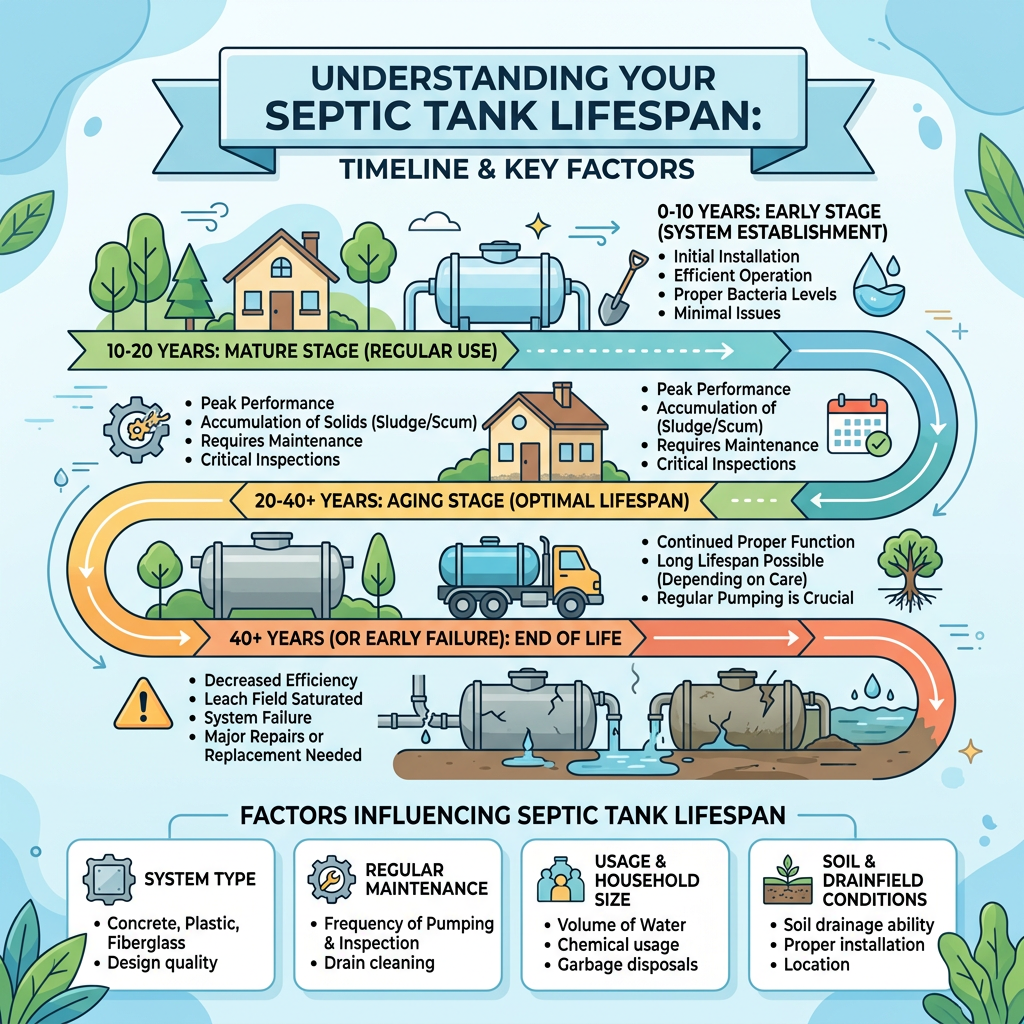
The septic system is made of a tank and a drainfield, with the liquid flowing from the tank to the drainfield after it leaves the tank. The waste enters the tank where solid matter (sludge) sinks to the bottom, fats and oils (scum) rise to the surface and liquid (effluent) remains in the middle for travel through the drainfield.
Healthy bacteria living within the tank consume the solid waste matter to prevent solid buildup and therefore, backups and odors. Unhealthy bacteria will cause solid waste to accumulate, leading to backup issues, odors and stress on the system. Healthy bacteria promote flow.
Chemicals and Tools to Avoid With a Septic Tank
These products are dangerous for your tank and pipes.
Do Not Use:
- Chlorine bleach (kills beneficial bacteria; causes corrosion on the inside of your tank & pipes).
- Hydrochloric acid (causes severe burns on your skin, corrodes all metals).
- Sulfuric acid (corrosive; kills beneficial bacteria quickly).
- Sodium hydroxide (also known as lye; caustic; harmful to beneficial bacteria).
- Quaternary ammonium compounds (powerful disinfectants; kill bacteria).
- Paint thinner and acetone (toxic solvents for microorganisms; toxic fumes).
- A compressed air blaster (can rupture the wax seal in the bottom of the tank and create a leak).
- A metal snake with no protective covering (will scratch the porcelain on the inside of the bowl).
When you see the words “drain opener” or “caustic” on the container label, STOP! Check if it’s safe for use in a septic system. If there is any question about its safety, don’t use it.
Safe Ways to Clear a Clog Without Hurting the Tank
Your most useful tools will be non-threatening and easy to use:
- A flange plunger designed specifically for toilets creates an air-tight seal and pushes the water through the pipe to dislodge the blockage.
- An Auger for Toilets, with a Rubber Guard, is able to reach further into the drain line than a standard toilet snake, break apart stuck waste that has accumulated in your drain line, while protecting the pipes from scratches and damage by the tool.
- Dish Soap (preferably one with enzymes) and hot water, lubricate the paper fibers as well as the greasier material which can make it easier to remove the clogged paper and/or grease.
- Enzyme-based cleaners for biological waste, although they work slowly, they can be very effective at breaking down organic matter which can create a soft clog or allow you to have some success after an overnight period of allowing them to do their job.
Remember that Enzymes need time to work, and when working with gentle surfactants, this allows the clog to slowly move down the drain. Don’t try to “beat” your clog. Use small amounts of cleaner and then let it sit and cycle several times.
Is It a Toilet Clog or a Septic Problem?
Use quick checks:
- Only one toilet is slow, likely a local clog.
- Several fixtures drain slow, likely a system issue.
- Gurgling from a tub when you flush, air in the line, think septic or a main line jam.
- Sewage smells outdoors, worry about the tank or drainfield.
- Wet spots or lush grass over the drainfield, call a pro.
- Backups at lower fixtures, main line or septic trouble.
If several drains struggle at once, jump to a septic inspection.

Step-by-Step: Use a Septic Safe Toilet Unclogger to Clear Your Drain Fast
Start with the least invasive step. Move up only if needed. Safety first.
- If water rises near the rim, stop. Wait 10 minutes before trying again.
- Wear gloves. Protect the floor. Move slowly and stay calm.
Prep First so You Do Not Make a Mess
- Turn off the water valve behind the toilet.
- Place towels or a trash bag around the base to catch drips.
- Put on rubber gloves and keep a bucket nearby.
- If the bowl is full, remove some water with a small container.
- Keep the tank lid closed so parts do not fall in.
- After you finish, sanitize tools with a septic safe cleaner.
Try the Hot Water and Dish Soap Method
- Squirt 1 to 2 tablespoons of plain dish soap into the bowl.
- Heat a gallon of water, hot but not boiling. Boiling water can crack porcelain.
- Pour the water from waist height, slow and steady, to add gentle force.
- Wait 10 to 15 minutes.
- Flush once. If it does not clear, repeat one more time.
This helps dissolve greasy residue and lubricates paper. It is simple and safe.
Plunge the Right Way With a Flange Plunger
- Use a toilet plunger with a flange. Sink plungers are not made for toilets.
- Seat the flange into the outlet tight. Keep the bell fully under water.
- Push and pull 10 to 15 times with steady strokes. Do not break the seal.
- On the last stroke, pull up fast to break suction.
- Wait 1 minute, then try a single flush.
- Do up to 2 or 3 sets if needed, resting between sets.
A good seal does the work. Patience beats power.
Use a Toilet Auger Without Scratching the Bowl
- Pick a 3 to 6 foot closet auger with a rubber sleeve.
- Insert the tip gently into the outlet, keep the sleeve against the bowl.
- Crank clockwise to feed and break up the clog.
- Do not force the cable. If it binds hard, back off a little, then try again.
- Retrieve any debris with the auger.
- Follow with hot water and one flush.
- For leftover paper, use an enzyme cleaner overnight.
A guarded auger protects porcelain while reaching deeper than a plunger.
How to Choose a Septic Safe Toilet Unclogger Product
Use labels as a guide but be cautious to not be misled. “Septic Safe” is not an approved claim by medical standards; you are looking for items that will not contain strong oxidizers, corrosives, or harsh disinfectants. Look for products that have a nearly neutral pH (acid-base level), gentle detergents/surfactants, and enzymes or cultures that are compatible with septics.
When it comes to a balance between speed of performance, safety and health of your system, and the cost of product, you can make a decision based on what is important to you.

Read the Label Like a Pro
Look for helpful words:
- Septic safe, non-caustic, non-acidic
- Biodegradable surfactants
- Enzyme-based or bacterial cultures for septic
- Bleach-free
Watch for red flags:
- Drain opener, caustic, lye
- Hydrochloric acid, sulfuric acid
- Dissolves hair instantly
- Danger, corrosive, strong oxidizer
If ingredients are not listed, check the Safety Data Sheet.
Best Ingredients for Septic Tanks, and Ones to Skip
Here is a quick cheat sheet you can trust.
Prefer for septic:
- Enzymes, like protease, amylase, and lipase, break down organic waste gently.
- Bacterial cultures for septic use, support digestion in the tank.
- Plant-based surfactants, loosen paper without harsh pH.
- Citric acid at low concentration, mild cleaner, safe in small amounts.
- Hydrogen peroxide at low strength for cleaning bowls, light oxidizer, use sparingly.
Skip for septic:
- Chlorine bleach, kills bacteria and can corrode parts.
- Quaternary ammonium compounds, strong disinfectants that harm microbes.
- Strong acids, like hydrochloric or sulfuric acid, corrosive to metal and produce harmful fumes.
- Sodium hydroxide, lye, caustic, burns tissue, kills bacteria.
- Solvent-heavy formulas, toxic to microbes and pose a flammable risk.
Why it matters: you protect helpful bacteria, reduce corrosion risk, and keep the drainfield happy. Use gentle cleaners for routine care. Save enzymes for soft clogs and maintenance.
Certifications and Safety Data Sheets to Check
- Look for EPA Safer Choice and USDA BioPreferred on suitable cleaners.
- Read the Safety Data Sheet, often linked on the brand’s site.
- Aim for pH near neutral, roughly 6 to 8.
- Avoid products that list strong oxidizers or corrosives.
- Prefer brands that publish full ingredient lists.
A little label reading saves big headaches later.
Tradeoffs: Speed vs Safety vs Cost
Using an enzymatic cleaner or using an acid-based cleaner can both be very effective at breaking down some types of clogs; however, the use of these types of cleaners may damage your tank. Using a mechanical tool such as a plunger or an auger can break up clogs quickly, is relatively inexpensive, and will not contaminate bacteria in your septic system.
To maximize your effectiveness while minimizing your costs, I recommend that you combine all three methods. First, try to plunge your toilet to remove the clog, then if this does not work, use an auger to help break it up. After you have used either method to remove the clog, use a commercial enzyme based cleaner to continue to soften the clog until it dissolves completely and to prevent new clogs from forming. This combination provides quick relief with low costs and a safe environment for bacteria.
Prevent Clogs and Use Toilet Bowl Cleaners Safe for Septic Systems
Chlorine Bleach, Hydrochloric Acid, Quats, or Heavy Disinfectants should be used as little as possible on a daily basis to kill bacteria. Occasional disinfection is acceptable (such as when someone has an illness) but frequent use of strong disinfectants can disrupt the natural bacterial environment.
Drop-in tablets that are designed to be placed in your tank and then dissolve, releasing bleach, dyes, etc. to treat your septic system needlessly “over-disinfect” each time you flush.
Flush Rules That Protect Your Septic System
- Flush only the 3 Ps: pee, poop, and paper.
- No wipes, even if labeled flushable.
- No feminine products, cotton swabs, floss, or paper towels.
- No kitty litter or grease.
- Use regular toilet paper that breaks down fast.
- Test your paper. Soak a sheet in water and swirl. If it breaks up, you are good.
These simple rules prevent most clogs.
Simple Habits That Stop Clogs Before They Start
- Hold the handle long enough for a full flush.
- Avoid thick wads of paper. Use less, flush more.
- Do two flushes for large loads.
- Keep a plunger within reach and teach kids how to use it.
- Space out laundry and dishwasher cycles to avoid flooding the tank at once.
- Pump the tank every 3 to 5 years, based on household size and use.
Routine care beats emergency fixes every time.
Toilet Bowl Cleaners Safe for Septic Tanks
Safe picks:
- Mild cleaners with plant-based surfactants.
- Citric acid in low amounts.
- Low strength hydrogen peroxide for the bowl surface, not for unclogging.
DIY option that works:
- Sprinkle baking soda in the bowl.
- Spray white vinegar over it.
- Scrub with a toilet brush.
- Rinse with a single flush.
Avoid daily use of chlorine bleach, hydrochloric acid, quats, or heavy disinfectants. Occasional disinfecting is fine, especially during sickness, yet daily heavy use can harm bacteria. Skip in-tank drop-in tablets that release bleach or dyes, they over-treat with every flush.
When to Call a Plumber or Septic Pro
Call for help if:
- Multiple fixtures back up or drain slow.
- Plunging and augering do not clear the clog.
- You smell sewage outdoors or see wet areas near the drainfield.
- Clogs return again and again.
You may want to consider installing a camera into your drainfield to identify if you have recurring problems with clogging. The water level in your tank will not go down due to a clogged line whether the tank is full or partially full. Therefore, even though pumping a full tank will help increase the storage capacity of your tank; it will not remove a blockage from your pipes. If you notice backups while your tank is full, contact us to arrange for service.
Conclusion
Most toilet clogs may be resolved without harming your septic system. Begin gently by using hot water and dish soap. Then use a flange plunger correctly. If that does not work, move on to a toilet auger. When you need an additional assist in removing a clog in your toilet; there are many options for septic safe toilet unclogger available; however, it is essential that you maintain good cleaning practices so as to protect the bacteria in your septic tank.
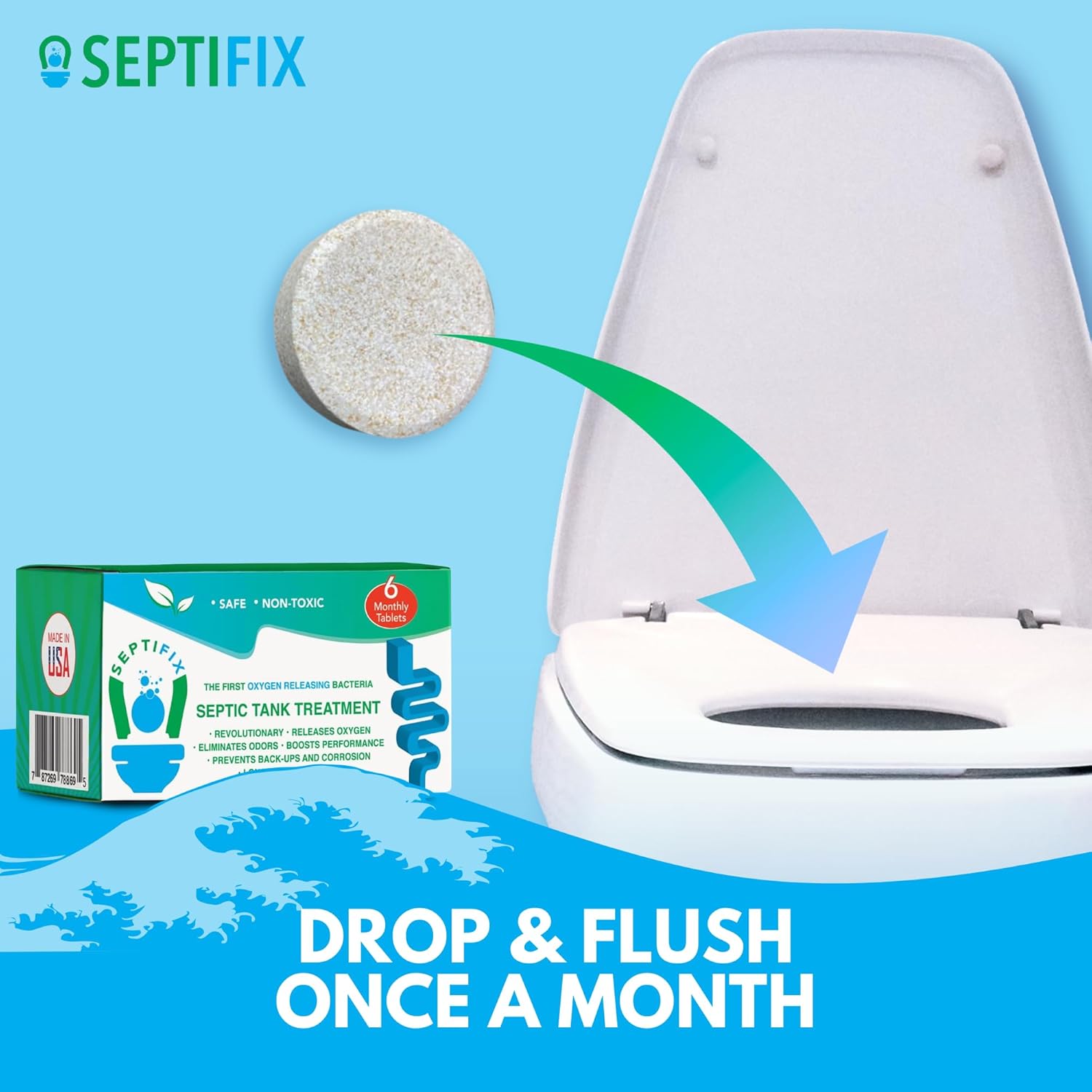
Give your septic system extra support with SeptiFix, an easy-to-use monthly tablet designed to help maintain a cleaner, healthier tank between professional inspections.

Affiliate Disclaimer
Some links in this article may be affiliate links. If you click a link and make a purchase, we may earn a small commission at no additional cost to you.
We only recommend products and services that may be useful for septic system maintenance and care. Affiliate relationships do not affect the information or recommendations in this article.
Additional Septic Tank Resources
More From Our Blog
- Septic Safe Drain Unclog: Clear Drains Without Harming Your System
Learn how to clear slow or clogged drains without relying on harsh chemicals. - Gurgling Toilet With a Septic Tank: Causes and Solutions
Find out what gurgling sounds may mean and when they could point to a septic problem. - Issues With Septic Tanks: Signs, Causes, and Safe Fixes
Review common septic problems, warning signs, and safe next steps. - How to Deal With a Septic System
Follow simple habits that can help prevent clogs, backups, and system damage. - Septic Tank Care and Maintenance Made Simple
Use practical maintenance tips to protect your septic tank and drainfield. - Septic Tank Maintenance Checklist
Follow a simple routine for regular septic care.
Trusted U.S. Resources
- Frequent Questions on Septic Systems, U.S. Environmental Protection Agency
Learn what should and should not be flushed, along with common signs of septic failure. - How to Care for Your Septic System, U.S. Environmental Protection Agency
Review guidance on water use, waste disposal, inspections, pumping, and drainfield care. - Caring for Your Septic System, Massachusetts Department of Environmental Protection
Get practical advice about household chemicals, grease, backups, and septic maintenance. - Signs of Septic System Failure, Washington State Department of Health
Learn how to recognize sewage backups, slow drains, odors, and wet areas near the drainfield. - Maintaining Your Septic System: A Homeowner’s Guide, Indian Health Service
Read a homeowner-friendly guide to septic care, flushing habits, and warning signs.
Recommended Safety Note
If a toilet clog keeps returning, affects multiple drains, or causes sewage odors or backups, the problem may involve the main sewer line or septic system. Avoid chemical drain openers and contact a qualified plumbing or septic professional.
Related Posts