Ultimate Septic System Maintenance Checklist for Homeowners
A well-maintained septic system can function for years, and most routine maintenance is relatively easy. Regular maintenance includes conserving water, avoiding placing harmful materials in drains, maintaining your drain field, and arranging for professional inspection at scheduled intervals.
The frequency of septic system maintenance depends on your septic tank’s size, the number of occupants in your home, your water consumption, soil type, system design, and local regulations. Typically, the United States Environmental Protection Agency (EPA) recommends that most residential septic tanks have a routine inspection every one to three years, with pumping every three to five years.
Alternative septic systems with pumps, electric controls, or other mechanical components will require annual inspections.
Regularly performing the tasks outlined in this septic system maintenance checklist will help ensure that routine care reduces the chance of experiencing a backup into your home, potential damage to your drain field, and costly repairs.
Key takeaways
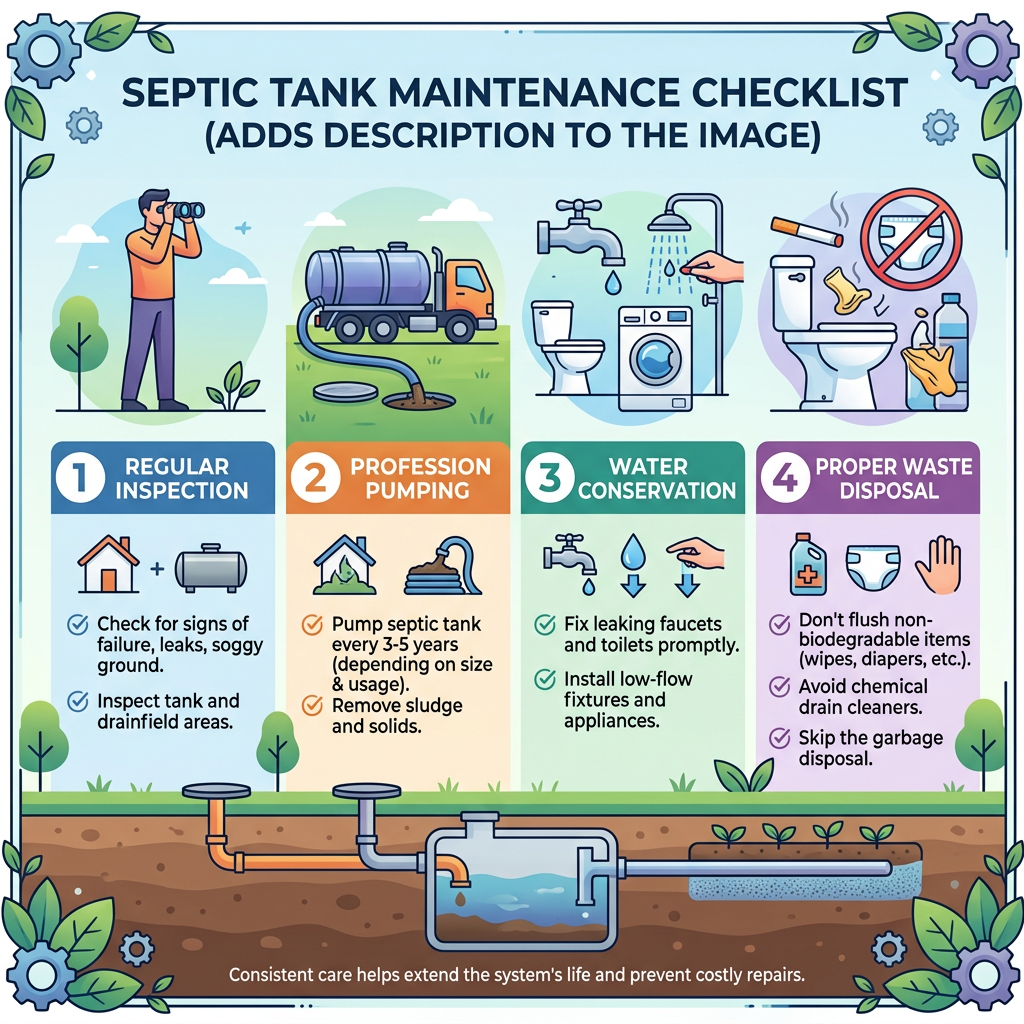
- Have your regular septic system inspected by a certified technician every 1-3 years.
- Empty the tank as soon as the solid material reaches the top (usually once every 3-5 years).
- Yearly inspection is common for alternative systems.
- Quickly repair all leaks in toilets and sinks.
- Try to spread out your heavy water uses, such as washing machines, throughout the week.
- Only flush human waste and toilet paper down the toilet.
- Do not place any structures (i.e., vehicles, buildings, swimming pools, etc.) within 10 feet of the drainfield area.
- Do not allow rainwater, sump pumps, or irrigation to enter the drainfield area.
- Be aware of slow draining, bad smells, wet areas, or sewage backup around the house.
- Keep a record of every inspection, tank pumping, system repair, and filter cleaning.
How a septic system works
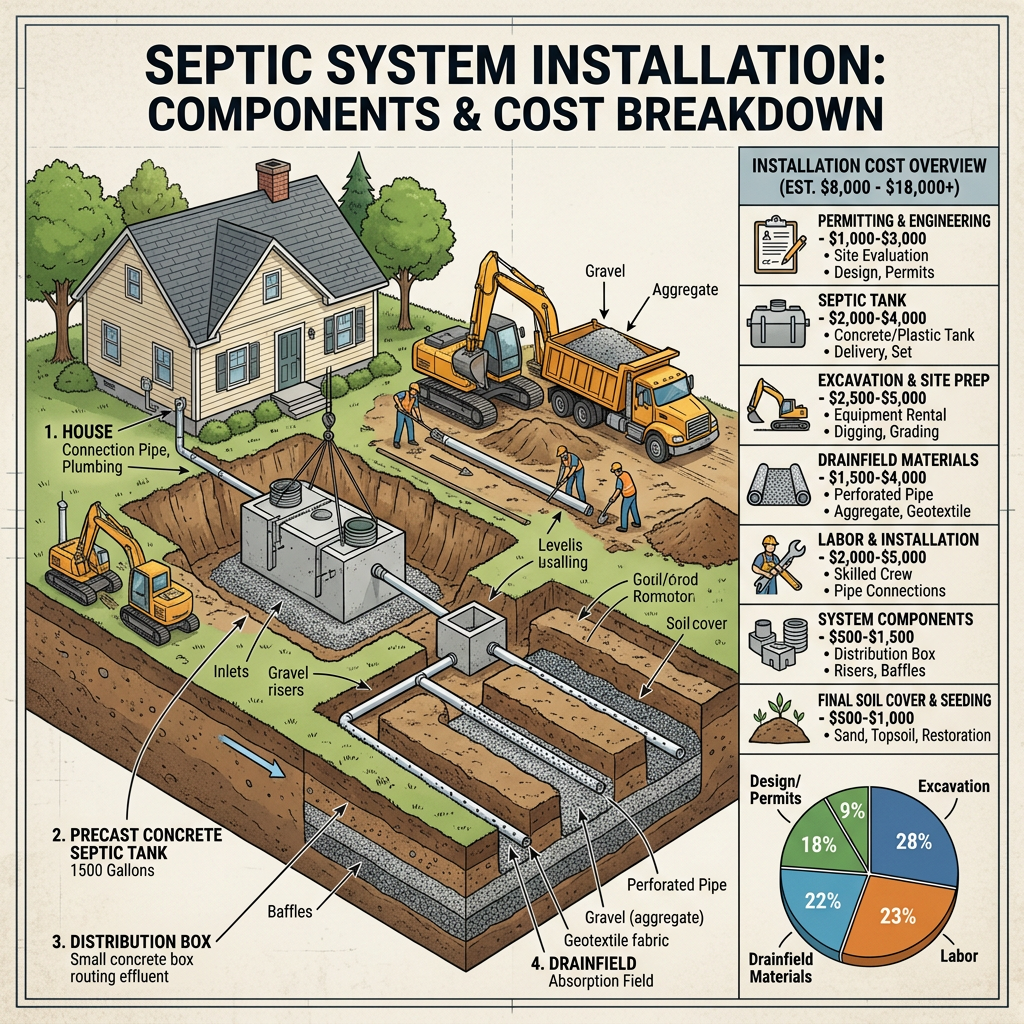
The primary components of a typical septic system are the septic tank and the drainfield.
Wastewater from each fixture (toilets, sinks, showerheads, dishwashers, washing machines) in your home or office goes to the septic tank. In the tank, the heavier solid particles settle to the bottom, creating “sludge.” Grease and other less dense substances float atop this sludge layer, creating the surface “scum” layer.
The remaining liquid, called effluent, exits the tank and drains into the drainfield. The drainfield then allows the effluent to flow into the ground where it is filtered and treated by the earth.
Serious issues with your septic system may arise if a high amount of solids accumulates within the septic tank, if an excess of water enters the septic tank simultaneously, if contaminants or harmful materials are introduced into the system, or if flooding or compaction occurs on the drainfield.
By performing routine maintenance, you will be able to detect potential problems before they become emergency situations.
Your Septic System Maintenance Checklist for Homeowners
1. Check for leaks inside the home
A leaking toilet can send a large amount of water into the septic system. A dripping faucet may seem minor, but constant leaks add up over time.
Check:
- Toilets that run after flushing
- Faucets that drip
- Showerheads that leak
- Water softeners that discharge incorrectly
- Washing machine hoses
- Dishwasher connections
- Visible plumbing leaks under sinks
Fix leaks as soon as possible. A running toilet can place more stress on the tank and drainfield than normal household use.
You can also check your water meter. Turn off all faucets and water-using appliances. Wait for a short period and see whether the meter continues to move. If it does, your home may have a hidden leak.
2. Spread out laundry and heavy water use
Septic systems need time to receive and treat wastewater. Sending several large loads of laundry into the system on the same day can overload the tank and drainfield.
Try to:
- Spread laundry across several days
- Use the correct load setting
- Repair washing machine leaks
- Avoid running the dishwasher and washing machine at the same time
- Use water-efficient appliances when possible
- Avoid long periods of unusually heavy water use
The EPA recommends using water efficiently because every gallon used indoors eventually enters the septic system. Reducing sudden water surges can help prevent hydraulic overload.
3. Flush only suitable materials
The safest flushing rule is simple: flush human waste and toilet paper only.
Do not flush:
- Baby wipes
- Cleaning wipes
- Paper towels
- Diapers
- Cotton swabs
- Dental floss
- Feminine hygiene products
- Cat litter
- Cigarettes
- Coffee grounds
- Medication
- Grease or cooking oil
- Paint or solvents
- Automotive fluids
- Pesticides
Flushing wipes or other products may be allowed according to your sewer authority, however most “flushables” do not dissolve within a sanitary sewage collection system.
All wipes and other non-sewerage material should go into the garbage until you are told otherwise by your local sanitation authority. Oils, greases, and many strong chemicals harm your drain line and also disrupt the natural biological processes of your treatment facility.
For more information about household products, see the EPA’s guide on how to care for your septic system.
4. Use garbage disposals carefully
Garbage disposals send food particles, grease, and other solids into the septic tank. This can increase the amount of sludge and scum that accumulates.
If you use a garbage disposal:
- Limit how often you use it
- Scrape food into the trash or compost when appropriate
- Avoid putting grease or oil into the disposal
- Use a sink strainer
- Ask a septic professional whether your system can handle regular disposal use
Some septic systems are designed to handle garbage disposals better than others. Your household size and tank size also matter.
5. Protect the drainfield
The drainfield is one of the most important parts of the septic system. Damage to this area can be difficult and expensive to repair.
Keep the drainfield free from:
- Cars and trucks
- Trailers and boats
- Sheds and other structures
- Swimming pools
- Patios
- Concrete surfaces
- Large play equipment
- Heavy construction equipment
Even repeated vehicle traffic can compact the soil and reduce its ability to absorb wastewater. A lawnmower is usually acceptable, but ask a professional before using heavier equipment.
Do not plant trees or large shrubs near the drainfield without professional advice. Roots can grow into pipes and damage parts of the system. Grass and other shallow-rooted plants are often better choices, but local conditions vary.
You can learn more in this guide on how to protect your septic drainfield.
6. Keep extra water away from the drainfield
Rainwater and groundwater can overload a drainfield. Make sure roof gutters, downspouts, sump pumps, and surface drainage do not send water toward the system.
Check that:
- Downspouts discharge away from the drainfield
- Sump pump outlets do not flow into the septic area
- Irrigation systems do not saturate the drainfield
- Driveway runoff does not collect over the system
- The yard slopes water away from the drainfield
- Standing water does not remain after rain
Your drainfield should not stay soggy during normal weather. Wet areas may indicate excess surface water, a drainage issue, or a septic system problem.
7. Locate and protect the tank access points
You should know where the septic tank is located before an emergency occurs. If you do not know the location, read this guide on how to find your septic tank without digging up the yard.
Once you locate the tank:
- Keep access lids visible or clearly marked
- Do not cover the area with permanent structures
- Keep heavy objects away from the lids
- Check that lids are secure
- Repair damaged or missing covers
- Keep children and pets away from open access points
Never enter a septic tank. Dangerous gases and low oxygen levels can cause serious injury or death. Tank access, inspection, and pumping should be handled by trained professionals.
When should you inspect and pump a septic tank?
A common schedule is not a guarantee for every home. The EPA generally recommends professional inspections every one to three years and pumping about every three to five years for many typical household systems.
Your system may need more frequent service if:
- More people live in the home
- The tank is small
- The home uses a garbage disposal
- Household water use is high
- The system has a pump or electrical controls
- The tank contains high levels of solids
- The drainfield has limited soil capacity
- Local regulations require a shorter schedule
A professional can measure sludge and scum levels during an inspection. Do not rely only on symptoms. A tank can need pumping even when toilets and drains appear to work normally.
For more detail, see how often you should pump a septic tank.
You can also read this guide to septic tank inspections, costs, and what to expect.
What happens during a septic inspection?
A professional septic inspection may include:
- Checking the tank location and access
- Inspecting the tank for cracks or leaks
- Measuring sludge and scum levels
- Checking the inlet and outlet pipes
- Examining baffles or tees
- Inspecting the effluent filter
- Checking pumps, floats, and alarms
- Looking for signs of backup
- Reviewing the drainfield area
- Recording recommended repairs
Your service provider should document the tank condition and work completed. Ask for a written report and keep it with your property records.
An effluent filter may need regular inspection and cleaning. The correct interval depends on the system design and manufacturer instructions. Follow the detailed steps in this guide to septic tank effluent filter cleaning.

Warning signs that need attention
Contact a qualified septic professional if you notice:
- Slow drains throughout the home
- Toilets that gurgle
- Sewage backing up into a sink, shower, or toilet
- Strong sewage odors inside or outside
- Wet areas near the tank or drainfield
- Unusually green or fast-growing grass over the drainfield
- Standing wastewater in the yard
- A septic alarm
- Sewage surfacing near the tank
- Repeated plumbing problems
One slow drain may be caused by a local plumbing blockage. However, problems affecting several fixtures at the same time may point to a septic issue.
Do not wait for a complete backup before calling for help. You can review the signs of a failing septic system for more information.
If sewage is already backing up into the home, stop using water and keep people and pets away from contaminated areas. Follow this guide on septic tank backups and emergency steps.
A simple septic maintenance schedule
Every month
- Check for running toilets and leaking faucets.
- Avoid flushing wipes and other unsuitable materials.
- Watch for slow drains or unusual odors.
- Use water efficiently.
- Keep grease and oil out of drains.
Every three to six months
- Walk around the tank and drainfield area.
- Look for standing water, erosion, or unusually wet soil.
- Check that downspouts and sump pump discharge flow away from the system.
- Make sure access lids are secure.
- Check that no vehicle, shed, or heavy object has been placed over the system.
Every year
- Review your pumping and inspection records.
- Check whether your system is due for professional service.
- Arrange a professional inspection for alternative systems with pumps or electrical components.
- Test septic alarms if your system has them.
- Review local maintenance requirements.
Every one to three years
- Arrange a professional septic inspection for a typical household system.
- Ask the professional to measure sludge and scum levels.
- Have the effluent filter and mechanical components checked.
Every three to five years
- Schedule pumping when required by the measured solids level, system condition, local law, or service recommendation.
- Do not wait for a backup to schedule service.
Keep good maintenance records
Keep a simple record that includes:
- Date of each inspection
- Date of each pumping
- Sludge and scum measurements
- Tank size
- Service company name
- Repairs completed
- Effluent filter cleaning
- Pump or alarm service
- Recommended next service date
Good records help you plan future maintenance. They are also useful when selling or buying a property. If you do not know when the tank was last pumped, arrange an inspection rather than guessing.
The EPA provides additional information through its resources on why septic system maintenance matters and frequent septic system questions.
Frequently asked questions
When should a septic tank be serviced?
A normal septic system requires a professional inspection approximately every 1 to 3 years. Most systems are pumped every 3 to 5 years. The frequency depends on the size, usage, and sludge level of your tank.
What are the most critical septic maintenance tasks?
Regular professional inspection and pumping are two very important aspects of maintenance. However, daily routines also play a key role: avoiding a high volume flow rate, never dumping grease, never allowing harmful materials into the drain, and protecting the drainfield will keep the system in proper operating condition.
Can I use bleach with my septic system?
With most cleaners, regular use as directed on the label is not a problem for your septic system. But remember not to pour down large quantities of bleach, disinfectant, drain cleaner, etc. Use these materials as recommended and feel free to consult a septic professional about specific products.
Is laundry detergent septic safe?
Many normal laundry detergents are compatible with a septic system; use them as recommended on the label. To ensure better use, avoid using the highest quantity and doing laundry all in one day. Spread loads over a period of time instead.
Can I plant trees around my drainfield?
A large root system from a tree or shrub could damage the pipes by growing into them. Keep vegetation with deep root systems away from the tank and drainfield unless an expert guarantees there is no danger. This varies due to sites and system designs.
Do I need to add additives to my septic system?
Adding additives to a normal system is not needed most of the time since the tank has naturally occurring bacteria. Additives are no substitute for inspection, pumping, using water sparingly, and properly discarding waste. Consult a professional before adding any type of additive.
How do I know when my septic tank is full?
A slow drain, a gurgle in a toilet, odor, a wet yard area, and sewage backup are the usual signs. But also be aware of other causes that these problems may stem from. Get it professionally inspected or measure the solids level for the safest method to diagnose a full tank condition.
Can I drive over the top of my septic tank?
Avoid driving over your septic tank, piping, and drainfield, unless that particular system is specifically designed to withstand vehicular traffic. Vehicle pressure can harm and break your tank, compress pipes, and reduce the rate of organic flow and gas diffusion by compacting soil.
What should I do if my septic alarm is going off?
Lower water intake and check whether it has a reset button. Don’t ignore the alarm; it’s time to call a septic professional. A septic alarm may reflect a high water level, pump fault, or flotation-triggered fault, and it is an early warning signal.
Final thoughts
Beginning with the list of tasks required by the homeowner for their septic system, these include monitoring water use in the home (since excessive amounts of water increase demand on the drainfield), keeping solid waste out of the septic tank, maintaining open access to the drainfield, and scheduling an inspection/evaluation every three years.
The EPA has outlined some “recommended” practices for homeowners to follow; however, local regulations (such as whether a home needs a septic permit) may be much more restrictive than what the EPA recommends. In addition, factors such as soil type, the slope of the land where the septic drainfield is located, and how many people live in the house will also factor into the recommended frequency of maintenance.
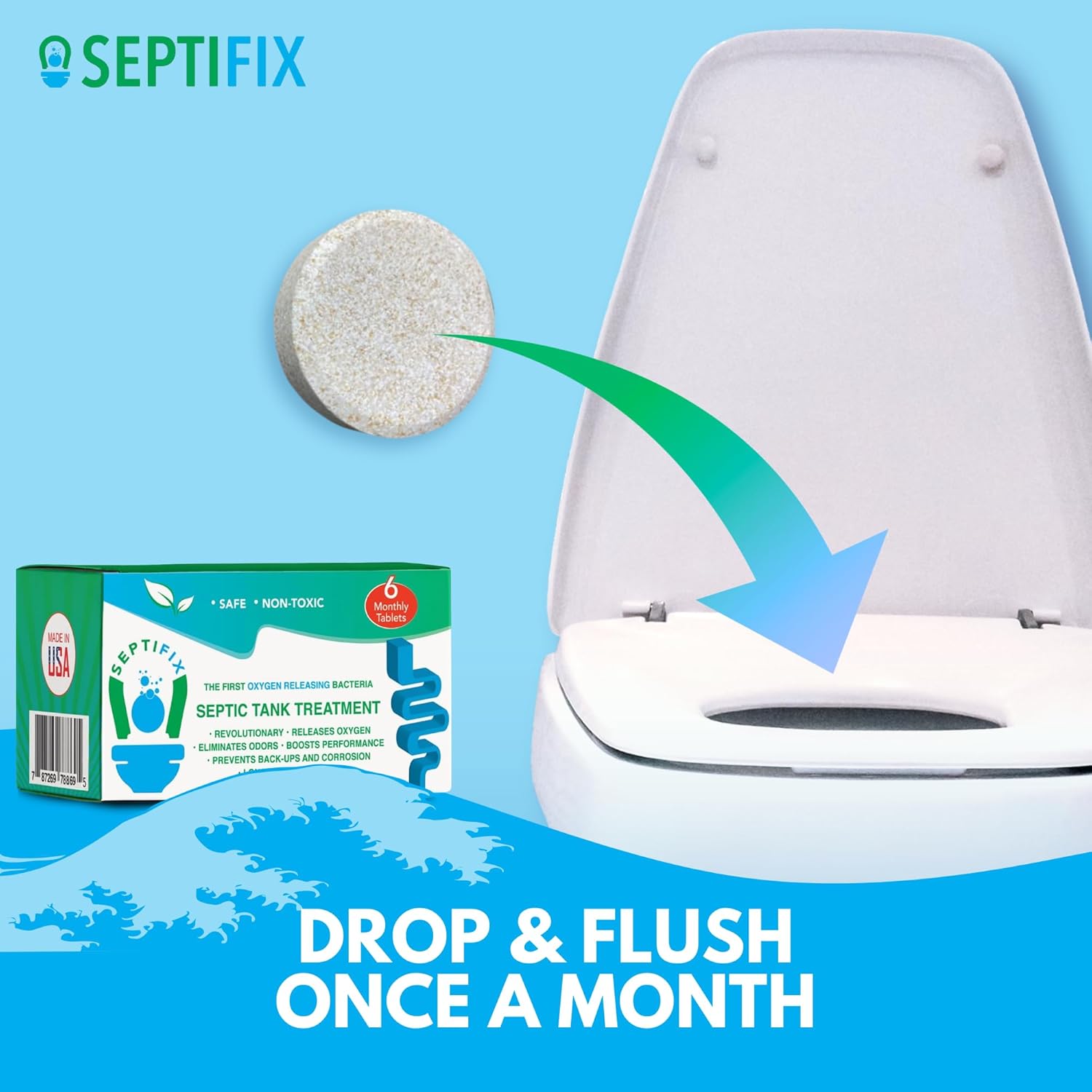
Give your septic system extra support with SeptiFix, an easy-to-use monthly tablet designed to help maintain a cleaner, healthier tank between professional inspections.

This article provides general educational information. Septic regulations and maintenance requirements vary by state and local authority. Contact a qualified professional for advice about your specific system.
Affiliate Disclaimer
Some links in this article may be affiliate links. If you click a link and make a purchase, we may earn a small commission at no additional cost to you.
We only recommend products and services that may be useful for septic system maintenance and care. Affiliate relationships do not affect the information or recommendations in this article.
Related Posts