Natural Septic Tank Additives: What Works and What’s Hype
“Just pour this in and your tank will be fixed,” promises just about every advertisement on television, newspapers, magazines, radio, etc. Whether you have concerns with odors, slow draining, or a large pumping bill; Natural septic tank additives seem to be an easy solution to fix problems quickly.
The truth you need to know so you can sleep well at night is, your septic tank already contains bacteria. The majority of septic tank troubles arise from overloading the tank (either too much water or solids), using harsh chemicals, and/or neglecting regular maintenance; most troubles do not stem from a “missing” additive.
I understand the appeal of using additives. In the following article we will discuss the Natural septic tank additives that may help under specific conditions, the products that are almost entirely marketing, and what is necessary to maintain a healthy septic system for years to come.
How a septic tank really works, so the claims make sense
START_TEXT
A septic system is simple, yet it has limitations. Wastewater flows from your home into the tank. Within the tank, the water naturally separates into three distinct layers: The heaviest solids fall to the bottom of the tank and create sludge; the lighter solids and liquids rise to the top of the tank and form scum; and the remaining clear liquid is discharged to the subsequent stage of the system.
The second phase is the critical component of the system. This is where the majority of the treatment process occurs. The drainfield (also referred to as the leach field), is where the remainder of the treatment process takes place. The soil then completes the process by removing contaminants through filtration and biodegradation of the material that was discharged from the tank.
This is why the focus of so-called natural septic tank additives are misguided. These additives focus on improving conditions within the tank, however they do little to correct the issues associated with an overload, compaction or blockage of the drainfield.
As previously mentioned bacteria naturally exist in the tank due to the introduction of these organisms via the wastewater. Additionally time also plays a significant role in completing the treatment process. However, pumping is the key to maintaining a properly functioning septic system.
While natural septic tank additives may help break down the sludge within the tank, they will never be able to remove the buildup of sludge fast enough to replace the need for regular pumping of the septic system. Sludge is comprised of non-digestable solid materials, grit and other debris which accumulate over the course of several years.
Therefore, if you retain only one image, I would suggest the following illustration: The tank is essentially a settling and holding area; the drainfield is the true site of treatment. Therefore, performing routine maintenance on your septic system will be more effective than using virtually all of the available natural septic tank additives, regardless of their rating.
The 3 things your tank needs most (and none come in a bottle)
Your tank stays stable when you give it a steady routine, not a surprise “treatment.” Focus on these basics:
- Steady water use: Big bursts of water can stir up layers and push solids out.
- No grease or solids overload: Grease floats, wipes don’t break down, and both steal tank space fast.
- Regular pumping and inspection: Pumping removes what bacteria can’t.
Quick “don’t flush” reminder: wipes (even “flushable”), paper towels, feminine products, condoms, dental floss, coffee grounds, and cat litter.

What “enzymes,” “bacteria,” and “oxygen” products are trying to do
These labels sound scientific, but the goals are pretty simple.
Enzymes: They’re meant to break larger organic bits into smaller ones. That can reduce odors in some cases, but it doesn’t make sludge disappear.
Bacteria: These products add microbes that claim to boost digestion. Some are fine for a system that took a hit, but they’re not a rescue crew for a failing drainfield.
Oxygen: Some products claim to “oxygenate” the tank. Septic tanks are mostly low-oxygen environments, so the promise often doesn’t match how the tank actually works.
A simple way to think about it: adding bacteria to a septic tank is like adding a spoon of yogurt culture to milk. It might help if conditions are right, but it won’t turn a dirty fridge into a clean one.
What actually works, and when it is worth buying
More than likely, no matter what products you buy to add into a normal working septic system; most systems will run fine on their own without any additional additives. The times when natural septic tank additives are useful in providing some assistance or backup would be when a septic system is experiencing temporary stress rather than physical failure. Examples of this are:
- After a round of strong antibiotics (they can reduce helpful bacteria)
- Right after a new system start-up
- When opening a seasonal cabin that sat unused for months
Even at this stage, there isn’t a “sludge-eating” objective; there’s a desire to allow the biological system in your septic tank to be restored to a stable condition so normal digestion and decomposition will occur as intended.
When looking for good products, there are several things you should look for: follow clear instructions, look for a label stating it is safe for septic tanks and claim statements that seem dull or unexciting. If you see a label claiming you’ll never have to pump your septic tank again, I guarantee you’ve been sold something rather than purchasing a maintenance product.
I’ve watched people spend more money on natural septic additives than they would have if they had simply had their septic tank pumped on time. As with most anything, the best way to spend money is on an inspection, pumping your septic tank when it needs it, and repairing the problem.
Bacteria-based boosters, the best “maybe” for a stressed but otherwise healthy system
If you’re going to try a product, bacteria-based boosters are usually the safest “maybe.” They can help re-balance microbes after a disruption, especially if your system was fine before.
What they can do:
- Support normal breakdown of everyday waste
- Reduce mild odor issues caused by a temporary imbalance
- Help a lightly stressed tank settle back down over weeks, not hours
What they can’t do:
- Digest years of sludge
- Fix a clogged outlet baffle or blocked line
- Repair a failing drainfield
A quick buying checklist:
- Septic-safe clearly stated on the label
- No caustic or solvent ingredients
- Realistic instructions (dose, frequency, what to expect)
- If CFU counts are listed, they should look like actual information, not vague hype
Used this way, natural septic tank additives are more like a supportive habit, not a rescue button.
Simple habits that beat additives every time
Your septic system likes calm and consistency. These habits protect it better than any bottle.
- Pump on schedule based on household size and tank capacity (a local pro can guide you).
- Spread laundry loads across the week, don’t do it all in one day.
- Fix leaks fast, running toilets can flood a drainfield quietly.
- Keep grease out (wipe pans, don’t pour oil down the drain).
- Protect the drainfield, no parking, no heavy equipment, and watch root growth.
- Use septic-friendly cleaners, avoid routine dumping of bleach-heavy or antibacterial products.
- Go easy on the garbage disposal, it adds solids and can shorten pump intervals.
If you do only one thing: find out when the tank was last pumped, then put the next date on your calendar.
What is mostly hype, plus the risks people do not hear about
“Natural” products often have a sense of safety about them. However, a septic system is just as unassuming and quiet as a small pond; if enough things are dumped into it (even “harmless” ones), they can cause a disturbance and many times create new problems while allowing you to believe you were able to take care of it with the addition.
The largest and most invisible threat lies here: Any additive which rapidly breaks down scum and sludge can expel solids out of the tank. The solids do not disappear; they are forced into the drain field where they can clog the soil and reduce the life expectancy of the system. It is a costly exchange.
There is also the “false calm” problem. A product that eliminates odors for one week may give you time to ignore what’s really going on (e.g., overfilling of the tank, a plugged filter, excessive water use).
In general, a simple rule is to treat the tank as a sedimentation chamber. Do not attempt to transform it into a blender.
Yeast, sugar, baking soda, and DIY mixes, why they rarely help and can backfire
DIY advice about septic tanks spreads quickly because they seem to be easy. Just add yeast, pour in some sugar, toss in some baking soda. The kind of advice that has a feel to it as though your grandfather told you this, therefore it is probably correct, correct?
You will need to provide yeast with the right foods and right environment for it to thrive. A septic tank is not bread dough. While adding sugar may alter what type of microbes grow in a septic tank, it does nothing to reduce grit, wipes or the thick layers of sludge that develop in a septic tank over time. In many instances, providing yeast with the incorrect microbe can produce additional gases and odors.
Baking Soda can slightly alter pH levels but it cannot unclog a clogged drain or resolve slow draining issues due to an overfilled tank. Also, large amounts of powders or homemade concoctions added to a septic tank can disrupt the natural state of the tank’s microbial population, especially if repeated.
If you like “simple and natural,” focus on steady water use and keeping solids out. That does more than most natural septic tank additives made from pantry ingredients.

Harsh “miracle” treatments that say they liquefy everything, what they can damage
Some products say they “liquefy” everything in your tank within hours – this is a red flag.
When strong solvents or caustics are used to destroy the scum layer and churn the sludge in the tank, it sends an increased amount of suspended solids into the drain field. The drain field wasn’t designed to capture a surge of particulate matter. Eventually, it could clog the soil’s pore spaces and lead to wet areas, odors, and failure.
These treatment options can also be harsh on older piping and seals, as well as older tank components. While these treatments may not immediately create problems for the system, they will accelerate wear in systems with years of service.
The best general guideline to save money: If a product says it will eliminate pumping for all eternity – do not believe it. There will always be solids that do not degrade regardless of how much you put into the tank.
A quick decision guide, plus signs you need a pro instead of a product
When you’re standing in a store aisle or scrolling reviews at midnight, it helps to have a simple plan. Natural septic tank additives should be a small decision, not a stress spiral.
Start with these questions:
- Is the system working right now? If toilets flush fine and drains run normally, you probably don’t need anything.
- Any backups or slow drains in more than one place? If yes, skip products and investigate.
- When was the last pump-out? If you don’t know, that’s your first step.
- Did something recent disrupt the system? Antibiotics, long vacancy, or a new start-up can be a reasonable reason to try a bacteria booster.
I realize it can be tempting to get some help right now when you are concerned about something. The best way to address a situation though is to ensure that your solution matches your problem. In many cases of minor disturbances in a properly working system, a small dose of natural septic tank additives may be an acceptable trial. On the other hand if you are seeing evidence of problems then it is likely time for an inspection, possibly a pump-out, or most often a combination of both.
Red flags you should not ignore
If you notice any of these, stop adding products and call a septic pro for inspection or pumping:
- Slow drains in multiple fixtures
- Sewage smell inside the house
- Gurgling in drains or toilets
- Backups (even one)
- Wet spots or soggy ground over the drainfield
- A stripe of unusually green grass over the drainfield
- System alarms (if you have a pump chamber)
These signs usually mean a physical problem, not a bacteria problem.
Conclusion
A well-maintained septic system typically does not need a “boost.” Steady water use, avoiding grease and debris in the pipes, and routine pump-outs will help you win most safely.
The best results come from products that do not eliminate the need for maintenance; they just may make things worse for you down the road.
The simplest next step would be to obtain a copy of your previous pump records. If you can’t locate them, or if you don’t know when the last time was that they were pumped, schedule a regular maintenance inspection and pump-out. It is cheaper to perform good maintenance than to have to repair, and it will keep your system running quietly and with minimal disruption.
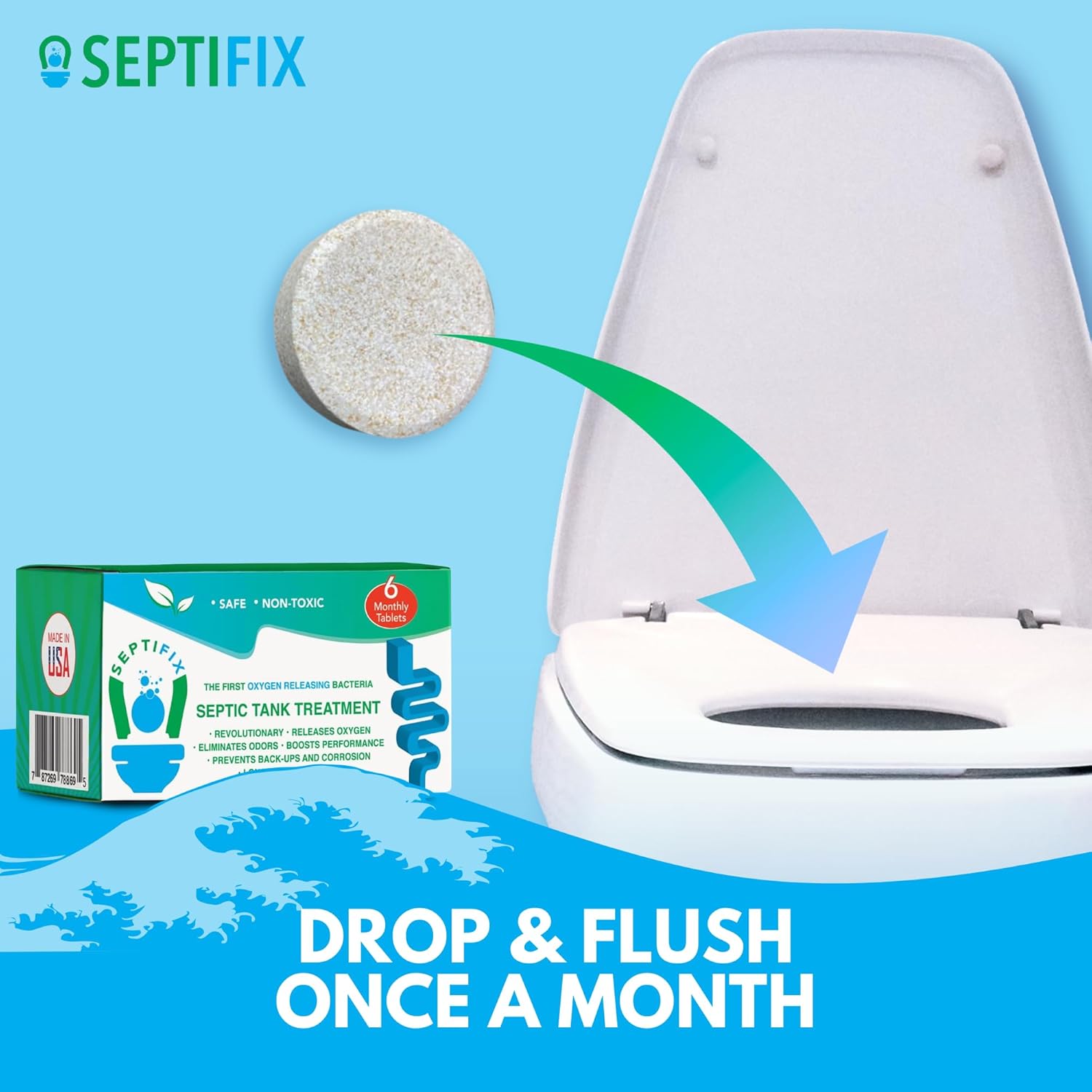
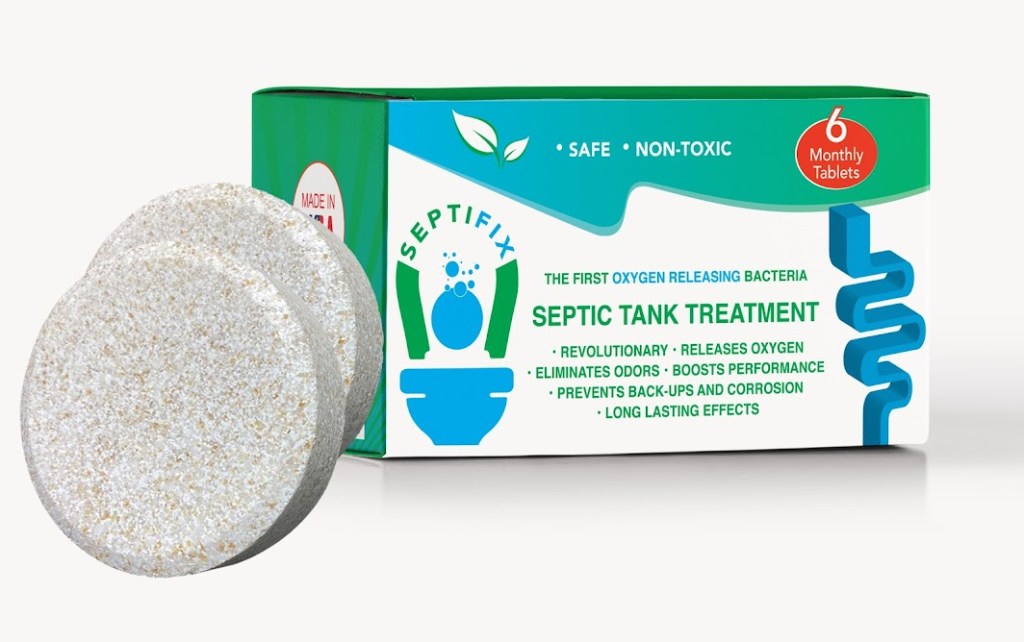
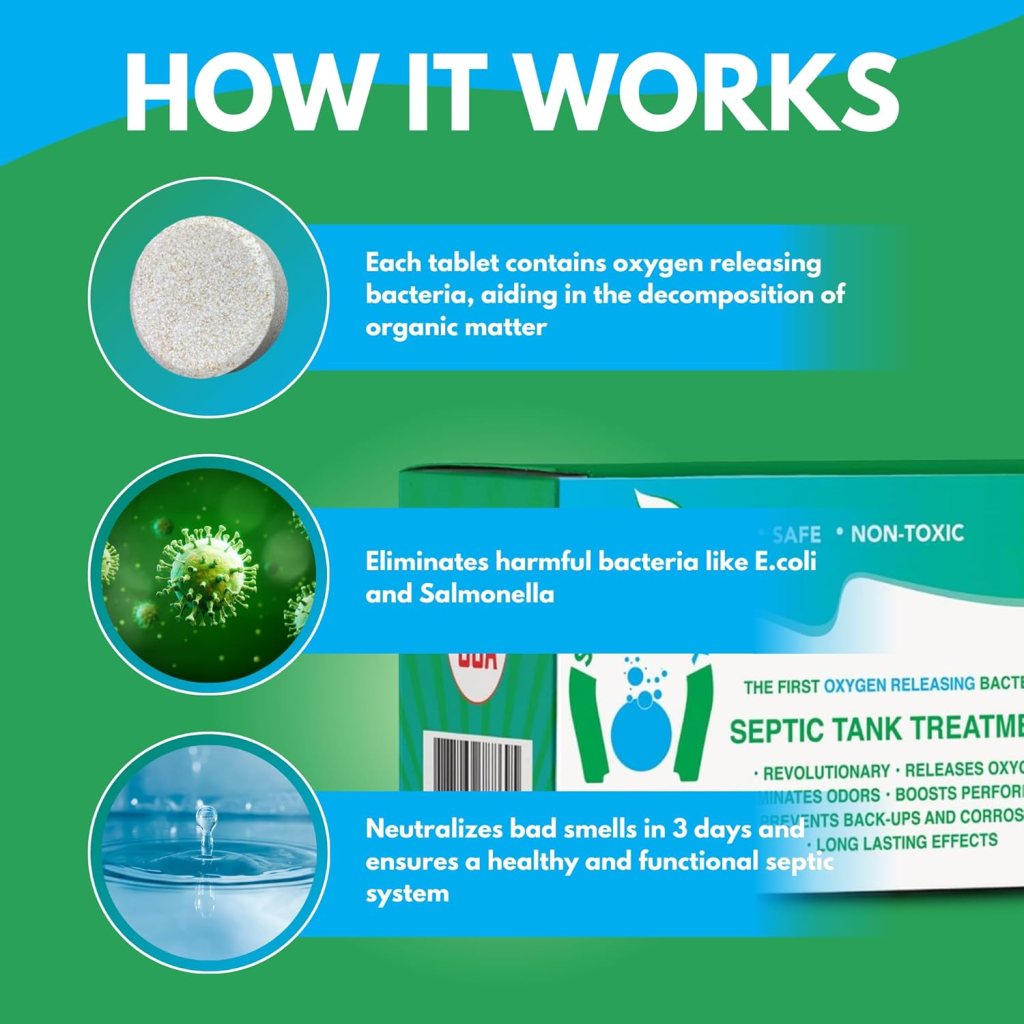
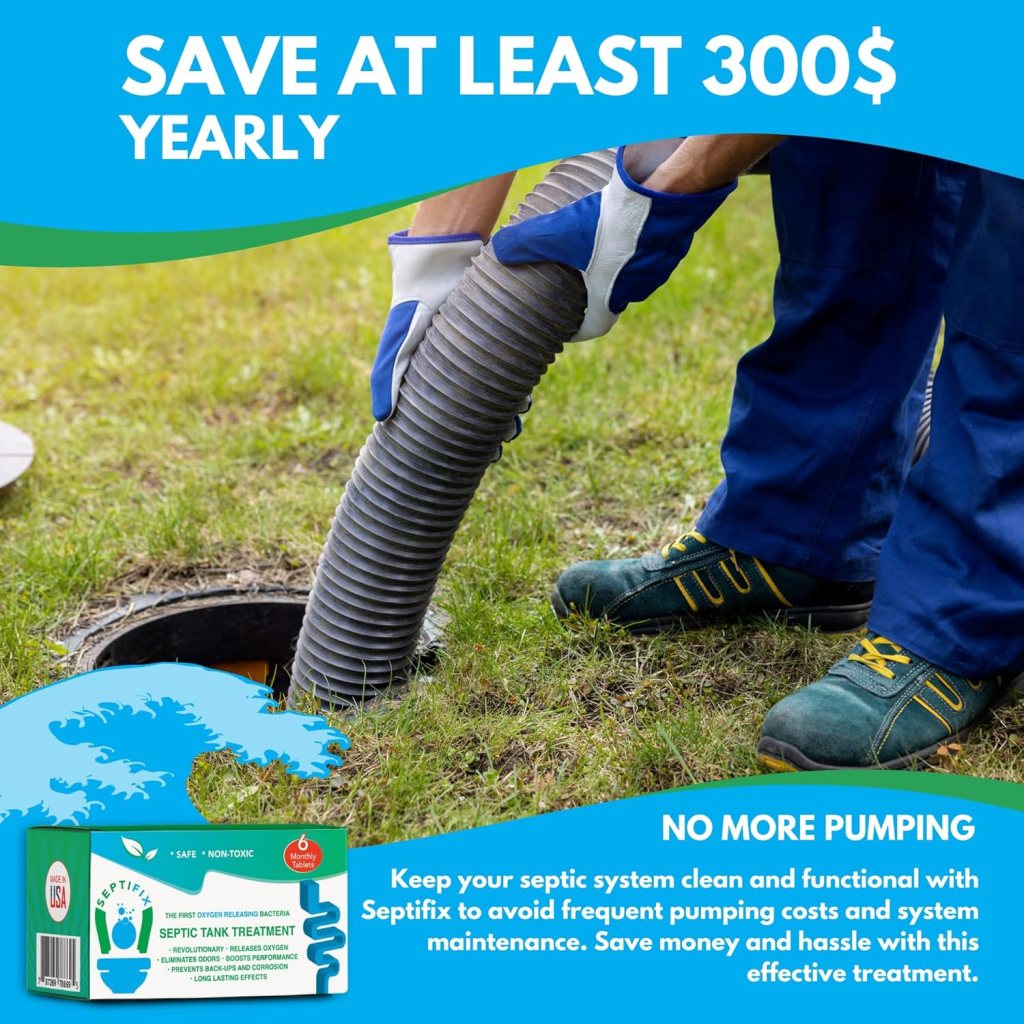
Septifix offers a simple monthly tablet designed to support septic tank maintenance, reduce odors, and help break down organic waste.
Cost Disclaimer
Septic service and repair costs vary widely across the United States. Your final price may depend on your location, tank size, system type, property access, soil conditions, permit requirements, and the extent of the problem. The cost ranges in this article are general estimates only and are not a guaranteed quote. Before approving work, request a written estimate that separates inspection, pumping, parts, camera work, labor, permits, and any drain-field repairs.
Affiliate Disclosure
This article may contain affiliate links. If you purchase a product through one of these links, we may earn a small commission at no extra cost to you.
We only link to products that may be relevant to septic system care and maintenance. However, affiliate relationships do not affect our opinions or recommendations. Always read product labels and consult a licensed septic professional for system failures, backups, or repair needs.
Related Posts