Baking Soda Septic Tank Treatment: Simple Help, Not a Magic Fix
Does your septic system have a faint sour smell? You aren’t alone. Many homeowners reach for baking soda septic tank treatment and wonder if it actually helps, or if it is a myth.
Here is the honest answer. Baking soda can help a little with odors and ph balance. It is mild, inexpensive, and easy to use. It will not eliminate clogs, digest solids, or cure a failing drainfield. This point is important.
You will receive clear guidance for baking soda septic tank treatment here. You will learn how much baking soda to add to a septic tank, how frequently to use it, and how to use it safely. You will also learn what baking soda will and will not do, how a septic system operates in simple layman’s terms, and what to do when real problems arise.
If you have backups, soggy lawn patches, or strong sewage odors outdoors, call a professional. Baking soda is a helper, not a fix.
Key takeaways
- Baking soda might help to neutralize some light odors in your home plumbing system; however, it will not resolve clogs, dissolve heavy muck/sludge, nor restore a malfunctioned/failed drainfield.
- When using baking soda, start with an initial dose of approximately 1/2 cup of baking soda (with warm water) and flush through your drain(s).
- You should never dump a large quantity of baking soda into the septic tank itself.
- NEVER combine baking soda with harsh chemicals for use as a drain cleaner.
- The signs of problems within a septic system include: slow draining, strong sewage smells, toilet gurgle noises, and/or standing water accumulating around your home from wastewater.
- Septic additives, while somewhat useful when used properly, are much less beneficial for maintaining your septic system health compared to regular maintenance (inspections), responsible solid waste disposal practices, reduced water usage and timely pumping.
Does baking soda septic tank treatment actually help?
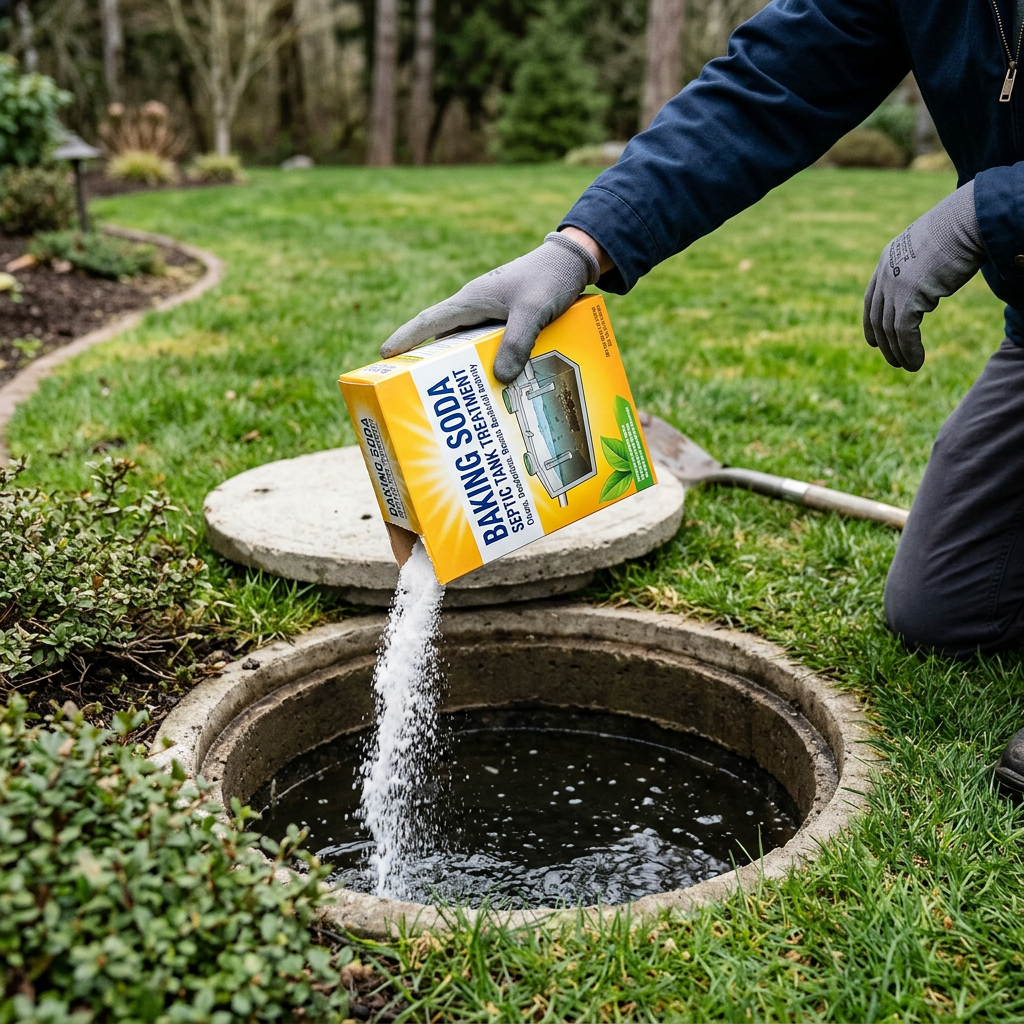
Baking soda can help a septic system a bit, neutralizing acids and controlling mild odors, but it will not digest solids or fix clogging. Baking soda, or sodium bicarbonate, is a weak base. It helps to control minor fluctuations in acidity.
Your septic system relies on bacteria. They digest wastes in the tank. These bacteria work best when the pH is fairly constant, around 6.5 to 7.5. If the tank or pipes are too acid, you may notice rotten smells around a kitchen sink or a bathroom that never smells entirely fresh. Mild doses of baking soda will help regulate that.
There is a limit, however, and too much baking soda may elevate the pH too high, above about 8. When that happens, the bacteria slow their activities. Less digestion results in more solids and more chance for problems over a period of time. So the dosage is important, and small doses are better than large ones.
What baking soda does inside a septic system
Baking soda septic tank treatment serves as a soft cushion against acidity. It is a mild base, and thus buffers small quantities of acid and will quiet sour smells in drains and bathrooms. Used in small quantities, it is noninjurious to pipes, traps, toilets and the tank.
A simple case will help. After you have cooked tomatoes or taken off pickles, you rinse down a lot of acid liquids. Later the drain smells a little sharp. A tablespoon or two of baking soda, washed out with warm water, will quell the sharpness without being injurious to your septic bacteria.
What baking soda will not fix
Baking soda does not add bacteria. It does not break down slime or scum. It does not clear clogged pipes nor fix a saturated drainfield.
If there are drains backing up in the house, if toilets gurgle, or if there are wet, smelly spots over the drainfield, baking soda will not help it. It does not do the work of regular pumping and a real inspection.
pH and bacteria basics you should know
Healthy septic bacteria like a pH of around 6.5 to 7.5. At a pH above 8, the bacteria slow down. That is one reason why this stuff is dosed, small and steady is safe, large dumps are not. Think of it like salt in cooking, a pinch helps, a cup makes supper a failure.
How much baking soda to put in a septic tank, and how often
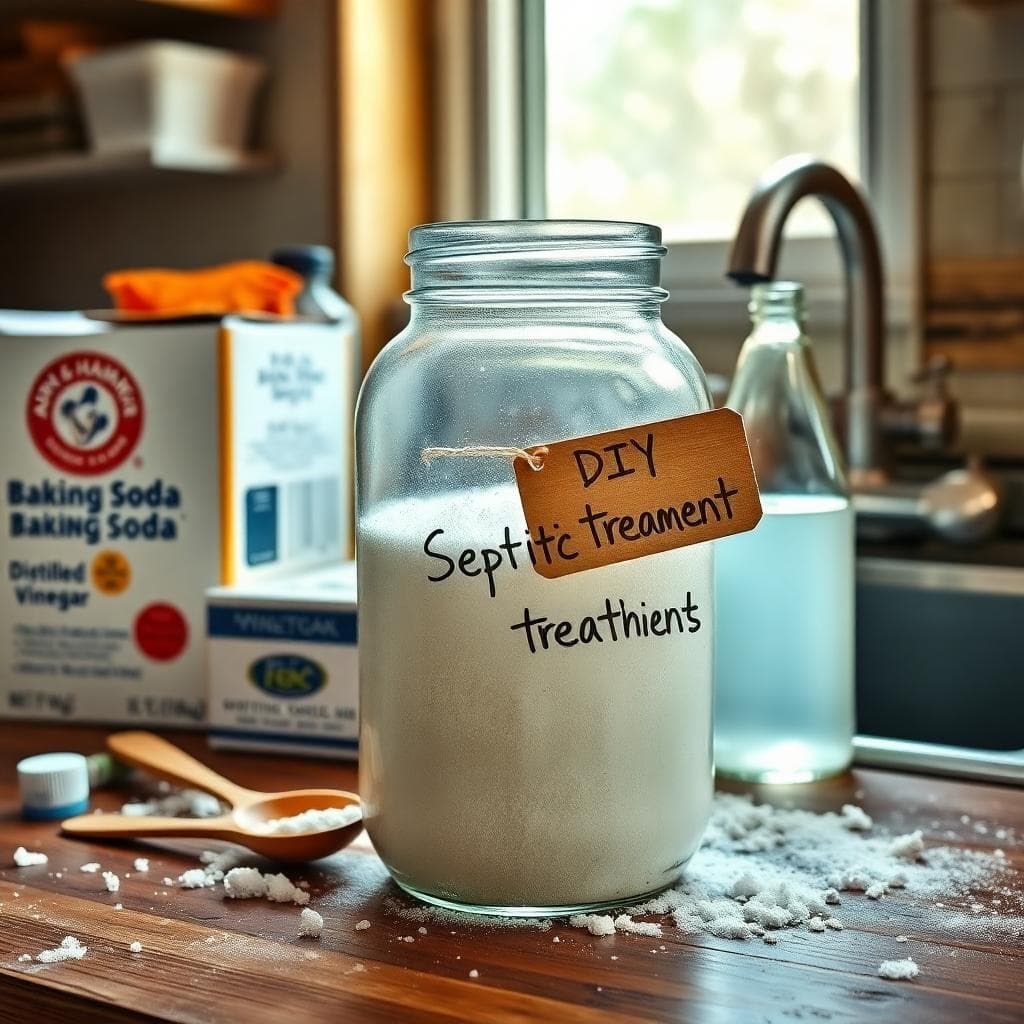
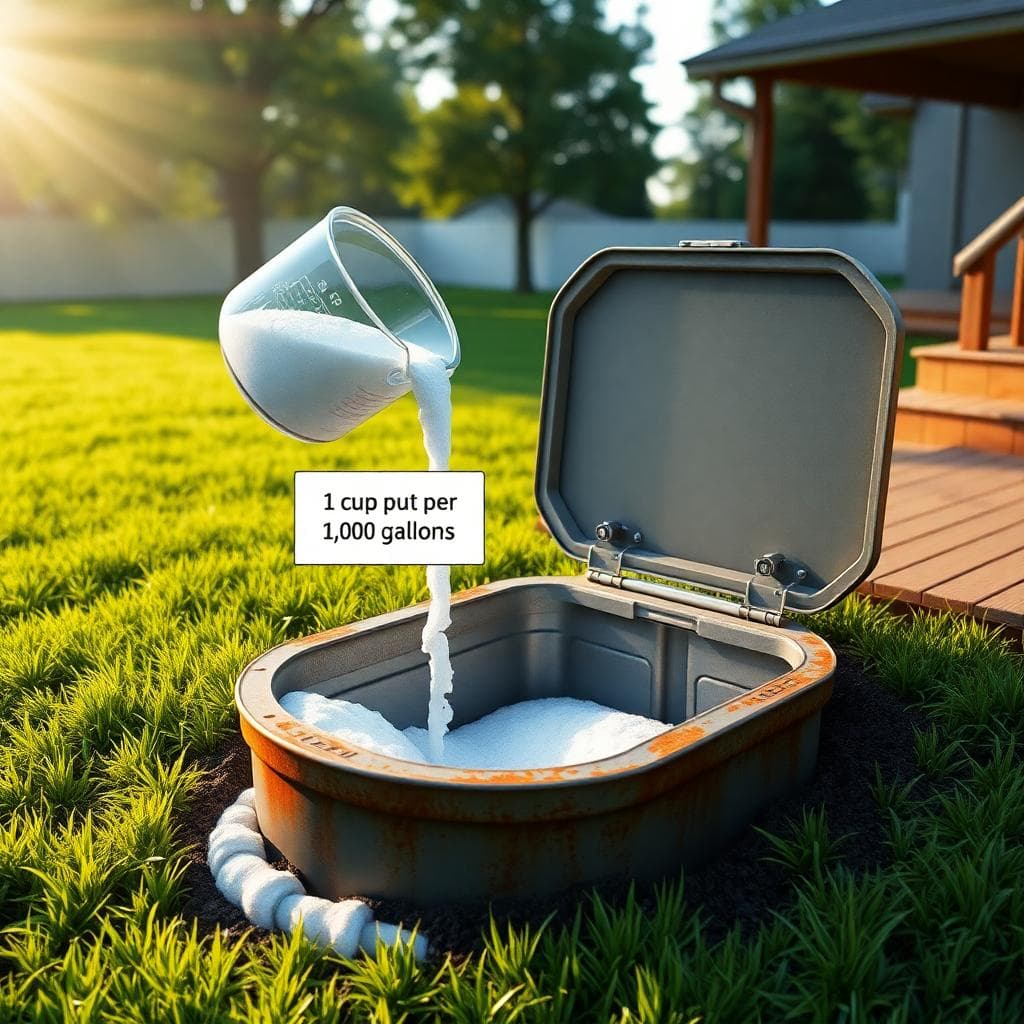
Here is the clear, safe dosing guide. For most homes with 2 to 4 people, use 1/2 cup once a week. Flush it with warm water down a drain or a toilet. For larger homes with 5 or more people, you can use up to 1 cup per week.
Do not exceed 2 cups per week total for the whole house. Never dump a whole box at once. Pause use if you recently used strong cleaners or bleach. Those already stress the bacteria, and you do not want to stack stress on stress.
If you searched how much baking soda to put in septic tank, this is the simple answer: 1/2 cup weekly for most families, up to 1 cup for larger homes, and never more than 2 cups per week total.
Simple dosing guide by household size
- 1 to 2 people: 1/4 to 1/2 cup per week
- 3 to 4 people: 1/2 cup per week
- 5+ people or heavy kitchen use: up to 1 cup per week
Keep total use under 2 cups per week for the whole home.
How to add baking soda the right way
- Measure the weekly amount.
- Dissolve it in a large pitcher of warm water so it spreads evenly.
- Pour into a different drain each week, or use a toilet, then flush.
- Do it at night to limit heavy water use right after.
- Skip the week if you used bleach or harsh drain chemicals.
How often should you repeat, and when to pause
Weekly use of baking soda septic tank treatment, in small amounts, gives good results. Stop if you see soap foam in the drains, if strong chemicals were used, or if the drains throughout the house are slow. This will lead you to look for the true cause instead, instead of covering up the results.
Therefore you will give more thought to the remedy, instead of wasting time on the cause. Alays keep in mind the true cause of all trouble in the septic system is always a fault in the septic tank or the drain or drainfield.
If there is any sign of backing up or any soft places about outside, now is the change. The next step is call a septic tank expert. Use baking soda later, after the system gets well again.
How to use baking soda safely with your septic system
Baking soda can be a part of a gentle cleaning routine. It is safe to use in small amounts on sinks and toilets and dishes and garbage disposal. The greatest value is as a deodorizer and a mild cleaner. Not as a treatment.
There are certain rules. Use do use small amounts. Do use over periods of time. Do conserve on the water, so that drainfield can have a rest. Do not mix baking soda with chemical drain openers. Do not pour tons of it into the same drain. Do not treat it as a cure for real septic troubles.
Tie it in with long time health. Do not use foul cleaners too much. Pump regularly. Treat the drainfield like lungs of the system; gentle in, and steady out.
Step-by-step safe use at home
- Deodorize drains with 1 to 2 tablespoons sprinkled in, let sit 10 minutes, then flush with warm water.
- Clean toilets by shaking a light layer into the bowl, scrub with a brush, then flush.
- Keep the weekly tank treatment separate from cleaning days so you do not pile on the total amount in one day.
Do’s and don’ts for baking soda septic tank treatment
- Do: measure small amounts, pour slowly, use at night, keep simple records.
- Do: keep harsh bleaches and antibacterial cleaners to a minimum.
- Do not: dump large amounts, mix with chemical drain openers, or try to neutralize bleach with huge doses of baking soda.
- Do not: skip regular pumping and inspections.
Pair baking soda with good septic habits
- Pump every 3 to 5 years, based on household size and use.
- Keep fats, oils, and grease out of drains.
- Avoid flushing wipes, hygiene products, or coffee grounds.
- Spread laundry over the week to protect the drainfield.
- Fix running toilets and leaks to control water flow.
These five habits do more for your system than any additive, and they cost little.
What to use instead when you have real septic problems
Think of sodium bicarbonate (baking soda) as a deodorizer. It is not a remedy for a failure of the system. If there are slow drains in the whole house, if unpleasant odors prevail outside the house, if there are gurgling noises, or back ups, maintenance of the system is needed.
The best remedies are simple. Schedule pumping. Clean effluent filter. Check baffles. Jetline when needed. Prevent excessive moisture in drainfield.
Additives of enzymes or bacteria are generally optional. Some use them, some do not. They do not cure a full tank, or a failing drainfield. The cure is maintenance, repair and intelligent use of water.
Problems baking soda cannot fix
- Full tank: Symptoms include slow drains in many rooms and gurgling in toilets. Correct fix is pumping and a check of sludge and scum levels.
- Clogged effluent filter: Symptoms include sudden backup after heavy use, like laundry day. Correct fix is cleaning or replacing the filter.
- Collapsed or root-bound lines: Symptoms include one area of the house draining poorly. Correct fix is line inspection, hydro-jetting, or repair.
- Saturated drainfield: Symptoms include yard puddles over the field and strong outdoor odors. Correct fix is resting the field, fixing water overload, or repair.
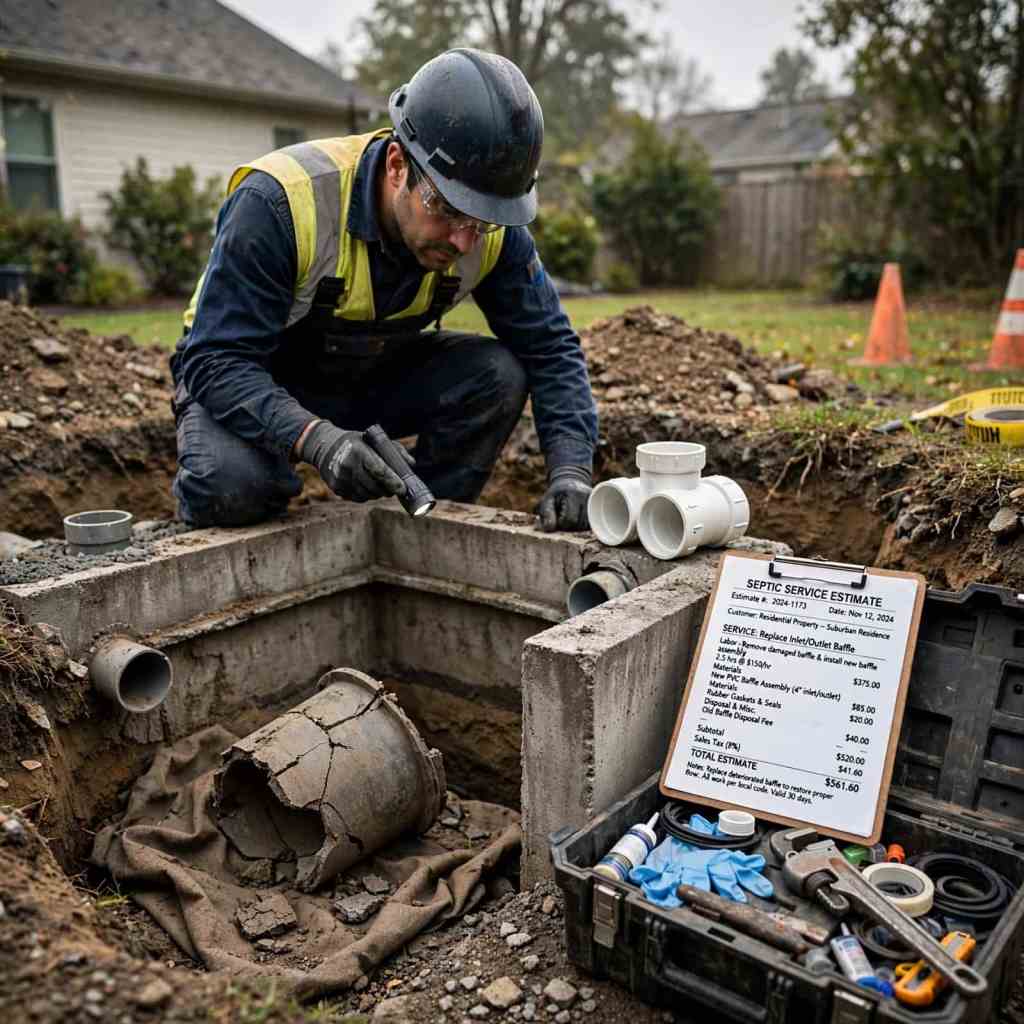
- Damaged baffles: Symptoms include solids leaving the tank and reaching the field. Correct fix is repair or replacement of baffles.
Better fixes for odors, clogs, and overload
- Pump and inspect the tank.
- Clean the effluent filter.
- Hydro-jet or snake problem lines.
- Divert roof and sump water away from the drainfield.
- Rest the drainfield by spacing out showers, laundry, and dishwasher cycles.
These steps restore flow and protect the bacteria you rely on.
When to call a septic pro and what to ask
Call a licensed septic contractor if you see backups, yard puddles, strong sewer smells, or repeated slow drains. Ask three clear questions:
- What did you find in the tank, including sludge and scum levels?
- Is the effluent filter clean, and are the baffles intact?
- Do the lines or the drainfield show signs of saturation?
Ask for photos or a short written report. It helps you track issues and plan the next steps.
Quick answers to common questions about baking soda septic tank treatment
Can you use baking soda and vinegar with a septic tank?
For small uses, cleaning a sink or toilet is perfectly fine. The fizz is in the pipe and no tank repair, etc. Do not pour in large doses of vinegar, nor flush any large reaction, into the system. Keep it small doses and followed with warm rinse water.
Will baking soda kill septic bacteria?
Small doses will not kill bacteria, etc. Very large doses will change the pH to too high a level, slow them down. This is the reason that you measure and use weekly amounts. Small and steady will protect your system.
Is baking soda safe with a garbage disposal and septic?
Yes, one or two tablespoons will deodorize and is harmless. Don’t grind fats, fibrous vegetables or coffee grounds since these are hard on the system. After using disposal, rinse with warm water. Keep blades clean with some simple little tricks.
Should you pour baking soda directly into the tank?
No, add it through a household drain or toilet. Opening up a tank is dangerous, and should be left to a professional for pumping or inspection. Keep your use simple and safe in the house.
Conclusion
Baking soda septic tank treatment will help a little with odor and pH, but it is not a clog-buster, back-up-remedy, or a total tank-fix. When using baking soda on septic systems, dosages should not be in question: 1/2 cup for most homes per week, up to 1 cup for larger households and never more than 2 cups a week total. Couple it with good habits, pump every 3 to 5 years, and watch the extreme-chemicals low.
Your action plan is simple. Set a phone reminder to use it weekly. Watch your use. Avoid as much bleach and anti-bacterial cleaners. Call a sewer and septic professional at the first sign of trouble. Do these things and your system will be healthier, your house fresh, and your peace of mind will grow, which is exactly the goal anyway behind the use of baking soda in the first place.
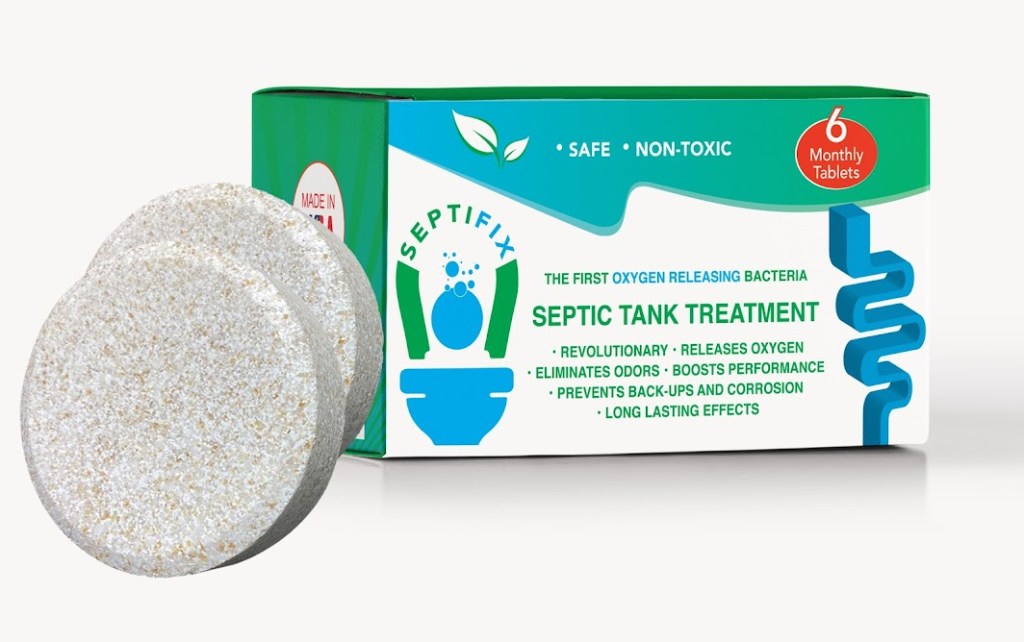
Give your septic system extra support with SeptiFix, an easy-to-use monthly tablet designed to help maintain a cleaner, healthier tank between professional inspections.
Affiliate Disclaimer
Some links in this article may be affiliate links. If you click a link and make a purchase, we may earn a small commission at no additional cost to you.
We only recommend products and services that may be useful for septic system maintenance and care. Affiliate relationships do not affect the information or recommendations in this article.
Additional Information for U.S. Homeowners
Septic system rules in the United States vary by state, county, and local health department. Before installing, repairing, or replacing a septic system, check with your local permitting authority. They can explain local requirements and help you find licensed septic professionals.
The U.S. Environmental Protection Agency (EPA) does not recommend routine septic tank additives. Baking soda may be safe in small household amounts, but it is not a replacement for professional inspections, pumping, or repairs.
For general maintenance, the EPA recommends:
- Inspect the system at least one time in three years.
- Most residential septic tanks should be pumped each three to five years.
- Be mindful of your use of water to keep the system from being overloaded.
- Avoid putting grease, wipes, medicine, and strong chemicals down the drains.
- Do not put vehicles, structures or heavy machinery close to the drain field.
- Keep a record of all inspections, pumpings, repairs and permits.
The three-to-five-year pumping guideline is only a general recommendation. Household size, tank size, water use, and the amount of solids in the tank can change the correct schedule.
For more information, visit the EPA septic system guide or contact your local county or state health department.
Related Posts