
Odor Free Septic Tank: A Practical Prevention Guide
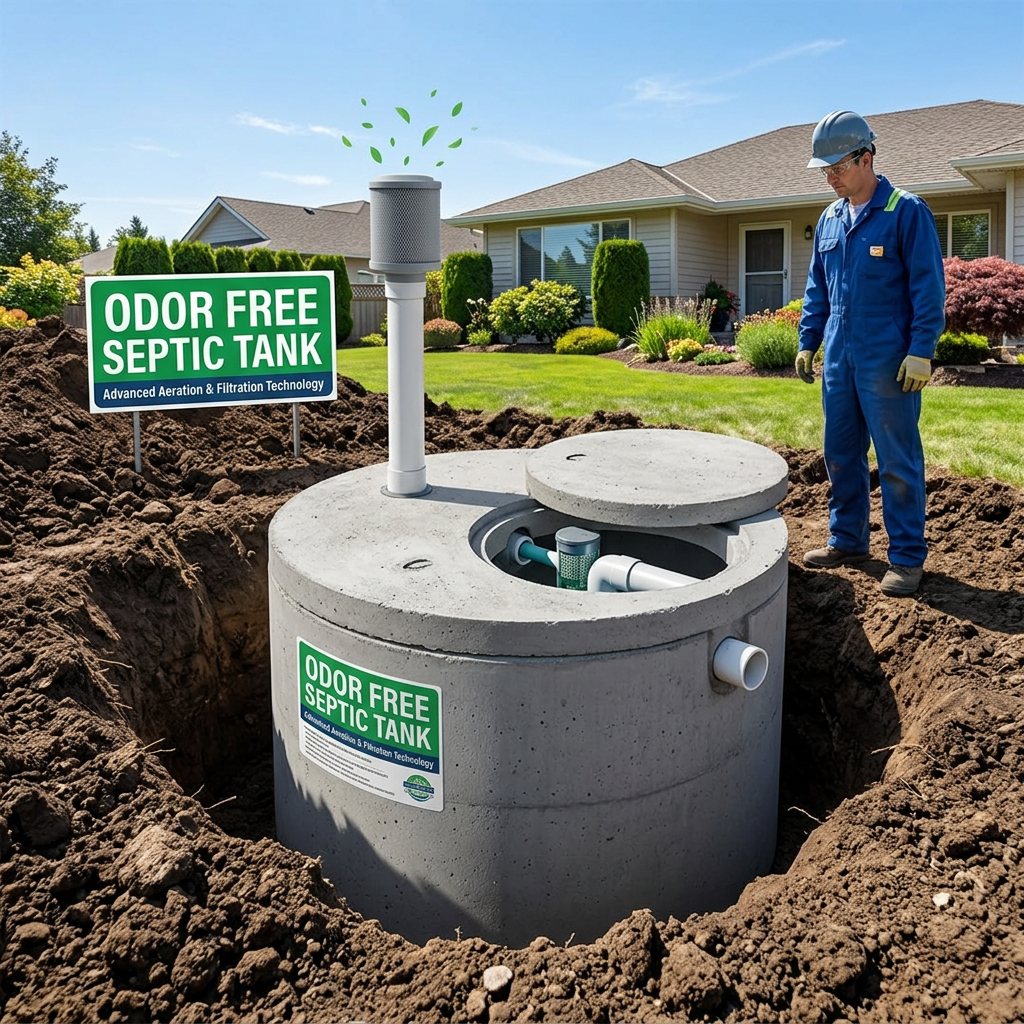
An odor free septic tank begins with proper system usage, proper water management, and regular (scheduled) professional maintenance. All septic tanks produce some type of gases while breaking down waste. Our goal is to prevent those odors from entering homes, yards, or living spaces. An odor should always be viewed as a sign for further investigation instead of trying to cover it up.
Odors in your septic system could be caused by many things, including but not limited to: a dry drain trap, a problem with your plumbing vents, a full tank, a clogged filter, too much water being added to your tank at one time, and/or excessive stress on your drain field. Where you find the odor is important. Indoor odors are usually the responsibility of a plumber. Outdoor odors or a wet yard/surrounding area with sewage backups/odors will require assistance from a licensed, experienced septic professional.
Key Takeaways
- Odor in the septic system does not necessarily mean there is an operational issue, but it does need to be addressed.
- Only use the septic system for disposing of human waste and toilet paper. Do NOT dispose of grease, wipes, food waste, chemicals, etc., down your drain.
- Help reduce water flow by spreading out laundry and fixing water leaks; prevent rainwater from running off onto the drainfield.
- Dry floor drains and sink traps may allow sewer gases into the home.
- Regular inspections and pumpings by a licensed professional will continue to be necessary (no additive can take their place).
- Do NOT open, get inside, or lean over the top of a septic tank.
- If you have multiple slow-draining fixtures, sewage backing up into your basement/bathroom/kitchen, or if you see or smell standing wastewater, call a professional immediately.
Start by Narrowing Down the Source
The smell can give you useful clues, but it cannot diagnose the problem by itself. Use this table to decide on the safest next step.
| Where or when you notice the odor | Possible source | Safe first step |
|---|---|---|
| One bathroom, laundry room, or basement | Dry drain trap or plumbing issue | Run water into seldom-used drains and watch for a return of the smell |
| Near several fixtures inside the home | Plumbing vent, drain, or septic issue | Contact a plumber or septic professional if the odor persists |
| Near the tank or drainfield | Tank, cover, vent, pipe, or drainfield problem | Keep people and pets away, then arrange a septic inspection |
| After heavy rain | Saturated soil, runoff, or a vent-related issue | Reduce water use and check that runoff stays away from the system |
| With slow drains, gurgling, or backups | Restricted wastewater flow or system malfunction | Stop excess water use and call a septic professional promptly |
Affiliate disclosure: This article may contain affiliate links. If you buy through one, this site may earn a commission at no extra cost to you. An additive is not a substitute for professional septic inspection, pumping, or repair.
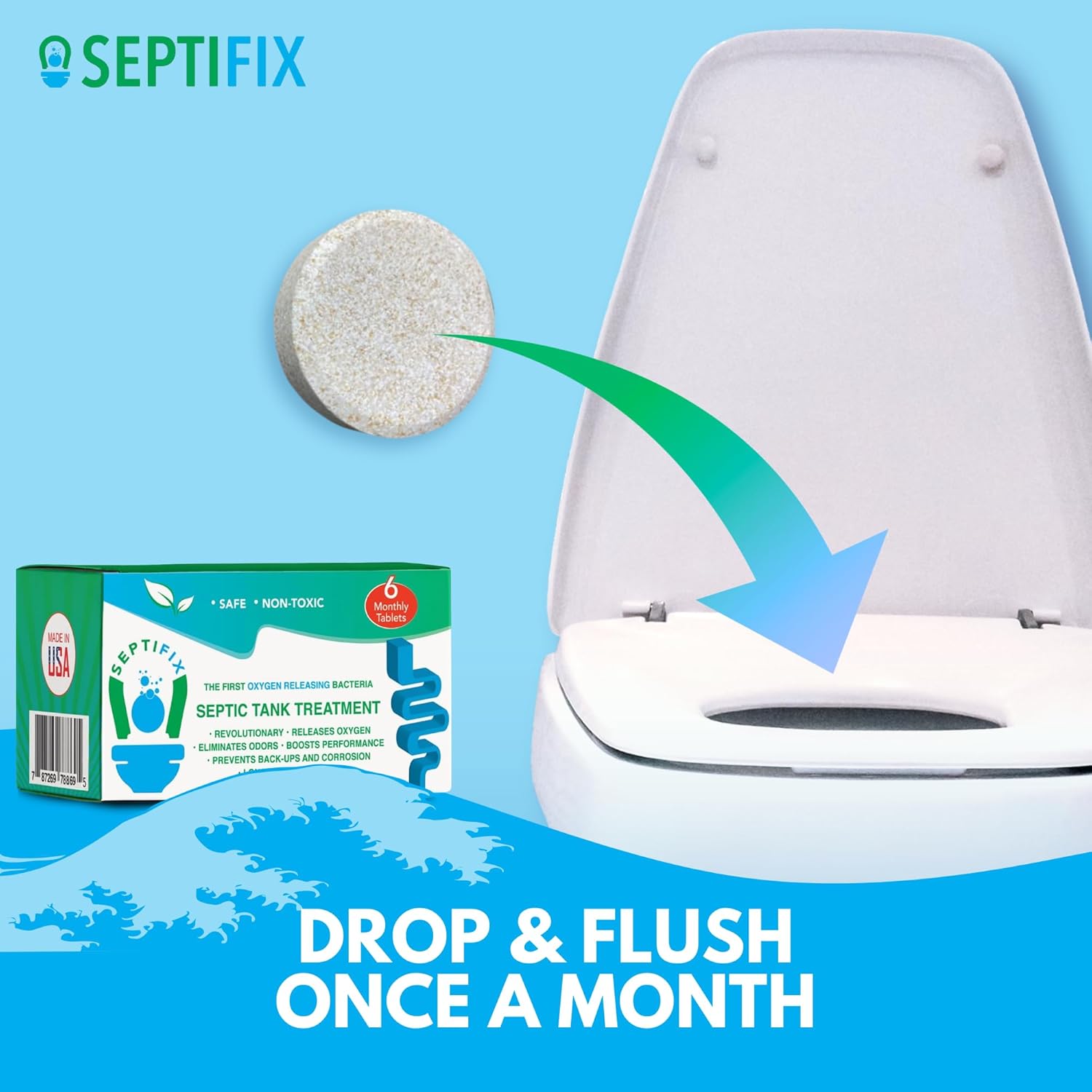
If you are comparing maintenance products for a normally functioning system, you can view SeptiFix product information here. Do not use any product to delay help for backups, sewage on the ground, a failing drainfield, or a persistent odor.
How to Keep an Odor Free Septic Tank
The best approach is to reduce the conditions that allow gases or wastewater to escape where they should not. That means using the system carefully and responding early when something changes.
1. Flush only what belongs in the toilet
Your toilet is not a trash can. Flush human waste and toilet paper only.
Keep these items out of the system:
- Baby wipes and cleaning wipes, even if labeled flushable
- Paper towels and facial tissue
- Dental floss and cotton swabs
- Diapers and cat litter
- Feminine hygiene products
- Medication, cigarette butts, and condoms
These materials can block pipes, increase solids in the tank, or interfere with wastewater flow. The EPA recommends keeping non-flushable waste out of the toilet as part of basic septic system care and maintenance.
2. Keep grease and food scraps out of kitchen drains
Grease might appear harmless once it reaches its hottest point; however, as soon as it begins to cool down and solidify, it will harden and congeal within your house’s plumbing lines, ultimately building up on the scum layer at the bottom of your septic tank.
Do not scrape food particles off dirty dishes prior to washing them. Use an empty, disposable container to store all cooled cooking grease. Place a sink strainer over the drain when rinsing off food to prevent particles from entering your sewer system. Reduce the number of times per week you operate your garbage disposal (if you have one).
You should limit your use of a garbage disposal because coffee grounds, oil and fats, and food scrapings all add unnecessary solids to a septic system. None of these materials belong inside a septic system.
3. Manage water use throughout the week
Manage how many gallons of water flow through your home on a weekly basis. A septic tank requires sufficient time for solids and liquids to separate, which provides adequate opportunity for the drainfield to receive and treat the effluent in unsaturated soils. Excessive water flow through a septic system on any given day creates additional stress.
Do not do laundry every single day. Fix all leaking or continuously operating toilets and faucets. Allow the dishwasher and laundry machines to run whenever possible; however, try not to perform multiple high-water usage operations back-to-back.
For a deeper look at service timing, see how often to pump a septic tank.
4. Use household cleaners as directed
Normal household use of cleaning products is usually different from pouring concentrated chemicals down a drain. Follow each product label. Never use the septic system to dispose of paint, gasoline, pesticides, solvents, medication, or large amounts of harsh chemicals.
Do not try to solve an odor by dumping in bleach, caustic drain cleaner, or a chemical treatment. Those products do not identify the source of the smell. They can also create new problems.
Use a plunger or a drain snake for a simple local clog when appropriate. If several fixtures drain slowly, stop treating it as a minor clog. The issue may be farther down the system.
5. Keep water in seldom-used drain traps
A drain trap holds water inside a curved section of pipe. This water seal helps block sewer gas from entering the room.
A guest bathroom, basement floor drain, utility sink, or unused shower may sit dry for weeks. When the trap dries out, odors can enter the home even if the septic system is otherwise working as expected.
Run water into seldom-used drains regularly. If a floor drain dries out often, ask a plumber for advice. The Wisconsin Department of Health Services also recommends flushing floor and sink drains with water to help prevent dry traps.
If the smell returns soon after refilling a trap, or if you hear frequent gurgling, a plumber should check the drain and vent system.

6. Protect the drainfield from water, roots, and traffic
The drainfield treats wastewater in the soil after it leaves the tank. It needs open, unsaturated soil to work properly.
Keep these away from the drainfield:
- Vehicles, trailers, and heavy equipment
- Sheds, patios, pools, and other structures
- Roof runoff and downspout discharge
- Sump-pump water and irrigation
- Large trees and aggressive roots
- Deep digging and major grading changes
Do not assume a wet drainfield is normal after a storm. Heavy rain can contribute to saturated soil, but repeated odors or standing water still deserve attention. For weather-specific guidance, read what septic tank smells after rain can mean.
For more details on landscaping and drainage, see this guide on protecting your septic drainfield.
7. Follow a professional maintenance plan
Bacteria in a septic tank break down some organic waste. They do not remove all solids. Sludge collects at the bottom, and scum collects at the top. Without professional pumping, those layers can eventually reduce capacity and allow solids to move toward the outlet.
The EPA states that most household systems should be inspected every one to three years and pumped about every three to five years. The right interval depends on the tank size, household size, water use, garbage disposal use, system type, and solids level.
Keep records of:
- Inspections
- Pumping dates
- Repairs
- Filter service
- Alarm or pump issues
- The locations of the tank and drainfield
If your system has an effluent filter, follow the maintenance schedule provided by the installer or septic professional. Not every system has one, and service needs vary.
Do Septic Additives Prevent Odors?
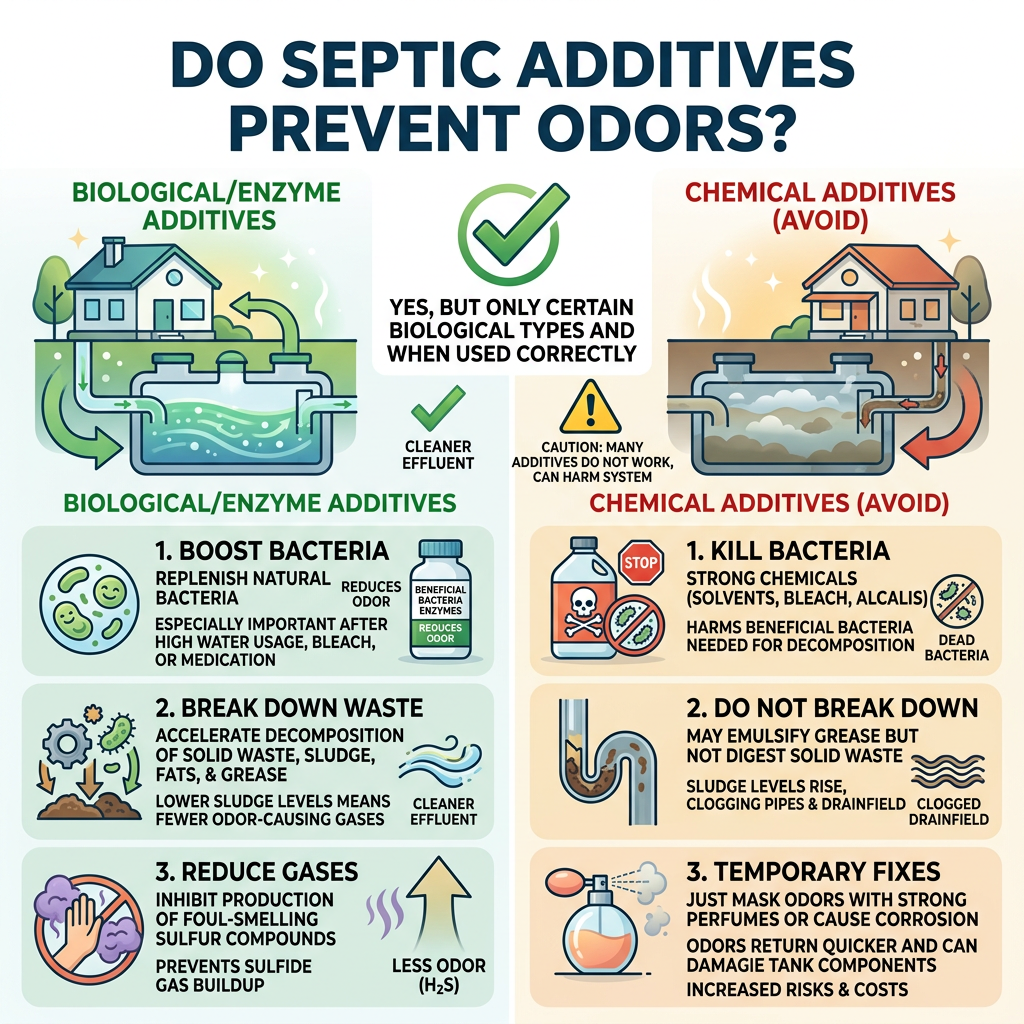
Not reliably. The EPA does not recommend routine septic tank additives for systems treating normal household wastewater. A working system already contains the microorganisms it needs.
Some products claim to break down sludge, control odors, or reduce pumping needs. Those claims should not replace inspection, pumping, repair, or careful water use. The EPA’s Septic Tank Additives Fact Sheet explains why additives are not needed for a properly functioning household system.
An additive cannot fix:
- A dry indoor drain trap
- A blocked plumbing vent
- A cracked or blocked pipe
- A damaged baffle
- A clogged outlet filter
- A failed pump
- A saturated or failing drainfield
- A tank that needs pumping
If an odor is new, strong, or recurring, find the cause before spending money on a product.
When a Smell Needs Professional Help
Call a septic professional promptly if you notice any of these warning signs:
- Water is backing up through your toilet, sink, tub, shower, or a floor drain.
- Multiple drains are clogged and draining very slowly at the same time.
- Toilets or plumbing gurgle.
- There is standing water or wet soil around the top of your septic tank or the bottom of your drainfield.
- Sewage from your septic system is coming up out of the ground.
- You smell something terrible near the tank or drainfield.
- During normal dry weather, you see bright green, spongy grass growing above your drainfield.
- A septic alarm that stays on or keeps returning.
These signs can have more than one cause. A full tank is only one possibility. The problem could also involve a line blockage, pump, filter, baffle, drainfield, or plumbing vent.
The EPA lists odors, backups, slow drains, damp spots, and unusually lush grass as possible septic system malfunction signs. If wastewater is backing up, stop using water inside the home until a qualified professional gives you next steps.
For emergency guidance, see what to do during a septic tank backup.
Septic Tank Safety Comes First
Do not open a septic tank to inspect its contents. Never enter a septic tank. Do not lean over an open access point or put your head inside.
Septic tanks can contain dangerous gases and have low oxygen levels. They can also have damaged or unsecured lids. Keep children and pets away from tank covers, wet drainfield areas, and any visible wastewater.
If you suspect a high concentration of sewer gas indoors, leave the building. Avoid flames, smoking, electrical switches, or anything that may create a spark. Call emergency services from outside if the situation seems urgent.
Sewer gas can include harmful or flammable gases. If you have dizziness, nausea, headache, drowsiness, or breathing trouble after suspected exposure, seek urgent medical care. Smell alone cannot tell you whether the air is safe.
A Simple Prevention Checklist
Use this list as a practical routine:
- Flush only human waste and toilet paper; keep all other items (grease, wipes, food, etc.) from entering the drain lines.
- Fix leaky pipes immediately.
- Try to spread your laundry throughout the week instead of washing it all at once.
- If you have a floor drain that is no longer being used, fill it with water.
- Do not park cars or build over the septic drain field.
- It is also important to redirect all roof runoff, sump pump discharges, etc., away from the septic system.
- Always keep an accurate record of your maintenance activities.
- Schedule routine checks by a qualified professional on a regular basis to inspect and service the tank(s) and disposal area.
- Take prompt action if you notice warning signs.
Conclusion
The idea of an odor free septic tank may be possible if you focus on prevention instead of being satisfied with a quick fix. If you consistently use water, maintain the health of the drain field (by protecting it from damage), keep foreign objects and harmful substances out of the drains, and stay consistent in your septic system maintenance, then this will give you the best opportunity for a properly functioning septic tank.
However, if you notice recurring odors in your septic tank, wet spots in the yard above your drain field, slow-draining toilets, sinks, showers, etc., or backups into your home, then finding what caused these problems as soon as possible will provide the greatest protection for your home, property, and septic system.
Frequently Asked Questions
Can a septic tank smell normal?
A normal septic tank smell is usually minimal. However, you might notice a minor smell outside the home as air exits through a vent. An unpleasant smell inside the home, in the vicinity of the septic tank (such as near the drain field), or near where wastewater flows from the home into the septic system indicates there is likely something wrong with either your septic system or a plumbing issue. There are many possible causes of bad smells that originate from an issue with a septic system.
What would cause my house to smell like raw sewage on rainy days?
On rainy days the ground becomes saturated and possibly changes airflow patterns near both plumbing vents and your drain field. Rainy days may expose issues related to how well water can flow down the drain and how often traps have dried out. This is why you might want to schedule a service call with a professional to check your system out if odors appear to be returning each time after a storm.
Is a dry floor drain going to make my house smell like raw sewage?
Yes. Raw sewage has an extremely strong and pungent odor. Sewer gases will enter a room through a floor drain that doesn’t have standing water in it. To prevent this from happening, run some water down sink drains, shower drains, tub drains, etc., which don’t seem to get much use. If you notice that the odor returns almost instantly, then you probably need to contact a licensed plumber.
Does pumping my septic tank solve the problems associated with sewage smells?
Pumping your septic tank will certainly alleviate problems caused by excessive sludge in your septic tank; however, it won’t necessarily correct all of the potential reasons for bad smells. Issues such as clogged pipes, broken components, or wet or dry conditions of your drain field are just a few examples of things that could potentially still produce odors even after pumping.
Should I use bleach to eliminate odors in my septic tank?
Bleach and large quantities of any chemical will not identify what is causing an unpleasant odor. Bleach and similar chemicals can actually cause more harm than good. Try to find the root of the problem instead of treating it chemically.
Do septic tank additives replace maintenance?
No. Septic tank additives are intended to support your septic system, but they cannot take the place of regular inspections, maintenance pumping, repairs, or appropriate management practices.
What do I do if raw sewage backs up into my house?
Immediately stop running water. Keep people and pets away from raw sewage. Schedule a service call with a qualified septic technician and contact your local Health Department or Regulatory Agency regarding guidelines for cleaning up.
Affiliate disclosure
Affiliate disclosure: This article contains an affiliate link. If you purchase a product through the link, we may earn a commission at no extra cost to you. An affiliate product is not a substitute for professional septic inspection, pumping, maintenance, or repair. Follow the product instructions and contact a qualified septic professional if you notice odors, backups, standing water, or other warning signs.
Give your septic system extra support with SeptiFix, an easy-to-use monthly tablet designed to help maintain a cleaner, healthier tank between professional inspections.

Additional Septic System Resources
For more information about septic odors, maintenance, and safety, see:
- EPA Frequent Questions on Septic Systems
- EPA Long Homeowner’s Guide
- EPA Septic Tank Additives Fact Sheet
- ATSDR Hydrogen Sulfide ToxFAQs
- Common Septic Tank Issues and Safe Fixes
- Effluent Filter Maintenance
- What to Expect During a Septic Inspection
Related Posts

One thought on “Odor Free Septic Tank: A Practical Prevention Guide”