
Septic Tank Backup: Causes, Emergency Steps, and Prevention
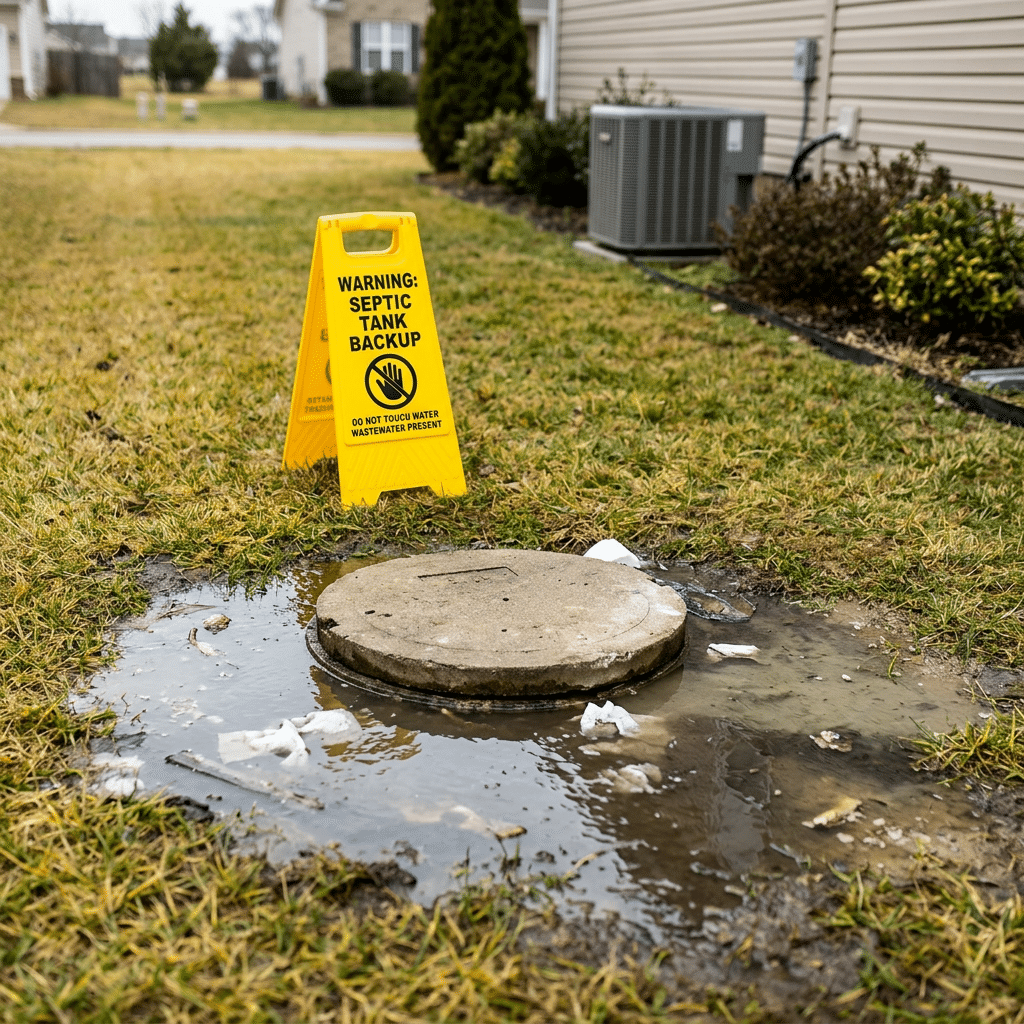
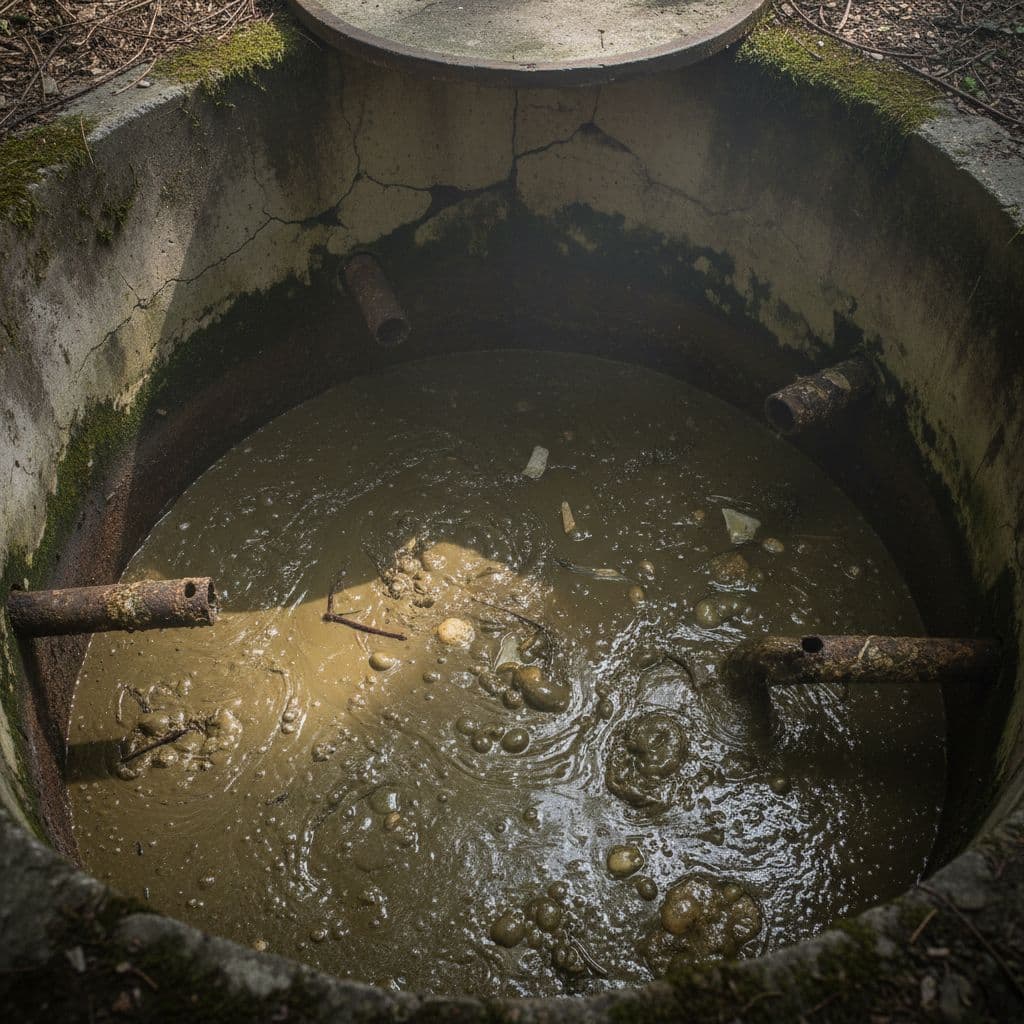
A septic tank backup is a serious health concern and an expensive home repair. Water could be coming up through your toilet, sink, shower, tub, or floor drain. In addition, waste could show up in your yard where the septic tank or drain field are located.
Stop using water immediately. Do not flush the toilet, do not wash clothes, do not take a bath/shower, and do not use your sink until you determine why the backup occurred. Keep children and pets out of all wastewater. Contact a septic service professional that has experience with backups.
According to the U.S. Environmental Protection Agency, one of the most common signs of a failing septic system is when raw sewage backs up into the house’s plumbing system. Other potential warning signs include slow draining toilets/sinks, gurgling sounds while flushing/running water, standing water on top of the drain field (or anywhere else), unusual odor in the home, etc., as well as excessively lush growth on lawns surrounding the drain field.
Key Takeaways
- Do not use water in your home as soon as wastewater is backing up into it.
- Keep people and pets away from sewage and contaminated soil when wastewater has entered your home.
- One slow drain could be a local plumbing clog problem, but if you have several slow drains that point to a septic tank system problem.
- Common causes of septic system failures include full tanks, blocked pipes, a clogged effluent filter or a faulty drainfield.
- Chemical drain cleaners and other additives should not be added to your system without consultation with a qualified septic service provider.
- No One should open or enter a septic tank. Toxic gases can build up inside a septic tank.
- These are just some of the steps you can take to prevent future backups, which include regular inspections, pumping, careful water use and protection for your drainfield.
What Is a Septic Tank Backup?
A septic tank backup occurs when wastewater cannot move through the septic system as it should. Instead of flowing from the home to the tank and then to the drainfield, the wastewater may stop inside the plumbing or move back toward the home.
A septic system has several connected parts:
- Plumbing In Your Home – Wastewater will be carried from your home via household plumbing.
- Septic Tank – Solids (sludge), liquids (effluent) and floating scum will be separated by this part of the septic system.
- Outlet Pipe – Effluent will pass through this pipe to travel to the drainfield.
- Drain Field – This area is where effluent will go thru a process called filtration in order to enter the ground.
Any number of problems can occur within the various components of the system to create a backup. For example; if the tank becomes overfilled due to slow absorption by the drain field; blockage in one or more pipes; or poor absorption of the soil in the drain field.
Not all backups require replacement of the entire septic system. Most often, simply having the tank pumped; or cleaning a clogged filter would solve the problem.
What to Do During a Septic Tank Backup
1. Stop using water
Stop all water use in the home. This includes:
- Flushing toilets
- Running faucets
- Taking showers
- Using the dishwasher
- Washing clothes
- Running a garbage disposal
- Using water-softening equipment
- Running sump pumps or other equipment that discharges into the septic system
Every gallon of water that enters the system can make the backup worse. Ask everyone in the home to avoid using plumbing until a professional provides instructions.

2. Keep away from sewage
Do not touch sewage with bare hands. Wastewater can contain bacteria, viruses, parasites, and other contaminants. Keep children and pets away from flooded areas, wet soil, puddles, and contaminated flooring.
The CDC recommends rubber boots, rubber gloves, and eye protection when sewage or contaminated floodwater may be present. If sewage has entered the home, contact your insurance company and local health department for cleanup guidance.
People with open wounds, weakened immune systems, young children, older adults, and pregnant people should avoid contact with sewage.
3. Call a qualified septic professional
Contact a local septic service provider. Tell the company:
- Where is the backup occurring
- Are multiple drains affected by this backup
- Is sewage entering the home
- Is there water in yard or flooding of yard
- How long ago was septic tank pumped
- Has it been heavy rain lately
- Does your home have a septic pump and alarm
A professional may assess the tank level, the inlet and outlet pipes, baffles, effluent filter, distribution box, pump, and drainfield in order to determine if there are any issues with the system.
Homeowners should be advised of the recommendation from the EPA that they contact both their local septic service provider as well as their local health department or regulatory agency if an issue is suspected to exist with the system. Each locality will have different regulations depending on where you live (state and county), therefore, please consult your local ordinances.
4. Do not open the tank yourself
Never enter a septic tank. Do not lean over an open tank or allow children near it. Septic tanks can contain dangerous gases, including hydrogen sulfide. These gases may cause illness, unconsciousness, or death.
Tank lids can also be heavy and may not be secure. A septic professional has the training and equipment needed to inspect the tank safely.
Signs of a Septic Tank Backup
A septic backup can develop suddenly, but many systems show warning signs first.
Wastewater rises through drains
Wastewater coming up through a basement floor drain, shower, bathtub, or sink is a serious warning. Sewage may appear after flushing a toilet or running a washing machine.
If water rises in several fixtures, the problem may be in the main plumbing line or septic system.
Several drains become slow
One slow sink may have a local clog caused by hair, soap, food, or grease. Several slow drains are more concerning.
Slow drainage throughout the home can indicate:
- A full septic tank
- A blocked main line
- A clogged effluent filter
- A blocked outlet pipe
- A saturated drainfield
- A failing septic pump
See our guide to 9 signs your septic system is failing for more warning signs.
Toilets gurgle
Gurgling toilets can be indicative of either trapped air or poor flow of wastewater through your sewer line.
A gurgle could be caused by a number of things including flushing a toilet, running a washer, draining a tub, etc. Gurgling itself doesn’t necessarily mean that there is backup from your septic tank; however, you should consider addressing the issue if it also includes slow drains, bad smells (sewage), soggy ground or back-up into your home.
Sewage odors appear
Strong sewage odors near toilets, drains, the septic tank, or the drainfield can indicate a problem. Odors may come from a dry drain trap, a blocked vent, a damaged pipe, a loose tank lid, or a failing drainfield.
Persistent outdoor odors should not be covered with air fresheners or treated as a normal part of septic ownership. Find the cause instead.
Water or sewage appears in the yard
Standing water, muddy soil, or sewage surfacing near the tank or drainfield can indicate a failing system. Bright green grass over the drainfield during dry weather may also show that wastewater is reaching the surface.
Keep people and pets away from these areas. Untreated wastewater can expose people to harmful organisms and can pollute nearby groundwater or surface water.
The septic alarm sounds
If your system has a pump tank, an alarm may sound when the liquid level becomes too high or the pump is not working. Check whether the alarm has a silence button, but do not ignore it.
Avoid opening electrical equipment or working around standing water. Call a septic professional or electrician if the alarm continues.
Common Causes of a Septic Tank Backup
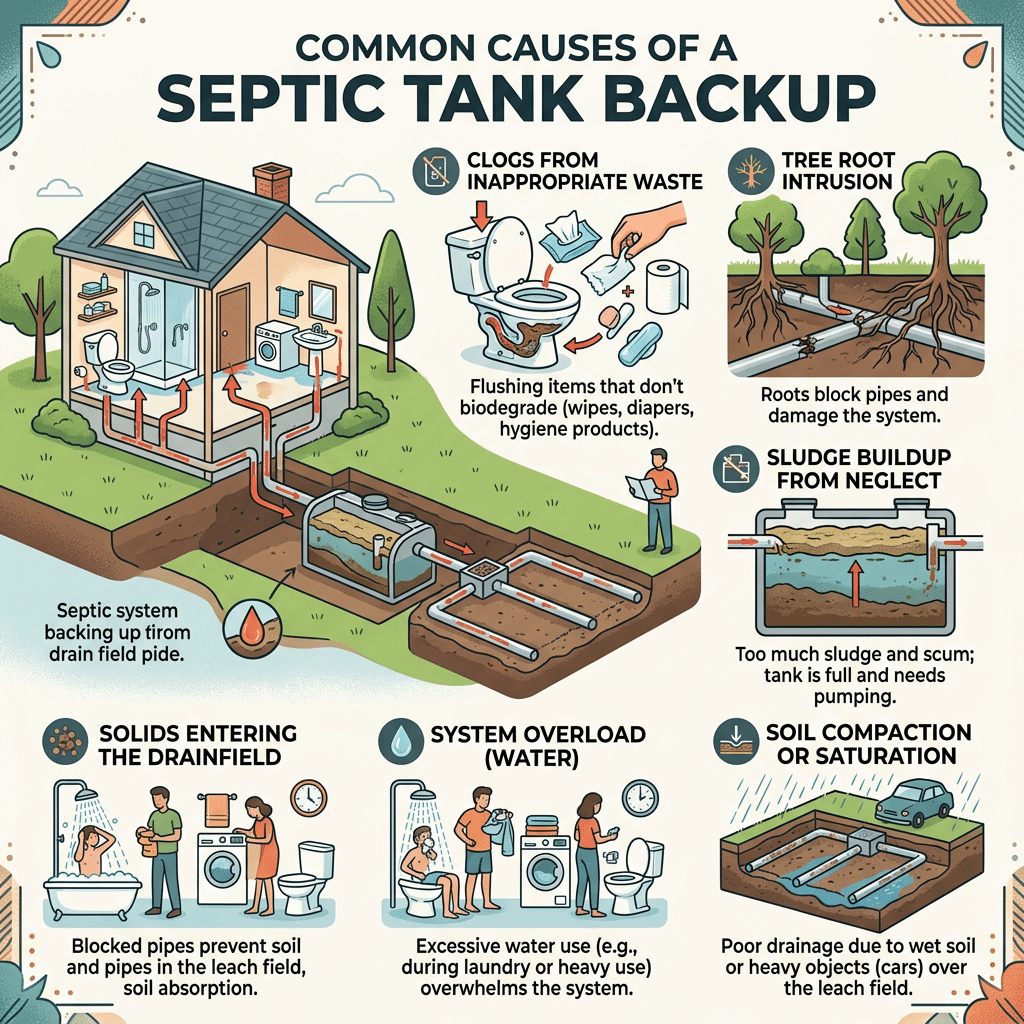
The tank is full of solids
A septic tank holds wastewater long enough for solids to settle. Heavy solids form sludge at the bottom, while grease and lighter materials form a scum layer at the top.
The tank still needs pumping because bacteria do not remove all solids. When sludge and scum build up, solids may move into the outlet pipe or drainfield. This can restrict flow and cause a backup.
Our guide explains 7 signs your septic tank is full and what to do next.
The effluent filter is clogged
Many septic tanks have an effluent filter near the outlet. The filter helps keep solids from leaving the tank. If it becomes clogged, wastewater may not flow correctly.
A professional can inspect and clean the filter. Do not remove it unless you know the system design and can do so safely.
A pipe is blocked or damaged
Roots, soil movement, grease, wipes, and other debris can block or damage pipes. A crushed or broken pipe may prevent wastewater from reaching the tank or drainfield.
Do not assume that flushing more water will clear the blockage. More water can increase pressure on the system.
The drainfield is saturated
A drainfield needs unsaturated soil to absorb and treat wastewater. Heavy rain, flooding, poor grading, irrigation, roof runoff, or a high water table can saturate the soil.
When the ground cannot accept more liquid, wastewater may back up into the home or rise to the surface.
Read how a septic drainfield works to learn how the soil treats and disperses effluent.
Too much water enters the system
Large family members, large number of visitors and/or a home with many high-flow fixtures (e.g., low-flush toilets) are factors that may cause the demand for hot water to exceed what is available in your tank on some days.
Additionally, using an excessive amount of hot water at one time; i.e. multiple loads of laundry in one day can put a strain on your water heater’s ability to meet all of your demands for that day.
Non-flushable items enter the system
Flush only human waste and toilet paper. Items that can cause problems include:
- Baby wipes
- Cleaning wipes
- Paper towels
- Diapers
- Feminine hygiene products
- Cotton swabs
- Cat litter
- Dental floss
- Grease and cooking oil
- Cigarettes
- Coffee grounds
Even products labeled flushable may not break down like toilet paper. Place these items in the trash according to local waste rules.
The drainfield has been damaged
Vehicles, sheds, patios, pools, heavy equipment, and compacted soil can damage the drainfield. Keep these items off the area.
The EPA recommends keeping vehicles away from the drainfield, directing roof and surface water away from it, and planting only shallow-rooted vegetation nearby.
Can You Fix a Septic Tank Backup Yourself?
Some small plumbing clogs can be handled by a homeowner, but a suspected septic backup needs professional attention.
You may be able to:
- Stop using water right now
- Look for a toilet overflow that is obvious and see if it has stopped
- Check the septic pump breaker to see if it has been tripped (if safe to do so)
- Note where the backup occurs
- See if you have any maintenance records available to Check
- Keep people away from contaminated areas
Avoid these actions:
- Chemical drain cleaners injected into the system
- Bleach added to the system at large amounts
- Septic additives used as substitutes for pumps
- Digging around the tank or dranfield
- Driving on wet spots
- Opening the tank without proper training
- Entering the tank
- Trying to push sewage back through the pipes with more water
Pumping may solve a tank that is full, but it will not repair a failed drainfield, broken pipe, damaged baffle, or faulty pump. A complete inspection is important.
How to Prevent a Future Septic Backup
Schedule inspections and pumping
The EPA recommends that you check your septic system every 1-3 years. Most septic systems will need to be pumped out in 3-5 years; however, there are many variables including the size of your septic tank, how large is your family, how much water does your family use, and how much solids are being produced by your family that could affect how often a septic system needs to be pumped.
A larger household might have a greater number of people using the septic system therefore it would likely require pumping more frequently. If your septic system includes a pump, electrical control box, or has mechanical components these areas should receive additional attention during inspection.
You should keep record of all septic-related activities such as inspections, pump outs, repairs, and where your septic tanks and drain field(s) are located
Use water wisely
Efficient water use reduces stress on the system. Repair leaking fixtures and consider high-efficiency toilets and washing machines.
Try to:
- Run full loads of laundry
- Space laundry across the week
- Take shorter showers
- Fix running toilets quickly
- Avoid several water-heavy tasks at once
- Keep excess rainwater away from the drainfield
Protect the drainfield
Do not park vehicles or store heavy items over the drainfield. Do not build structures on it unless local rules and a qualified professional approve the plan.
Keep roof gutters, sump pump discharge, and surface runoff away from the drainfield. Too much water can saturate the soil and reduce treatment performance.
Dispose of waste properly
Do not pour grease, oil, paint, gasoline, pesticides, solvents, or harsh chemicals down household drains. Follow local disposal rules for household hazardous waste.
Use cleaning products in moderation. Do not flush wipes, paper towels, medications, or personal care products.
Do not rely on additives
Septic additives cannot replace routine inspections and pumping. Some products may not provide meaningful benefits, and certain chemicals may harm the system or move contaminants into the drainfield.
Ask a local septic professional before using any treatment product.
When to Call for Emergency Help
Call a septic professional promptly if:
- Backflow of wastewater into a home
- Backed-up wastewater is rising to the surface of your lawn
- Multiple slow drains
- Repetitive toilet “gurgling”
- Alarm from a septic system
- Strong sewage odor(s) present
- Yard near the septic tank or drainfield is consistently wet
- Backup occurs immediately after a heavy rain and will not cease.
- Contact with sewage by a vulnerable individual
If sewage enters living areas, you may also need a water damage or biohazard cleanup company. Follow guidance from your insurance provider and local health department before beginning major cleanup.
Frequently Asked Questions
What is the first thing to do during a septic tank backup?
Immediately stop using all of the water at the house. Protect children and pets from sewage or contaminated soil. Contact a qualified septic professional to inspect your entire septic system.
Can a full septic tank cause a backup?
YES. If there is too much sludge and/or scum taking up room in the septic tank then there is less space for the wastewater to move freely. The solids can also fill up the outlet pipe or drainfield and cause a blockage.
Will pumping the septic tank fix a backup?
If the backup was caused by an overflowed tank (the tank being “clogged”) then yes it could possibly fix the problem. However, this does not mean that every problem will be fixed with pumping. There could be a clogged pipe, a damaged tank, a failed pump or a saturated drainfield which would need separate repairs.
How can I tell whether the problem is a plumbing clog or septic backup?
If one drain is running slowly it is most likely because of something in that particular drain line. If multiple sinks, toilets etc., are draining slowly and/or if you notice gurgling toilets, bad smells coming from the pipes, or if you see raw sewage on the surface of the ground then you probably have a major plumbing or septic system issue.
Are septic tank additives a good solution?
Additives should never replace routine inspections and pumping of your septic system. Before adding anything to your septic tank ask a qualified septic service provider. They will give you their opinion regarding the best course of action. Additives are usually used to supplement the normal breakdown process of organic waste material.
Is sewage from a septic backup dangerous?
You could be. Raw sewage contains many types of bacteria, viruses, parasites, etc. Stay away from it, keep kids and pets away from areas where there has been exposure to raw sewage and wear protective clothing if you must clean the affected area.
How often should a septic tank be pumped?
Typically, septic tanks are pumped out every three to five years. Depending upon how big your tank is, how many people live in your house, how much water you use daily and how fast your solids build up in your tank will determine how frequently you need to have your tank serviced. Routine inspections of your septic system can provide guidance on the best frequency for having your tank serviced.
Final Thoughts
A septic tank backup is an early warning sign that wastewater has stopped moving correctly in the system. If you act immediately to address this issue, you will be able to minimize your risk of having some property damage or being exposed to potential health hazards.
Do not use water, avoid contact with sewage; protect children and pets, then call a qualified septic professional to fix your immediate problem. After the initial problems are addressed, develop a routine maintenance schedule.
For additional guidance, visit the EPA’s resources on resolving septic system malfunctions, septic system care and maintenance, and how to care for your septic system.
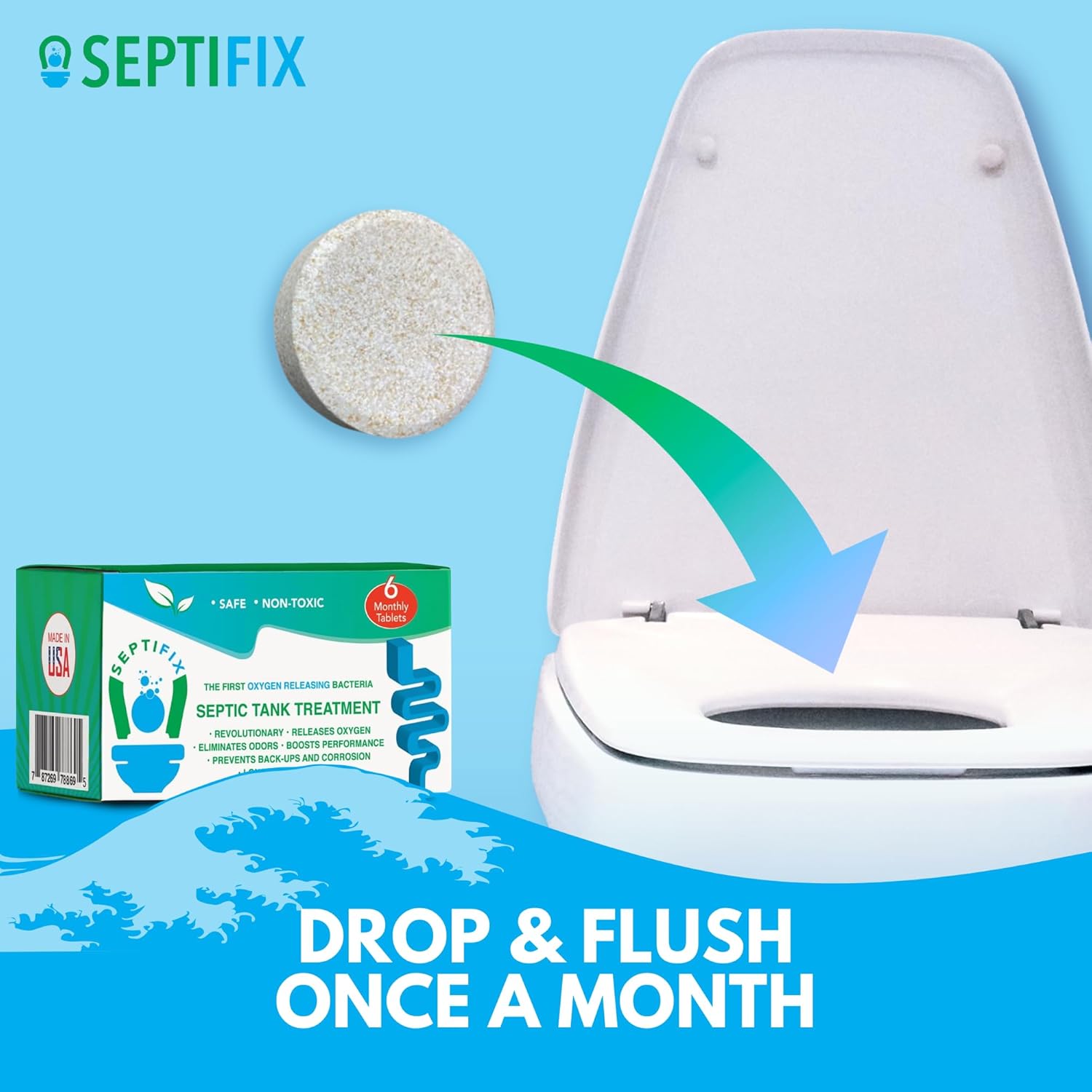
Give your septic system extra support with SeptiFix, an easy-to-use monthly tablet designed to help maintain a cleaner, healthier tank between professional inspections.

Affiliate Disclaimer
Some links in this article may be affiliate links. If you click a link and make a purchase, we may earn a small commission at no additional cost to you.
We only recommend products and services that may be useful for septic system maintenance and care. Affiliate relationships do not affect the information or recommendations in this article.
Related Posts


3 thoughts on “Septic Tank Backup: Causes, Emergency Steps, and Prevention”