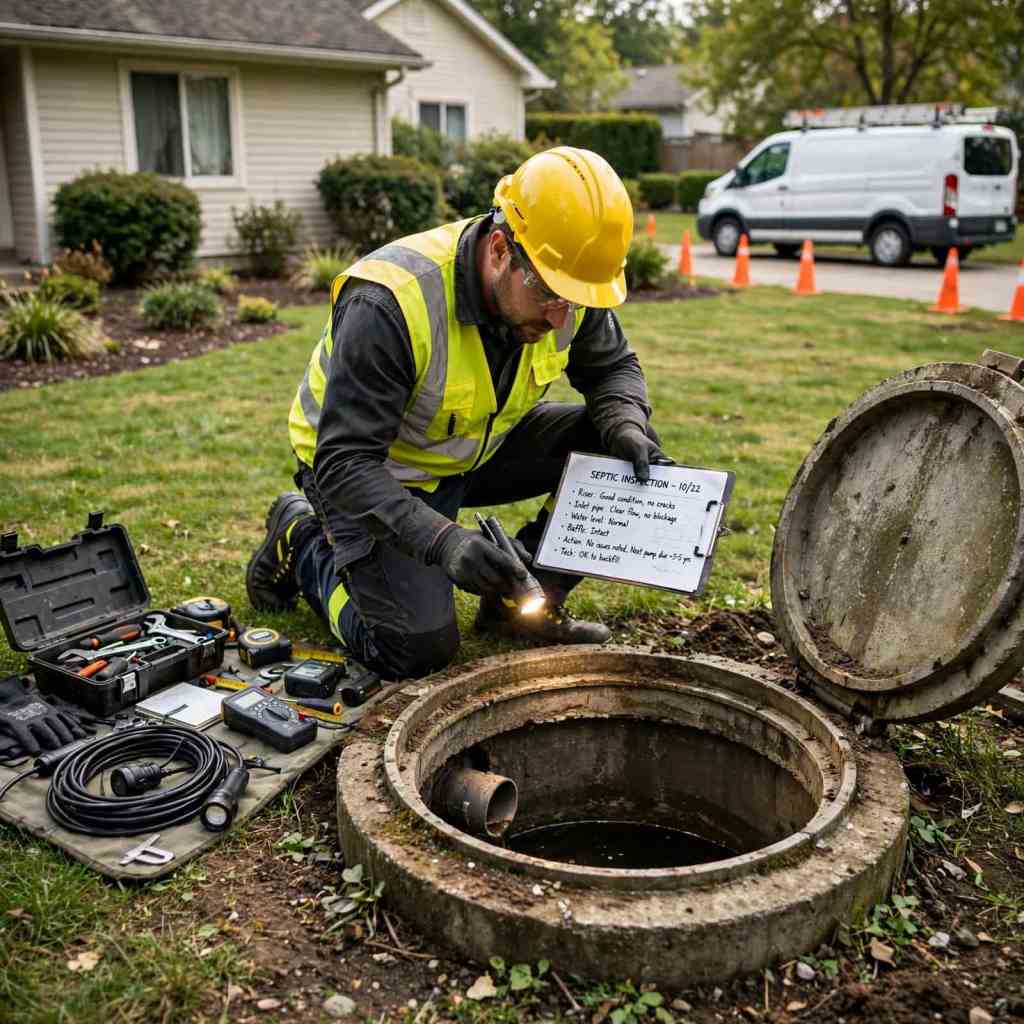
Aerobic Septic System Problems: Signs and Safe Checks
Common aerobic septic system problems include aeration unit malfunctions, faulty high water alarms, constant odor problems, pump malfunctions, and problems with disinfectant systems.
Document any warning signs on your exterior control panel (e.g., Warning or Caution messages), reduce the amount of water used in your home, and have your maintenance provider assist you if you experience problems with your septic system.
Turn off all household water use and do not enter any area where raw sewage is likely to be present. If sewage backs up into your home or surfaces outside, DO NOT attempt to clean up the mess.
Your alarm signals a problem; however, it cannot identify which component(s) caused the failure. Operating the pumps will not resolve any failures. The purpose of this guide is to explain which components of your system you can safely inspect yourself, which components need to be inspected/tested by a trained technician, and what questions you need to ask before hiring someone to make repairs.
You should never open your tanks, circumvent control mechanisms, or go near wet electrical equipment.
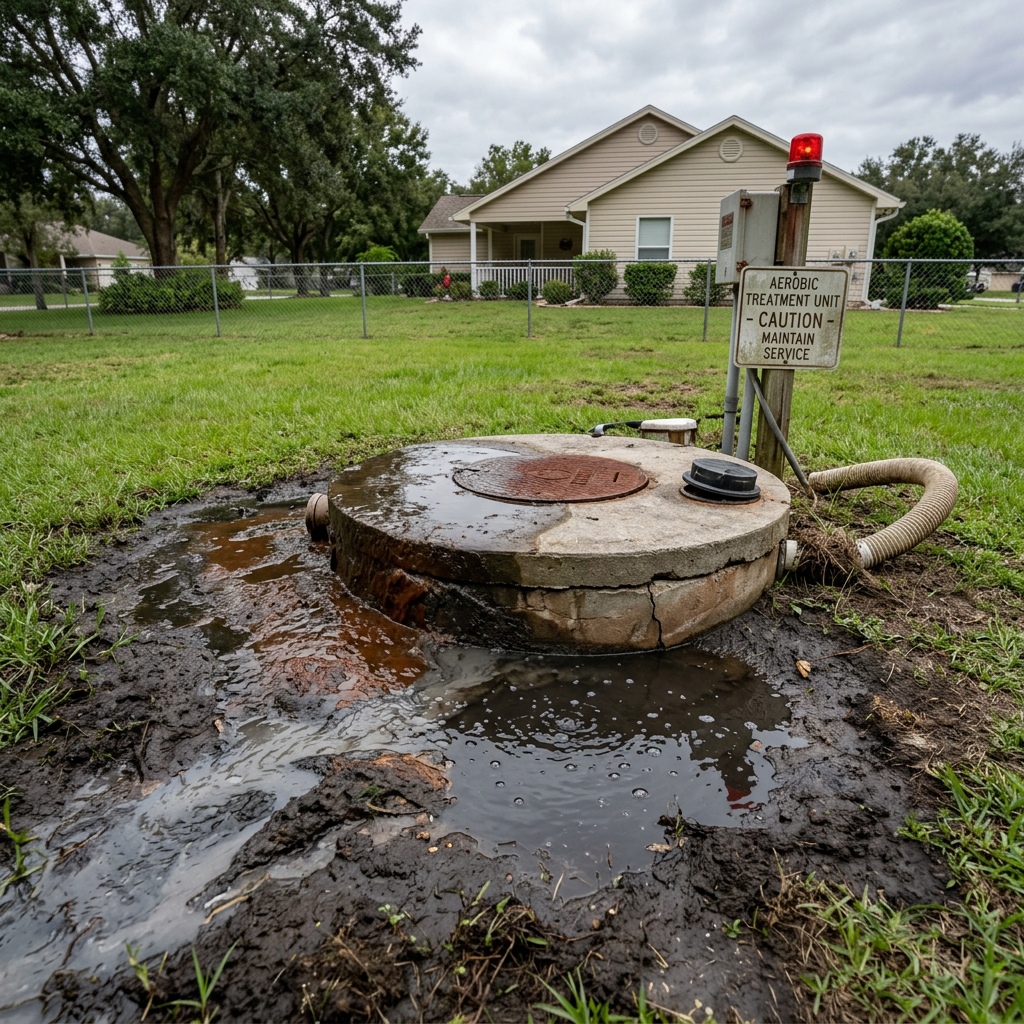
Aerobic Septic System Problems: What to Check First
Start with the symptom, not a replacement part. The explanations below are possibilities, not diagnoses.
| Warning sign | Possible explanation | Safe first response |
|---|---|---|
| Air or aeration warning | Reduced airflow, blower fault, or damaged airline | Record the warning and contact your provider |
| High-water warning | Pump or float fault, restricted flow, or excess incoming water | Reduce water use and request service |
| New, persistent odor | Poor aeration, excess solids, or another treatment or plumbing problem | Note where and when the odor occurs |
| Weak or missing spray | Normal timer cycle, blocked head, piping fault, or pump problem | Observe from outside the spray area |
| Several slow drains | Plumbing blockage or restricted wastewater flow | Avoid adding more wastewater and arrange an assessment |
| Sewage surfacing or backing up | Failure to contain or move wastewater | Stop household water use and request urgent help |
Explore Septifix for Septic System Support
Learn more about Septifix and see whether it fits your septic maintenance routine. Review the product details before making a decision.
How an Aerobic Septic System Works
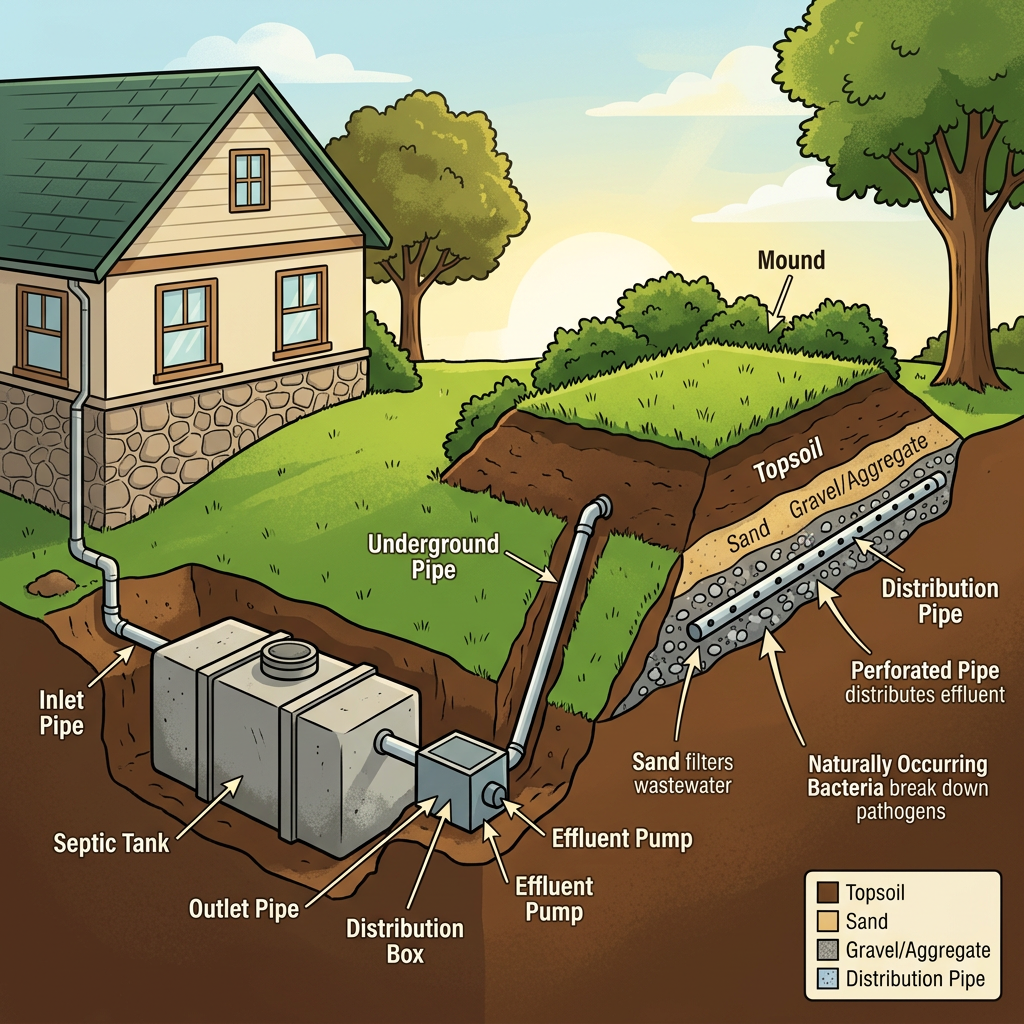
An aerobic treatment unit, often called an ATU, supplies oxygen to support microorganisms that break down wastewater.
Many systems include:
- Pretreatment: A tank separates and retains some solids.
- Aeration: An air pump supplies oxygen to the treatment chamber.
- Settling: A clarifier allows solids to separate from the liquid.
- Disinfection, where required: Approved equipment treats the effluent before dispersal.
- Dispersal: Treated wastewater moves through the system’s approved outlet, such as spray irrigation or subsurface distribution.
Oklahoma State University Extension explains these treatment stages. The exact arrangement depends on the system and its permit.
Each stage has a separate job. A working discharge pump does not prove that aeration is working. A silent alarm does not prove that disinfection is effective.
Treated wastewater is not drinking water. Avoid contact with effluent and keep children and pets away from active wastewater spray.
For a broader explanation, read our guide to aerobic septic tank treatment.
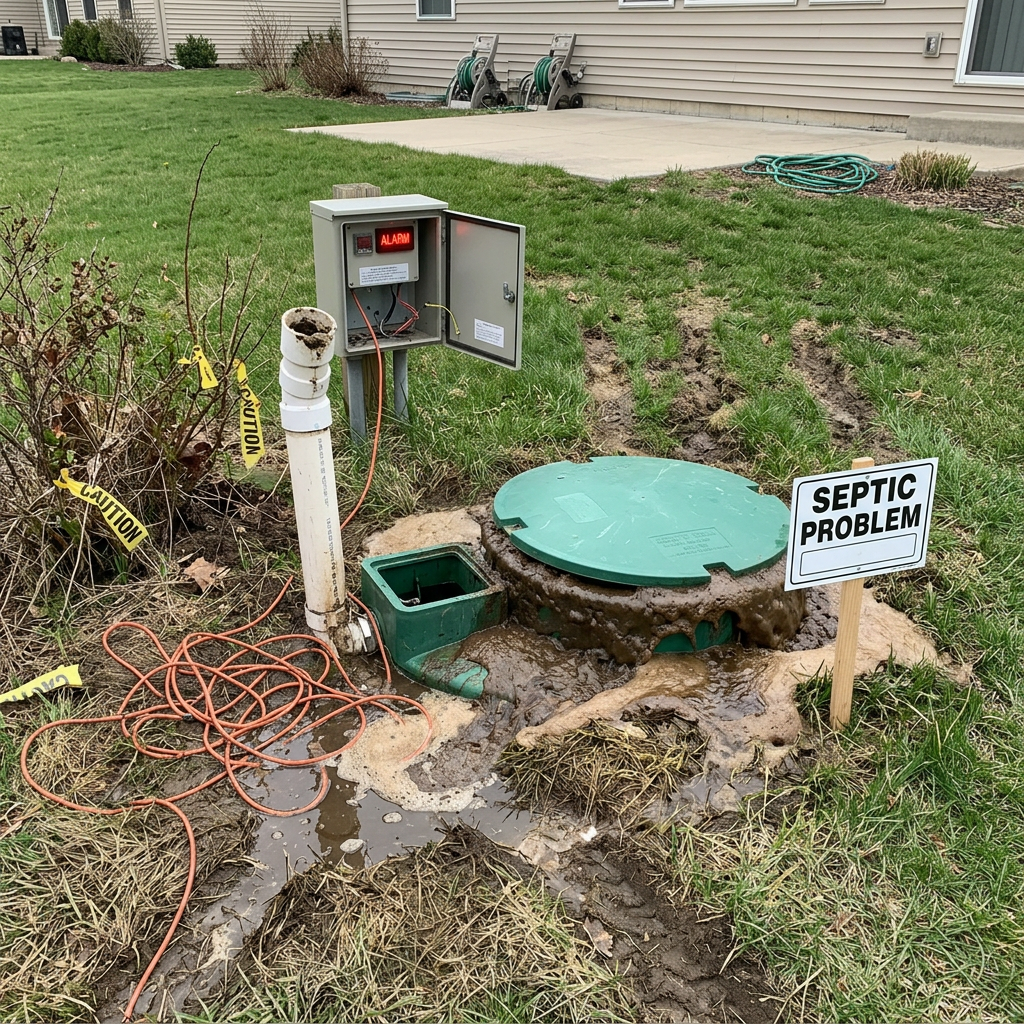
Six Common Aerobic Septic System Problems
1. The alarm sounds, but the drains still work
Normal-looking drains do not mean you can ignore an alarm. The system may detect a problem before wastewater backs up into the house.
From a safe, dry location, read the exterior indicator or message. Record whether it refers to high water, aeration, or another condition.
A high-water warning may involve:
- A wastewater pump that is not moving enough water.
- A faulty float or level control.
- Restricted discharge piping.
- Excess water entering the system.
- A problem farther along the dispersal system.
If your manual allows it, use the exterior silence button to mute the buzzer. Silencing the sound does not clear the fault. Contact your maintenance provider directly rather than assuming the alarm sends an automatic notification.
Do not switch off system power simply to stop the noise. If flooding or an electrical hazard is involved, stay away from the equipment and seek emergency guidance.
See our guide to what to do when a septic tank alarm goes off for more general alarm information.
2. The blower is silent or sounds different
If a blower will not operate, it could be due to an electrical issue (loss of power), a failed motor, or a mechanical issue in other equipment. A blower’s operating schedule is dependent upon its specific type or model.
The blower can also operate but fail to deliver sufficient airflow. Issues that could cause this include restricted intake airflow, disconnected, damaged, or blocked airlines, as well as issues related to the diffusers.
From the exterior of the equipment enclosure, listen for any deviation from the typical sound of the blower and note any such changes. Do not remove tank lids to look for bubbling.
Ask the technician to check:
- Whether the blower operates as specified.
- Air delivery through the lines and diffusers.
- Restrictions, leaks, and damaged connections.
- Whether a replacement blower matches the system’s requirements.
Replacing the blower without checking the rest of the air-delivery system may leave the original problem unresolved.
3. Strong odors develop near the equipment or discharge area
Poor aeration can cause odors, but smell alone cannot identify the fault.
Other possible causes include excess solids, heavy wastewater loading, plumbing or vent problems, and treatment disruptions.
Note where the odor is strongest without approaching wastewater or opening covers. Tell your provider whether it began after:
- A power outage.
- A large increase in household water use.
- An overdue service visit.
- Chemicals being poured down household drains.
Do not add extra disinfectant or other chemicals to hide the smell. Disinfection and biological treatment perform different jobs. Extra chlorine will not repair a blower or remove accumulated sludge.
Indoor odors may require a plumber’s assessment as well as a septic inspection.
4. Sprinklers stop, spray unevenly, or run unusually often
Not all aerobic systems use sprinkler irrigation. If your aerator uses spray irrigation, the approved control method(s) could be as simple as an on/off timer switch, a water level setting, or both.
Just because a spray head appears stationary when you look at it doesn’t necessarily mean there’s anything wrong with it. Any time you notice a “weak” spray pattern, a damaged spray head, or a puddle of water under your sprayer, these are indicators that need further review.
- A blocked or damaged spray head.
- Restricted distribution piping or a filter, where fitted.
- Reduced pump output.
- Faulty controls.
- Excess incoming water.
Check for obvious household leaks, such as a running toilet. Do not assume that frequent spraying proves the pump is defective.
Do not replace wastewater spray heads with ordinary lawn sprinklers, move them, or redirect the discharge. Changes can affect the permitted design and expose people to wastewater.
5. Several drains slow down or wastewater surfaces
A single clogged drain could be due to a localized obstruction; however, further investigation will be necessary if there are multiple slow-draining fixtures, gurgling water in the drains, or raw sewage on the exterior of the home/property.
There are several potential causes for a backed-up septic system:
A) A blockage within the main building sewer line.
B) Excess solid waste.
C) Restriction of one or more filters.
D) Trouble with the pumping mechanism.
E) Over-saturation of the dispersal area.
If you experience sewage backup or surfacing, immediately stop all household water usage and call for emergency assistance. Keep all persons and animals out of the immediate area where the sewage backup occurred.
For systems with a subsurface field, our septic drainfield repair guide explains why the whole system should be checked before major excavation. A wet yard alone does not establish that the entire field needs replacement.
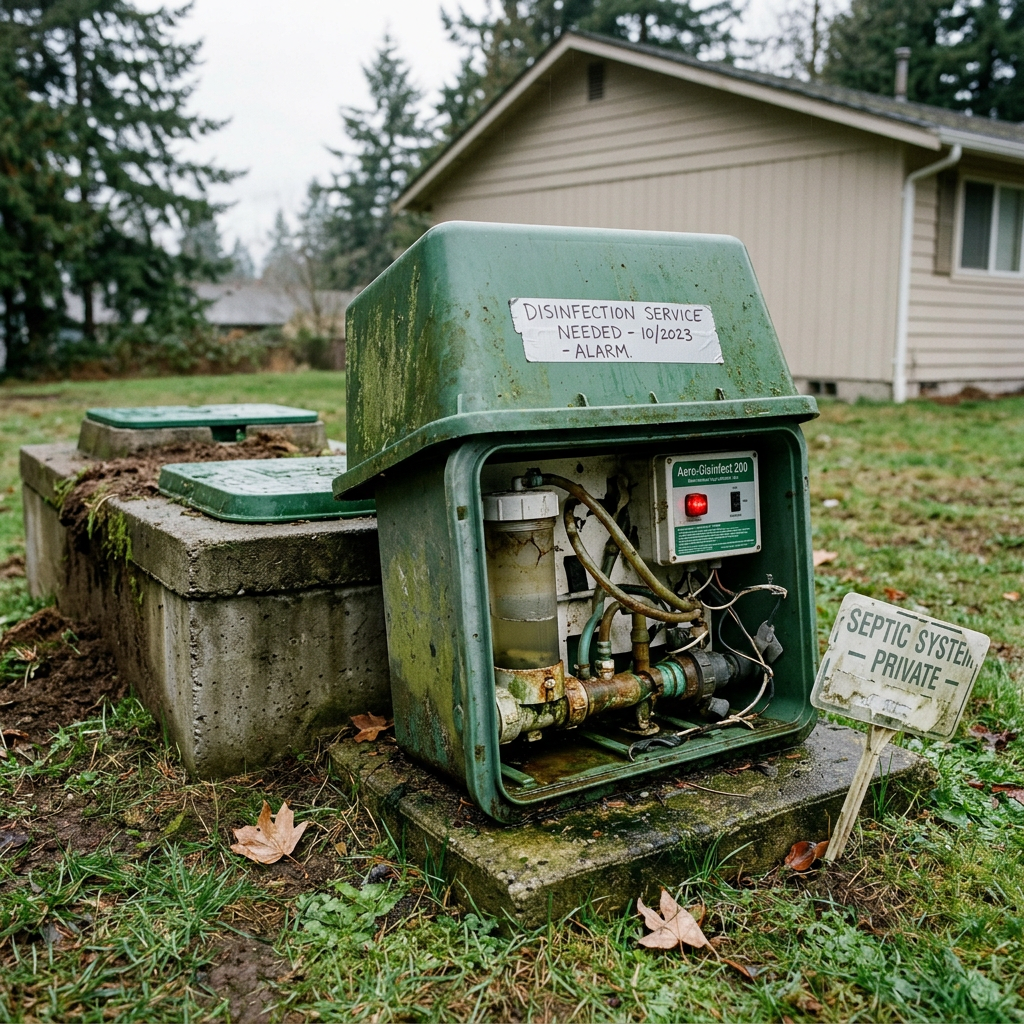
6. Disinfection equipment needs service
Clear-looking effluent does not prove that treatment or disinfection is effective. Likewise, a quiet alarm does not confirm that the system meets its treatment requirements.
If your installation requires disinfection, follow its specific service instructions. Report a disinfectant shortage, equipment warning, or suspected failure to your maintenance provider.
For chlorination equipment:
- Use only the product specified for the wastewater chlorinator and approved system.
- Do not substitute swimming-pool chlorine tablets.
- Never mix chemicals.
- Ask who is authorized to replenish and service the unit.
Texas A&M AgriLife guidance on spray distribution systems specifically warns against using swimming-pool tablets in wastewater treatment systems.
Do not open a tank, touch effluent, or collect samples yourself to judge treatment quality. Leave testing to a qualified provider.
Safe Checks Before the Service Visit
Your role is to gather useful information without disturbing the equipment.
- Pause heavy water use. Delay laundry, long showers, and the dishwasher. During an active backup or surfacing sewage, stop household water use.
- Look for household leaks. Listen for running toilets and note dripping fixtures.
- Record the timing. Write down when the warning began and whether it followed rain, an outage, or unusually heavy water use.
- Photograph the closed exterior panel. Do this only from a safe, dry location without opening electrical covers.
- Find the records. Have the system model, manual, service agreement, last pumping date, and repair history ready.
A warning after a weekend of guests does not prove that water use is the only cause. An existing pump or treatment problem may become noticeable under heavier use.
Do not repeatedly reset breakers, force pumps to run, change timers, or bypass floats and alarms.
If flooding or electrical hazards are involved
Flooding changes the response. Do not follow ordinary “keep the system running” advice when equipment is flooded or electrically unsafe.
CDC guidance for septic systems during emergencies advises reducing nonessential water use and avoiding contact with septic electrical devices until they are dry and clean. It also warns that tanks can move or float under flooded conditions.
Stay out of standing water near electrical equipment. Have a qualified professional assess flooded components before restarting them.
Get professional advice before arranging pumping during or after flooding. Emptying a tank under unsuitable conditions can cause damage.
What a Qualified Technician Should Handle
Choose a provider familiar with your treatment-unit brand and local requirements. Tank pumping and mechanical troubleshooting are different services, so ask what the visit includes.
Depending on the symptoms, professional testing may involve:
- Testing and measuring to determine if there was an issue with airflow into the tank, and testing or inspecting all of the air delivery items in your tank.
- Testing the float (float switch), high water alarm, and low water alarm on your pump control unit.
- Testing your effluent pumps to make sure they are working properly.
- Testing for accumulation of solids in the tank.
- Determining if all of your disinfectant equipment (i.e., chlorinator, UV light, etc.) is functioning as intended, and also determining the effectiveness of the treatment process.
- Testing the area where you will be spraying/spot treating/dispersing chemicals into the environment after completing the repair.
If electrical work is required on your system, it would need to be done by a licensed electrician.
Before the provider leaves, request written findings. Ask when normal water use can resume, which warning signs require another call, and whether follow-up testing is needed.
What Inspections and Repairs May Cost
The figures below are broad U.S. budgeting references published by HomeGuide. They are not quotes for your aerobic system.
| Service or repair | Published estimate | Important limitation |
|---|---|---|
| Routine septic inspection | $150 to $450 | May not include a full ATU diagnostic visit |
| Pumping a 1,000-gallon tank | $300 to $700 | Multiple chambers, access, and disposal fees can change the price |
| Septic filter replacement | $200 to $300 | Does not cover every proprietary filter |
| Septic wastewater-pump replacement | $500 to $1,300 | An air blower is a different component |
| Control panel replacement | $300 to $500 | Specialized ATU controls may cost more |
Sources: HomeGuide’s septic pumping and service estimates and septic repair estimates.
Blower replacement, disinfection repairs, and annual maintenance agreements need quotes based on your equipment and location. Do not add the table’s figures together as a standard service package.
Before approving work, ask:
- What failed, and which test confirmed it?
- Does the quote include parts, labor, travel, and permits?
- Are pumping, disposal, and follow-up testing included?
- Does a service agreement cover this visit?
- What warranty applies to the repair?
A useful estimate explains the diagnosis, not just the replacement part.
Can Additives Fix an Aerobic Septic Problem?
Additives cannot repair a failed blower, broken pump, damaged float, or blocked pipe.
The EPA’s septic tank additives fact sheet says additives are not recommended for domestic wastewater treatment. They are not a substitute for inspection, pumping, and proper operation.
Have the fault diagnosed rather than adding a product to hide odors or other symptoms.
Required disinfection is different from optional septic additives. If your approved system includes chlorination or another disinfection method, maintain it according to the manufacturer’s instructions and local rules.
How to Reduce Recurring Problems
EPA maintenance guidance says alternative systems with electrical or mechanical components generally need inspection once a year. Your manufacturer, permit, or service agreement may require more frequent visits.
Set pumping intervals using measured solids, system requirements, and professional advice. Aeration does not eliminate all sludge.
At home:
- Repairing leaky toilets and other plumbing fixtures is important to prevent wastewater loss.
- To prevent overloading your septic tank system and ensure it works properly, spread out your laundry throughout the week.
- Do not dispose of items such as grease, wipes, chemicals (solvents), or medications down your drain.
- Also, do not park cars on top of the components buried in your yard.
- You should also follow your approved equipment maintenance schedule.
- It is also recommended to keep track of inspection records for the system, along with repair invoices.
Use our septic system maintenance checklist for routine household care. Add the inspections and servicing required for your specific aerobic unit.
When to Get Urgent Help
Request urgent assistance for:
- Sewage backing up indoors.
- Wastewater surfacing outside.
- A damaged or unsecured tank cover.
- An alarm accompanied by worsening drainage.
- Flooded or damaged electrical equipment.
Keep people and pets away. Do not enter a tank or attempt a rescue inside one. Call 911 for an immediate threat to life.
Avoid contact with sewage and potentially contaminated floodwater. If exposure occurs, wash exposed skin with soap and clean water. Seek medical advice for contaminated wounds or signs of infection.
Frequently Asked Questions
Should the Air Compressor Run All the Time?
Some units need a steady supply of air, while others prefer timed cycles. See your model’s manual, and do not assume silence means a unit is dead.
Do not establish your own bedtime or vacation shutdown plan.
How Long Can an Aerobic Septic System Go Without Power?
There is no single safe time period. It is subject to the respective treatment process, storage, water demand, and disposal.
Minimize unneeded water use and notify a septic care provider for advice for your system. Electric service should be reinstated through the electric utility.
If the equipment was flooded or damaged, seek professional advice before turning it back on.
Why Do the Spray Heads Run More Often After Rain?
Water may be leaking into the system through components that are damaged or have inadequate seals. Several other system/control failures can also cause this.
Note the occurrence and record it. Repeated recordings after rain need investigation rather than being accepted as normal.
Does Every Aerobic System Need Chlorine?
No. Disinfection depends on the approved design, manner of dispersal, and local regulations.
PERMIT and MANUAL: Check your permit and manual. Do not field-add chlorine to a non-chlorinated system.
Does an odor mean the tank needs pumping?
Not necessarily. You may have odors due to a lack of aeration, an accumulation of solids, excessively heavy loading, or blockages within the plumbing.
Request your provider to determine the cause and establish solids loading before evaluating what work is needed. Pumping will require even more attention, depending on the severity of the flooding.
Will replacing the blower stop a high-water alarm?
Not necessarily. They are two different things: aerating and pumping sewage.
If the problem is with the wastewater pump, floats, piping, incoming water, or dispersal area, then the high-water alarm can persist. The technician should verify the cause before recommending a blower replacement.
Conclusion
The best response to an issue with an aerobic septic system is to document any symptoms you have experienced, reduce water usage until a test can be conducted, and schedule a test for the correct issues. If raw sewage is backing into the house, stop all household water use immediately. Do not go near the contaminated wastewater or touch anything that could cause an electrical shock from wet or unsafe electrical systems.
Prior to approving any work on your system, ask the contractor what part of the system failed and how they plan to test it. Ask the contractor what their price quote includes. Store all information you receive regarding the contractor’s test findings with your service history documentation. This will enable the contractor, when they return to service your system, to identify problems that may have been present prior to their last visit and possibly resolve them before performing additional unnecessary repairs.
Looking for another option to explore? The banner below features Septifix, a septic tank treatment product you can review alongside the practical maintenance tips in this guide. Read the product information carefully, follow the directions, and decide whether it is appropriate for your septic system.

Related Posts