Inspecting your home’s septic system is like inspecting your car’s oil. Both inspections are designed to identify issues with the vehicle before it breaks down. As a homeowner who has a septic system in their home, I recommend that you treat the septic system inspection as part of your normal maintenance routine for your home. Do not wait until there is a sewage back-up into your home.
When a trained professional inspects a septic system, they will look at everything beyond just opening the septic tank lid.
They might be looking at; the septic tank itself, inlet and outlet piping, how much solid waste (sludge) is in the bottom of the tank and how much floating solids (scum) are on top of the liquid inside the tank.
A trained professional might also be examining all the parts of a pumping system such as pumps, control boxes, etc. The professional will also examine the distribution box which is usually located after the tank and before the drain field, they will check the drain field for proper flow and any signs of a leak.
Additionally, a professional will review past maintenance history and look for any signs that could indicate potential backups or other problems.
The specific items that a trained inspector looks at during an inspection will depend on many factors including, but not limited to, the type of septic system installed, local regulations regarding inspections, etc.
This document provides information about common things that homeowners should expect from a typical septic system inspection.
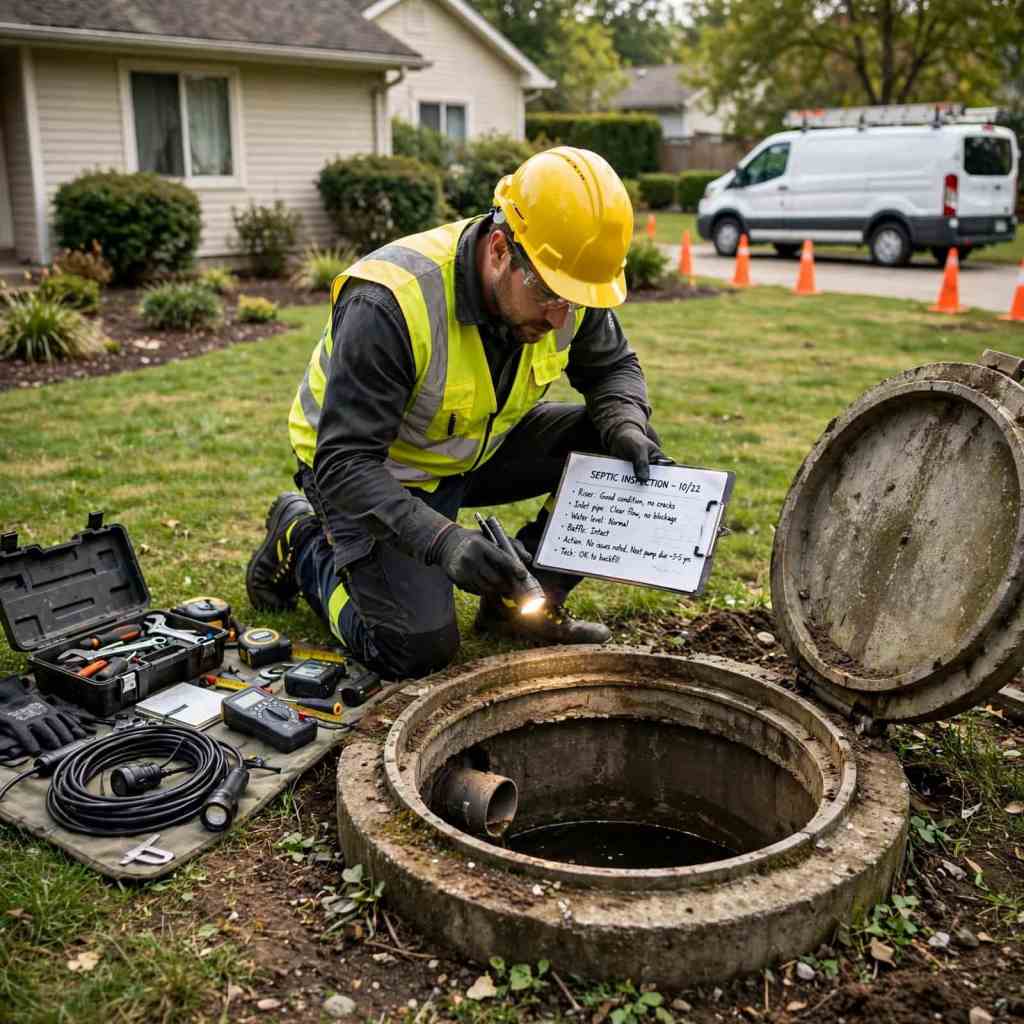
Key Takeaways
- A septic tank inspection reviews both the physical status and operational performance of the total system.
- The septic tank inspector may review historical data for the property owner, record measurements on how much sludge and scum exist in the septic tank, review all pipes that make up the drain field system and visually evaluate each component of the drain field.
- EPA typically recommends checking most typical systems once (every) 1 to 3 years. However, as stated previously, there are alternative ranges recommended by some EPA documents, i.e., 3-5 years.
- Yearly evaluations may be required for alternative systems that include pumps, electrical controls and/or other mechanical components.
- An inspection and pump-out service are two completely separate services. The purpose of an inspection is to determine if it’s necessary to perform a pump-out service.
- EPA estimates that routine septic maintenance will average approximately $250-$500 per year across this country; however, the cost of just an inspection can vary from one location to another.
- It should also be noted that slow draining toilets, bad odors from sewage coming into your house through plumbing fixtures, soggy areas near your home, extremely lush green grass around your home or sewer back-ups indicate that you need immediate action taken.
- Some local health departments may have unique requirements for their residents who want to purchase or sell homes regarding septic tank inspections.
What Is a Septic Tank Inspection?
A septic tank inspection is a professional review of your septic system. The goal is to determine whether the system is working properly and whether it needs maintenance or repairs.
A basic inspection may focus on the tank. A more complete inspection checks the full system, including the pipes that carry wastewater from the house, the tank, the distribution box, pumps, and the drainfield.
The inspector may also review your septic records. These records can show when the tank was installed, when it was last pumped, and whether the system has had past repairs.
I think of an inspection as a health check for your septic system. It does not guarantee that the system will never fail. However, it can reveal warning signs that are easy to miss during normal use.
The U.S. Environmental Protection Agency explains how septic systems work in more detail.
Why Does a Septic Inspection Matter?
A septic system is underground, so many problems are hidden. You may not notice a problem until wastewater starts backing up into the home or pooling in the yard.
Routine inspections can help identify:
- High sludge or scum levels
- Cracked or damaged tank components
- Broken inlet or outlet pipes
- Blocked pipes
- Leaking tanks
- Drainfield saturation
- Pump or electrical problems
- Poor wastewater flow
- Signs of an earlier backup
- Unsafe water use or drainage conditions
The EPA notes that regular maintenance is usually less expensive than major repairs or system replacement. The agency also recommends keeping records of inspections, pumping, repairs, and other service work.
You can read more about maintenance in the EPA guide, Why Maintain Your Septic System.
An inspection is especially important if:
- The system you purchased is no longer under warranty.
- You have decided to put your house up for sale.
- Your septic system is older than twenty years.
- You don’t know if the tank has been pumped in some time.
- You have expanded your bedroom count or total number of inhabitants.
- Slow draining occurs at your location.
- A well supplies water to your home.
- Flooding occurred in your neighborhood recently.
- You use an alternative type of septic system.
What Does a Septic Tank Inspection Include?
The inspection process can vary by state, county, system type, and service provider. Before hiring someone, ask for a written explanation of what the inspection covers.
1. Records and Permit Review
The inspector may begin by reviewing available records. These may include:
- Installation permits
- As-built drawings
- Previous inspection reports
- Pumping receipts
- Repair records
- Tank size and system type
- Drainfield location
- Operation and maintenance agreements
If you do not have these records, contact your local health department or environmental services office. Some offices keep septic permits and system maps.
Records are also useful when you sell a home. A buyer may want proof that the system has received regular care.
2. Locating and Accessing the Tank
The inspector needs to find the tank and open the access ports. Some tanks have risers that bring the lids close to the surface. Other tanks may be buried several inches or feet underground.
Easy access can reduce service time. It also makes future maintenance easier.
Never enter a septic tank. Septic tanks contain toxic gases and can lack enough oxygen to support life. A qualified professional should handle all tank access and inspection work.
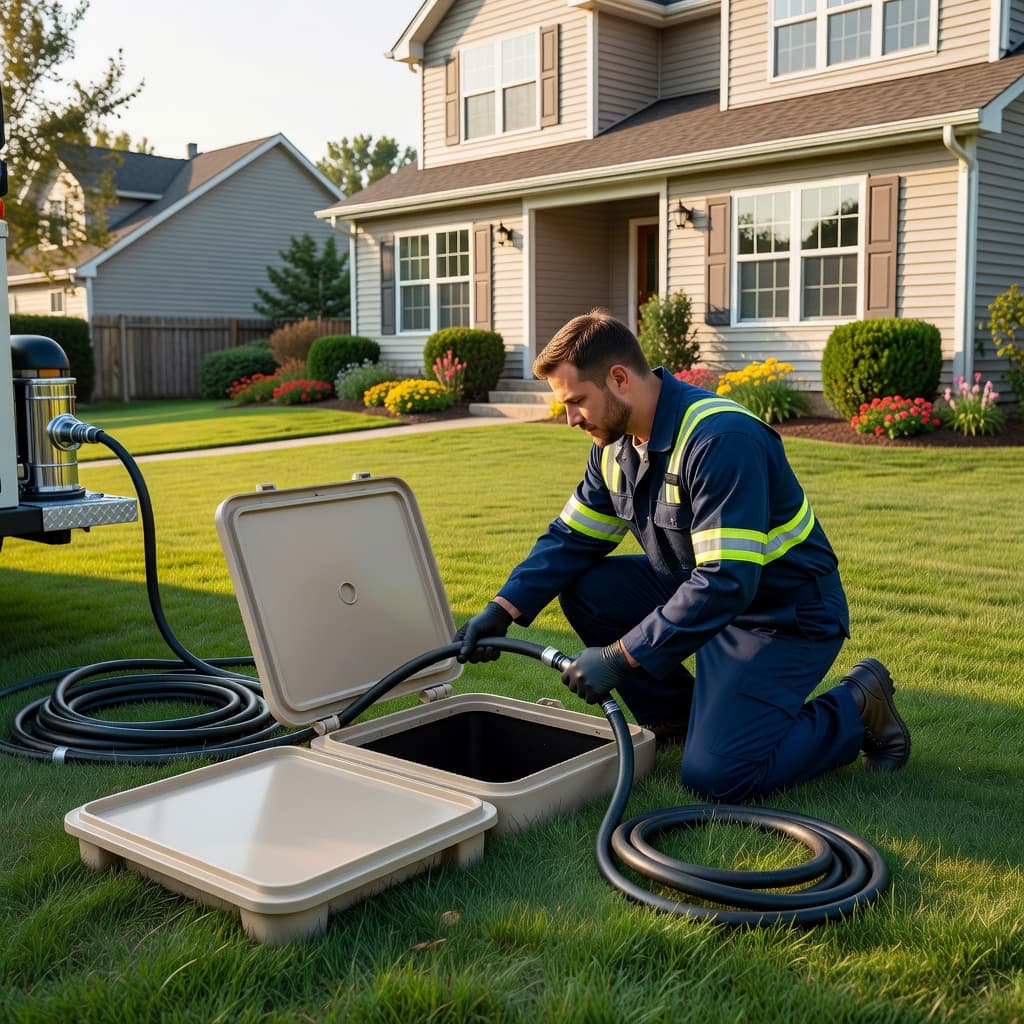
3. Checking the Tank’s Condition
The inspector looks for cracks, leaks, damage, and other structural problems. The tank material may be concrete, plastic, fiberglass, or another approved material.
The inspection may include:
- Tank walls
- Tank lids
- Access covers
- Baffles
- Inlet pipe
- Outlet pipe
- Effluent filter
- Evidence of groundwater entering the tank
- Evidence of wastewater leaking out
A low liquid level can sometimes indicate a leak. Staining above the normal wastewater level may suggest that the tank has experienced a backup.
The inspector may also check whether the baffles are present and secure. Baffles help control the flow of wastewater and keep scum from moving into the drainfield.
4. Measuring Sludge and Scum Levels
Solids build up in a septic tank over time. Heavy solids settle at the bottom and form sludge. Grease and lighter materials float to the top and form scum.
An inspector measures both layers. These measurements help determine whether the tank needs pumping.
According to the EPA’s SepticSmart homeowner guide, pumping is needed when:
- The bottom of the scum layer is within 6 inches of the bottom of the outlet pipe, or
- The top of the sludge layer is within 12 inches of the outlet pipe
These measurements are useful, but your service provider should also consider your tank size, household size, water use, and system design.
5. Inspecting the Inlet and Outlet Pipes
The inlet pipe carries wastewater from your home to the tank. The outlet pipe carries treated liquid, called effluent, from the tank toward the drainfield.
The inspector checks whether these pipes are:
- Connected correctly
- Broken or damaged
- Blocked
- Displaced
- Leaking
- Properly supported
The outlet area may also contain an effluent filter. This filter helps keep solids from reaching the drainfield. If the filter is clogged, wastewater may leave the tank too slowly.
6. Checking the Distribution Box
Many systems use a distribution box to divide effluent between drainfield lines. The inspector may check whether the box is level and whether wastewater is flowing evenly.
An uneven distribution box can overload one part of the drainfield. Over time, this may cause soggy soil, odors, or early drainfield failure.
Some systems use a pump chamber instead of relying only on gravity. In that case, the inspection may include:
- Pump operation
- Float switches
- Electrical controls
- Alarms
- Pump chamber condition
- Discharge piping
Systems with pumps, electrical float switches, or other mechanical parts often require more frequent service.
7. Examining the Drainfield
The drainfield is the part of the system that receives liquid wastewater from the tank. The soil helps filter and treat the wastewater before it moves farther into the ground.
The inspector may look for:
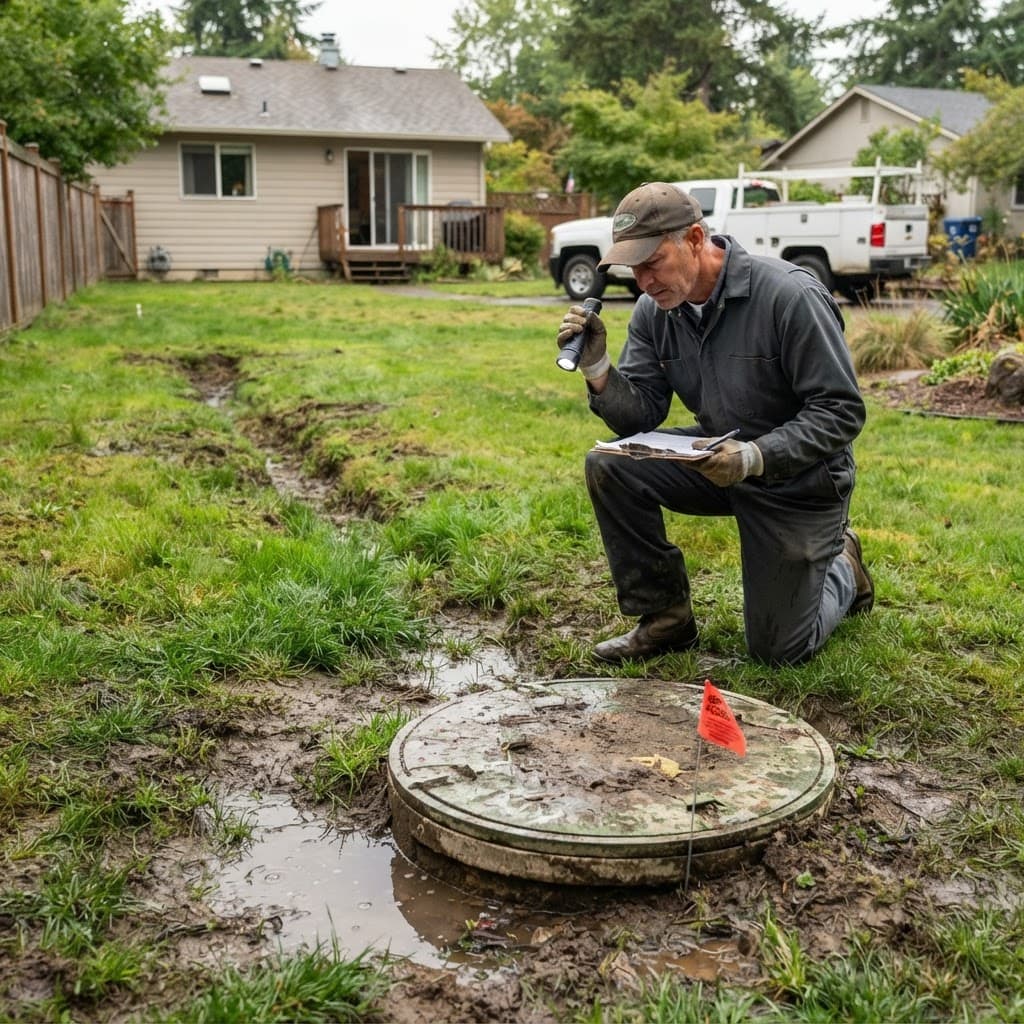
- Standing water on your lawn, muddy areas that are always wet, or sewage smells in your yard
- If you have bright green spots of grass in an otherwise brownish-colored lawn.
- If the grass is growing unevenly across your lawn (some parts grow faster than others)
- Broken or damaged sewer lines under your lawn
- Excess surface water running off of your roof into your yard
- Damage to a vehicle or piece of heavy equipment parked on top of your drainfield.
Your drainfield should not be used as a driveway, parking area, garden, or building site. Heavy vehicles can compact the soil. Compacted soil may prevent wastewater from moving through the ground.
For more care tips, read How to Protect Your Septic Drainfield.
Septic Tank Inspection Checklist
Use this checklist before the inspector arrives:
Documents
- Identify your septic permit or find a diagram of your system.
- Find past receipts that show when you had the septic tank pumped.
- Get copies of all inspections and repairs done to the septic system.
- Record the most current date that maintenance was performed on the system.
- If you have experienced any issues with your plumbing or drainage recently, note them in the space provided below.
Inside the Home
- Inspect for clogged drains.
- Hear if there is a “gurgle” coming from one of your toilets or pipes.
- Smell for an unusual odor associated with sewage.
- Identify if you are having trouble getting water to drain out of one of your sinks, tubs, or floor drains.
- Notify the inspector of anything that has been different regarding your usage of water as well as whether or not you’ve recently had any type of plumbing work.
Outside the Home
- If you can locate the septic tank, then do so.
- Remove leaves, brush or other debris from all access lids to the tank.
- Examine the area around the septic tank and the drain field for any wet areas.
- If there is a spot of bright green grass that seems to be growing faster than the rest of your lawn then this could indicate an issue with the septic system.
- Do not allow vehicle traffic or heavy machinery in close proximity to the septic system.
- Do not allow children or pets to come into contact with either sewage or standing wastewater.
Do not dig around the tank unless the service provider tells you where it is safe to dig. You could damage pipes or electrical components.

How Much Does a Septic Tank Inspection Cost?
There is no single inspection price that applies to every home in the United States. Costs vary by location, system type, property size, access, and the amount of work included.
The EPA cites a nationwide estimate of about $250 to $500 for routine septic maintenance. That estimate may include inspection and pumping. It should not be treated as a fixed price for an inspection-only visit.
Your cost may be higher if the provider must:
- Find the access lid(s) of your septic system
- Pump out your tank
- Repair/replace an effluent filter
- Check the pump chamber
- Check electrical parts
- Locate your drain field
- Access all areas where maintenance can be done (i.e., open as many lids as possible)
- Provide a complete report detailing everything inspected so it will help you when selling your home.
- Perform all necessary testing to meet any local requirements.
Before scheduling, ask these questions:
- Does the price include pumping?
- Will you examine my septic system’s drain field?
- Are access covers (lids) to be provided with the inspection?
- Will you also check the condition of my distribution box or pump chamber?
- Will I receive a detailed, written report on the findings of this inspection?
- Are follow-up repairs (if necessary) included in the price of this inspection?
- Are there extra charges for digging or traveling to inspect my property?
For more cost information, see How Much Does It Cost to Pump a Septic Tank?.
How Often Should You Schedule an Inspection?
The right schedule depends on your system and local requirements.
EPA guidance commonly recommends inspecting a typical septic system every 1 to 3 years and pumping it every 3 to 5 years. Another EPA homeowner brochure refers to inspection every 3 to 5 years. These ranges are general guidance, not a replacement for local regulations or advice from a qualified professional.
As a simple starting point, I recommend asking a septic professional to inspect a typical household system at least every 3 years.
You may need inspections more often if:
- There are several individuals living in your household
- Your septic tank is relatively small
- You have a garbage disposal unit
- A significant amount of water is used in your home.
- Pumping equipment exists on this system. Electrical control systems exist with this septic system.
- The property where this septic system exists has experienced backup problems.
- Drainage area (drainfield) for this system is either small or difficult to drain.
- This system is greater than twenty years old.
Alternative systems often need annual inspections because they rely on pumps, alarms, float switches, or other mechanical components.
You can also review How Often Should You Pump a Septic Tank? for more maintenance guidance.
Septic Inspection When Buying a House
A septic inspection is an important part of buying a home with an onsite wastewater system. A general home inspection may not include a complete septic evaluation.
If I were buying a house with a septic system, I would ask for a separate inspection from a qualified septic professional.
The inspection should help you understand:
- The age of the system
- The location of the tank and drainfield
- The tank size
- The last pumping date
- The current sludge and scum levels
- The condition of the tank
- The condition of the pipes
- Whether the drainfield is showing warning signs
- Whether pumps and alarms work correctly
- Whether repairs may be needed soon
A homebuyer should also contact the local health department. Some states and counties require a specific inspection, pumping, or certification before a property can be sold.
Read the EPA’s Homebuyer’s Guide to Septic Systems before making a final decision.
An inspection report should be clear about what was inspected and what was not inspected. It should also separate urgent problems from routine recommendations.
Warning Signs You Should Not Ignore
Do not wait for a scheduled inspection if your system shows signs of trouble.
Call a septic professional if you notice:
- Slow sinks or showers
- Toilets that drain slowly
- Gurgling sounds
- Sewage odors indoors or outdoors
- Water backing up into a tub or sink
- Wastewater around the tank
- Pooling water over the drainfield
- Muddy soil
- Bright green grass during dry weather
- Sewage visible in the yard
- A floor drain that overflows
If sewage backs up into your home, stop using water until you receive professional advice. Keep children and pets away from the affected area, and avoid direct contact with sewage.
The CDC provides guidance for septic and onsite wastewater systems, including steps to take when a system is not working properly or has been affected by flooding.
You can also read Septic Tank Backup: Causes, Emergency Steps, and Prevention and 9 Signs Your Septic System Is Failing.
How to Choose an Inspector
Look for a septic professional who is licensed or certified in your state or county. Requirements vary, so check with your local health department before hiring someone.
Ask whether the provider:
- Performs full system inspections
- Has experience with your system type
- Provides a written report
- Follows local inspection rules
- Can inspect pumps and electrical components
- Can recommend repairs when needed
- Carries appropriate insurance
Avoid choosing a provider based only on the lowest price. A limited inspection may not include the drainfield, distribution box, or pump system.
Frequently Asked Questions
Is a septic inspection the same as pumping?
No. Pumping removes sludge and scum from the tank. An inspection checks the condition and operation of the system. An inspection may show that pumping is needed, but the two services are not the same.
How much time will a septic inspection take?
Time will vary depending on the type of inspection. If you are having a very basic inspection done that is easy to get to (i.e., no digging, etc.) it might take less time than a full inspection which would involve digging, pumping, checking a pump chamber and/or drain field. When scheduling an inspection ask the company providing the service how long it will take.
Can I do a self-inspection of my septic tank?
Yes you can check for obvious red flags; however, do NOT open or enter the septic tank. This is hazardous due to gasses produced within the tank. Lids can also be unstable. Hire a professional to do the inspection for you.
Is there a septic inspection included in the Home Inspection?
Typically, a standard home inspection will include a general assessment of a septic system, but it will not be as thorough as a septic inspection. Check with the home inspector what is included in their report. Schedule a separate septic inspection if needed.
How frequently should a septic system be inspected?
For average households, a typical septic system should be inspected at least once every one to three years, according to industry guidelines. However, alternative systems with electrically controlled pumps may require annual inspections. Local regulations may dictate a different schedule.
What if the septic inspection fails?
Your inspector should identify the issue and recommend remedial action. Remediation actions could range from simply pumping out the septic tank to repairing pipes, filters, pumps or performing other types of drainfield work. Prior to authorizing significant repairs, ensure you understand why they are required and obtain a written estimate.
What is the most important part of a septic inspection?
The most important aspect is to evaluate the entire septic system. There could be damage occurring in one area while another appears fine. Ask your inspector if he/she will be evaluating all of the key elements of your system including the outlet pipe(s), pump(s), distribution box(es) and drain field(s).
Final Thoughts
Septic Tank Inspections give you valuable insight into what is going on under ground in terms of your septic system. They assist you in planning for future pumping of your tank, identifying issues related to excessive water use in your household, locating areas where components of your septic system have been damaged and correcting problems prior to them becoming serious emergency situations.
I suggest maintaining a simple “septic” file containing copies of your past inspection reports, pump-out receipts, permits and repair records. Protecting your drainfield is also crucial. Heavy machinery/vehicles and buildings should be kept off your drainfield and excess water should not accumulate over this area.
Based upon your individual situation, the ideal frequency of inspection for your septic system will depend upon many factors such as the type of system you have installed, number of people living in your household, soil conditions beneath your home and local ordinances/guidelines. If unsure regarding these items, consult with your local Health Department or hire a certified/septage expert who understands your specific property.
Keep your septic system working smoothly. Try Septifix today.
Check the current Septifix price here.
Affiliate disclosure: This may be an affiliate link. We may earn a commission if you make a purchase, at no extra cost to you.

Related Posts