Does Homeowners Insurance Cover Septic Systems?
Does homeowners insurance cover septic systems? That all depends on what happened and what part of your septic system is broken, and if your home was damaged as well.
It will depend on what is stated in your policy or endorsement. It could cover damage to your home from a septic system backup but not the septic system that failed.
There are many policies and endorsements out there that cover certain things, and some states have certain guidelines that they follow. Below is just some information on what may be covered.
Personal Note: Don’t just go off of yes or no for this. You will want to know what was damaged and how your insurance defines that item. Always check with your insurance company to be sure.

Key Takeaways
- Your homeowners insurance could help pay for damage to your septic system if the damage was caused by a covered event that directly and suddenly damaged your property. Whether you have coverage will depend on your policy and circumstances.
- If you have a backup endorsement, it could help cover some of the damage from sewage that enters your home. You may not be able to use it to fix your tank, lines, pump, or drain field.
- Review your policy for definitions and what is excluded, as well as your coverage limits and deductibles. Contact your carrier to find out if their backup coverage would apply to a septic system.
Does Homeowners Insurance Cover Septic Systems in Every Situation?
If there’s a covered event that causes direct and sudden damage to property you have on your policy, it could help pay for damage to your septic system. A covered event may also be referred to as a covered peril. Your policy will outline what events and property are covered.
For example, if a car hit your septic system or a tree fell on your system, these are just some examples of things to inquire about with your carrier. They will have to see what was damaged and if there are any exclusions or limits on your policy.
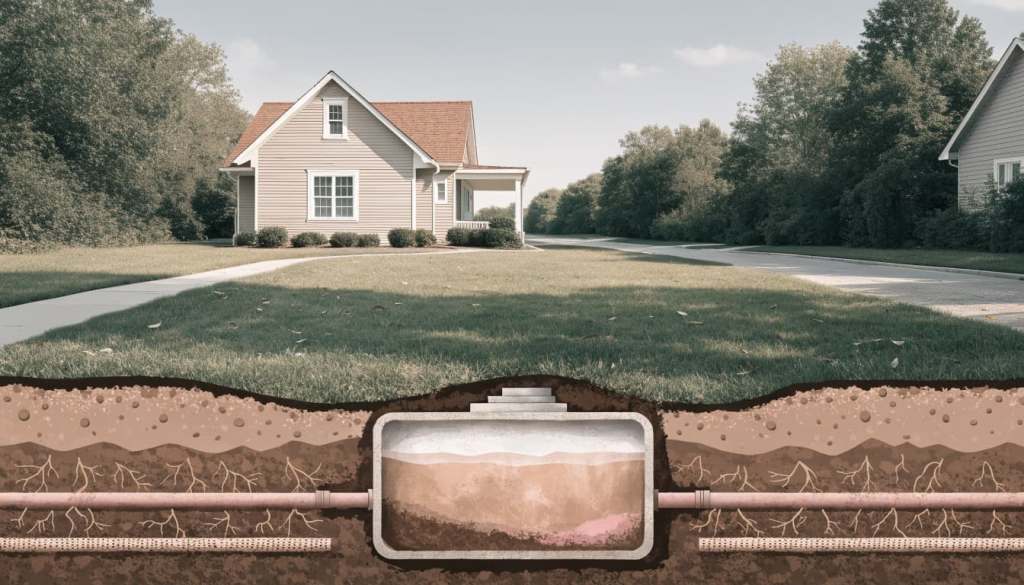
Depending on where the damage occurred and what was damaged, your policy may define your tank, pump, lines, and drain field differently. There may be limits or exclusions on property that is underground, or they could fall under different categories on your policy. Be sure to know what each piece of your system is covered for.
Review your policy and look at the definition section for dwelling, other structures, underground, pipes, sewer, and so on. Your declarations page will give you your coverage limits and deductibles.
| Example loss | What to check in the policy |
|---|---|
| A vehicle or falling object damages a component | Whether the cause is covered and whether that component counts as insured property |
| A tank, pipe, pump, or drainfield fails | How the policy treats that specific part, including underground components |
| Sewage backs up into the home | Whether a backup endorsement applies to a private septic system and which resulting losses it covers |
Considering septic-care products? See Septifix Tablets. This link is separate from insurance guidance. A product cannot determine whether a claim is covered or replace a qualified inspection or needed repairs.
What if my septic system damage is not covered?
There will be exclusions and limitations listed on your policy. You should never assume that your septic issue will be denied or covered. Always review your policy for specific language.
If your septic system is old, your policy may have exclusions that relate to wear and tear. This includes wording that states deterioration or corrosion or anything that would indicate the age of your system.
Damage that occurs gradually: Your policy may exclude damage that happens over an extended period of time. This could include, but is not limited to, a leak that has been occurring for some time. You can always have someone come out and give you a professional opinion on what may have caused your septic system to fail, but your policy will state what is covered.
If your septic system wasn’t maintained or plugged with sludge: If your septic system fails due to lack of maintenance or if it becomes plugged with sludge, your policy may state this is what caused the damage. The U.S. Environmental Protection Agency states that if your septic system isn’t properly maintained, it can cause sludge to get into your drain field. While this information is helpful to know how to take care of your septic system, it doesn’t mean your policy will cover it.
Your septic system wasn’t properly installed: If there is an issue with how your septic system was designed or installed, there may be other language that can be applied to your situation. Always ask your insurance provider what applies to your situation.
Flood damage or something that may be excluded from your policy: Just because you have flood damage doesn’t mean it’s the same as a septic or sewer backup. Your flood policy may exclude what is underground.
The Federal Emergency Management Agency states in their National Flood Insurance Program Training that their standard flood insurance policy does not cover anything that is underground. This could include, but is not limited to, your septic tank and system. Just because the Federal Emergency Management Agency excludes this on their policy doesn’t mean that your policy will exclude it.
If you are unsure what caused the damage, don’t assume or try to classify it as a specific type of damage when contacting your insurance company. Tell them what you know and ask them how they would like you to proceed with determining what caused the damage.
The U.S. Environmental Protection Agency recommends that if you have water damage, you determine what caused the water damage. Don’t just assume it’s flood damage.
Does septic backup coverage pay for the system repair?
This may or may not be covered under your policy. If you have a septic system that has failed, there could be damage to your home. You will want to look at your policy to see if the repair of the septic system is included or if it only covers the damage that may occur from the backup.
Let’s say your septic system backed up into your home. There could be damage to your home that you would want repaired. This could include carpeting, drywall, and personal property. Again, you will want to look at your policy to see what is covered.
Don’t assume that because your policy states that it covers sewers and drains that it will cover your septic system.
Make sure to read your policy for what is covered under your sewer or drain backup endorsement. There may be a limit to how much your policy will pay for a sewer or drain backup. Also, make sure to read if there is a deductible that will apply to your claim.
Septic system backup and flood are not always considered the same. The State of Michigan Department of Insurance and Financial Services recommends that if you have water damage, you determine what caused the water damage. Don’t just assume it’s flood damage. As mentioned earlier, the Federal Emergency Management Agency has stated that their flood policy does not cover what may be considered flood damage. So, always know what your policy will and will not cover.
The Michigan Department of Insurance and Financial Services advises consumers to report water damage and determine its cause rather than simply labeling it as flood damage.

How to check your policy
Read your full policy, not just the declaration page or a web page summary. The declaration page can give you information about your policy limit and deductible. Your policy and endorsements tell you what those amounts will pay for and list covered perils, definitions, exclusions, and policy conditions.
Some questions to ask your insurance carrier or agent:
- Will my policy cover damage to my septic tank, lines, pump, and drain field?
- Will I have different coverage if my system suffers sudden damage versus slowly failing?
- Will my backup coverage pay if I have sewage backup into my home from my private septic system?
- Will I need an endorsement to cover damage to my septic system or for backup?
- Are there any exclusions or policy limits/deductibles that apply?
- Will my policy cover cleaning up in my home, repairing my septic system, or both?
- What inspections or maintenance should I be keeping records of?
- If I have damage, will I need to wait until someone can inspect before I make repairs?
Have them reference the policy language. If the answer doesn’t seem to line up with your situation, ask them to explain how the policy wording would apply to your system and type of damage. Write down the date and who you spoke with and what their answer was. Speaking with an agent is helpful but does not supersede your policy language or written determination of coverage.
Know what type of system you have. Knowing if it is private, what it consists of, and where it’s located can be beneficial. If you have a plan for your septic system or records of inspections/services/permits, have those available with your policy information. They may help your carrier know more about your system but do not guarantee coverage.
If you can, ask these questions before a loss occurs. You can learn if you need an endorsement and what it will cover. If your policy doesn’t provide an easy answer to these questions, request a copy of the endorsement or policy language and discuss it with your agent.
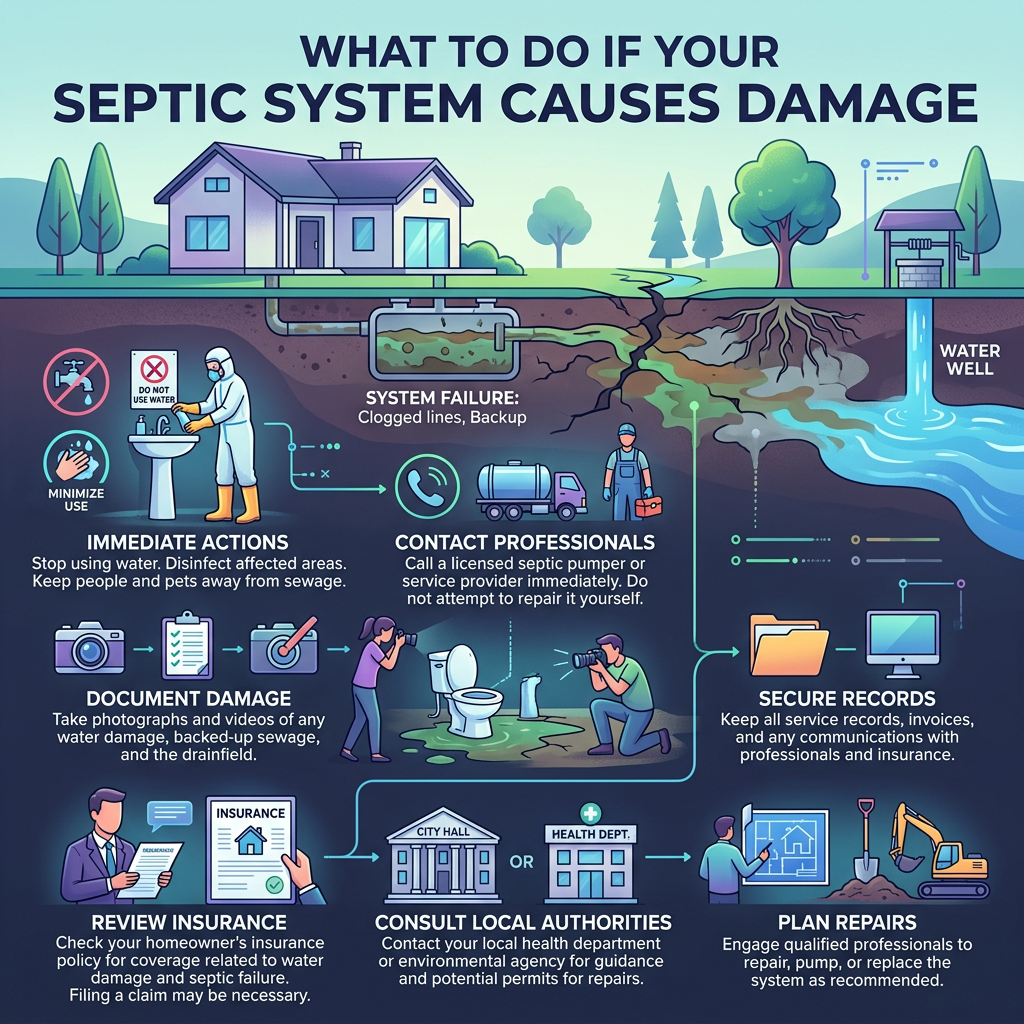
What to do if your septic system causes damage
Call your insurance carrier. Let them know what happened and ask what you need to do to begin a claim. Find out what information they may need and if they will send someone to inspect your home. If there is anything they want you to know about cleaning or making repairs, let them know.
Take care of your family. Do not come into contact with sewage or enter areas that you feel are unsafe. According to the EPA, avoid contact with sewage and call your local health department or regulation office for assistance. For your septic system, find someone in your area to come and take a look at your system.
Take pictures of what you can see that is safe for you to see. Rooms, belongings, and anything else that you feel safe taking pictures or videos of. Save the pictures and remember when you took them. Don’t put yourself in harm’s way trying to access your tank or other parts of your system.
Have someone diagnose your system in writing. Once you’ve had someone come and take a look at your system, have them explain what they found. What did they inspect, and what do they think caused your issue? Ask for this information in writing. Your insurance carrier may come and inspect your system themselves, but having this information can help explain what may have happened with your system.
Keep records. Keep records of any inspection/maintenance that has been done to your system, as well as any communication with your insurance carrier, estimates, receipts, and cleaning information. If you have any past records of your system, keep them. You never know if they may be needed in the future.
Break up your costs. Try to get separate estimates for cleaning/repairing your home and for diagnosing or repairing your septic system. This will allow you to know what may be considered a cost for your home and what may be considered a cost for your septic system. This will not determine what your insurance carrier will cover.
Ask before doing any repairs that are not urgent. Ask your insurance carrier if they want to come and look at the damage. If there are repairs that you feel need to be made to keep your family safe or to prevent more damage, ask your insurance carrier what to do and document any actions that you took. Don’t sit on things that could be harmful to your family.
If the diagnosis points to wider system problems, keep this article focused on the insurance questions. For symptoms and common causes, see Issues With Septic Tanks: Signs, Causes, and Safe Fixes. For drainfield inspections and repair options, read Septic Drainfield Repair: Inspection, Options, Costs, and Next Steps. For immediate backup steps, see Septic Tank Backup: Causes, Emergency Steps, and Prevention.
Frequently asked questions
Will my homeowners insurance cover my septic drain field?
Maybe. It will depend on what caused your damage and how your policy words “property underground.” Make sure you know what limits you have and what exclusions may apply to your policy. Ask your insurance carrier if your policy will cover your drain field and what type of damage.
Will my backup coverage cover my septic system?
Again, it will depend on how your policy words this endorsement. Ask your insurance carrier if your policy will cover backup from your private septic system. Will it cover cleaning up your home or repairing damage inside your home or repairing your septic system? Or maybe all of these?
Is a septic backup the same thing as a flood?
It can be. Depending on where your water came from and how it entered your home, each policy will define backup and flood differently. Tell your insurance carrier what happened and ask them how they will classify your damage. Don’t assume that your federal flood policy and homeowners policy will both cover your damage.
Should I fix my septic system before my insurance company comes to look at it?
Ask your insurance carrier if they need to come and look at the damage first. If there are repairs that you need to do to keep your family safe or prevent more damage, ask your insurance carrier what to do and take pictures of the damage and repairs you made if it’s safe to do so. Document everything and keep copies of any receipts.
My final thought: Always know your policy before you need it. Have your septic system information and your policy handy. And know if your insurance company will cover your septic system or if they will cover your home if you have backup.
Conclusion
So, Does homeowners insurance cover septic systems? The answer is yes and no. There is no definite answer to this question because each system is different, and each insurance claim will be evaluated by the insurance company.
Make sure you know what your policy language says and ask your insurance carrier if they will cover your septic system. Will they cover your home if you have a backup, or will they cover your septic system? Have these questions answered before you need to file a claim.
Keep your septic system clean and healthy with our SeptiFix product. Use one tablet a month to help your septic tank stay cleaner and healthier.

Related Posts