Septic Tank Distribution Box: What It Does, Signs of Failure, and Repair Costs
The distribution box (D-Box) connects the septic tank to the drain field. It distributes effluent as evenly as possible among the multiple drain field lines. If properly leveled, sealed, and operating, it will help prevent any one area of the drain field from becoming saturated.
If your distribution box is either damaged or improperly installed, you may see uneven flow, wet areas in your yard, sewage odors, and ultimately drain field failures. This article explains the function of a septic tank distribution box, describes symptoms of a failing distribution box, and outlines repair options along with estimated costs.
A damaged or improperly installed distribution box can create uneven wastewater circulation through the piping system, leading to soggy spots in your lawn, sewage odors, and ultimately damage to your drain field.
Affiliate disclaimer: This article contains an affiliate link. If you purchase a product through the link, this website may earn a commission at no additional cost to you. Product links do not replace professional septic inspections, pumping, repairs, or advice from your local health department.
Key takeaways
- A septic tank distribution box sends treated liquid from the septic tank into the drainfield.
- The box should be level, watertight, and installed on a stable base.
- Uneven flow can overload one drainfield trench while leaving other trenches underused.
- Common warning signs include wet spots, sewage odors, unusually green grass, and recurring backups.
- A septic professional should inspect, clean, level, repair, or replace the box.
- A basic repair may cost a few hundred dollars, while a difficult replacement can cost $1,500 to $3,000 or more.
- A distribution box problem may damage the drainfield if it is ignored.
What is a septic tank distribution box?
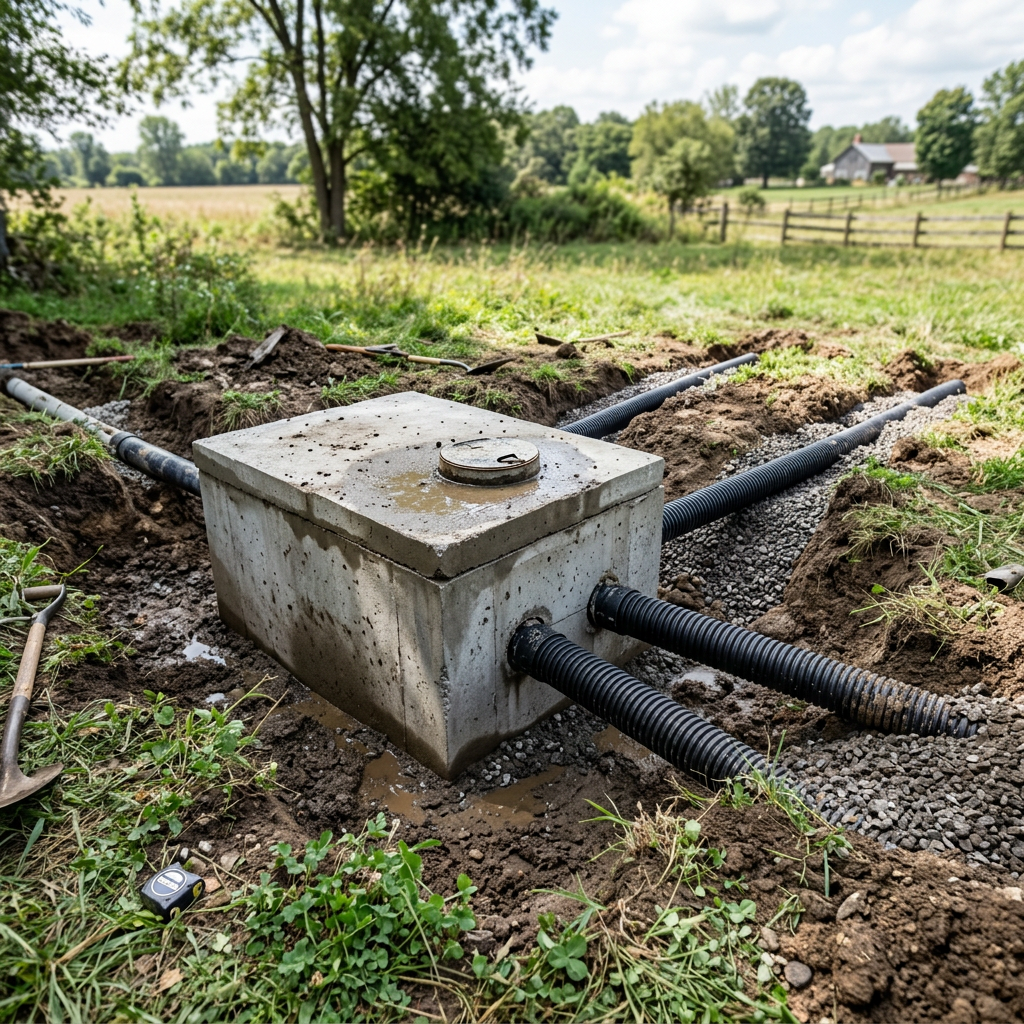
A septic tank distribution box is a small underground container installed between the septic tank and drainfield. It receives liquid wastewater from the septic tank and directs that wastewater into two or more drainfield pipes.
The box may be made from concrete, plastic, or another durable material approved for septic use. It usually has one inlet connected to the septic tank and several outlets connected to the drainfield laterals.
According to the U.S. Environmental Protection Agency, a typical septic system can include a septic tank, distribution box, and drainfield. The box helps distribute clarified wastewater through the drainfield.
Not every septic system uses the same design. Some systems use a pump tank, pressure distribution system, manifold, mound system, or drip distribution system instead of a traditional gravity-fed distribution box. Your septic permit, installation records, or a professional inspection can confirm which design your property has.
What does a septic tank distribution box do?
The main job of the distribution box is to divide wastewater between the drainfield pipes.
After wastewater enters the septic tank, heavy solids settle to the bottom and lighter materials float to the top. The liquid layer in the middle flows out of the tank through the outlet pipe. That liquid then travels to the distribution box.
The box directs the liquid into separate drainfield lines. Ideally, each line receives a similar amount of wastewater. This prevents one area of the drainfield from becoming overloaded.
The Penn State Extension septic system guide describes the distribution box as a watertight container located between the septic tank and drainfield piping. The box helps send effluent into the drainfield trenches without placing too much pressure on one area.
A distribution box must be level for this process to work correctly. If the box settles or tilts, wastewater may flow mostly into one outlet. The overloaded drainfield line may become saturated, while the other lines receive little or no wastewater.
How does a septic distribution box work?
A simple gravity-fed system works in this order:
- The effluent from the house flows to the septic tank.
- Solids drop out of solution in the tank.
- Effluent (liquid) then passes through an outlet pipe at the bottom of the tank.
- It enters the distribution box located after the tank.
- From there, it is distributed to one or more drainfield lines via this distribution box.
- Wastewater percolates downward into the soil within the drainfield, which treats and removes pollutants.
- The distribution box distributes the flow to each of the drain field lines.
- Soil will treat and absorb the wastewater as it passes through the drainfield.
The distribution box does not usually treat wastewater. The septic tank and soil provide the main treatment process. The box controls where the liquid travels after leaving the tank.
Some boxes use a small amount of elevation difference to divide the flow. Others may be part of a pressure-dosed system that uses a pump. The correct design depends on the property, soil, local rules, and original septic plan.

Signs of a damaged or failing distribution box
A distribution box problem does not always cause immediate indoor symptoms. In many cases, the first warning appears in the yard or drainfield.
1. One wet area over the drainfield
A soggy patch over one part of the drainfield may indicate that one trench is receiving too much wastewater. A damaged, tilted, or blocked distribution box can send an uneven flow into the drainfield.
Wet soil can also result from a high water table, a damaged pipe, heavy rain, or a failing drainfield. A professional should identify the actual cause.
2. Unusually green grass
Grass may grow faster or look greener over an overloaded drainfield section. Wastewater adds moisture and nutrients to the soil, which can create a visible difference in the yard.
This sign does not prove that the distribution box has failed. It may also indicate a larger drainfield problem.
3. Sewage odors outside
A strong sewage odor near the tank, distribution box, or drainfield is a warning sign. The cause may be a broken pipe, overflowing tank, saturated soil, or an exposed access cover.
Do not ignore sewage odors. Untreated wastewater can carry harmful pathogens and should be assessed by a qualified professional.
4. Sewage surfacing in the yard
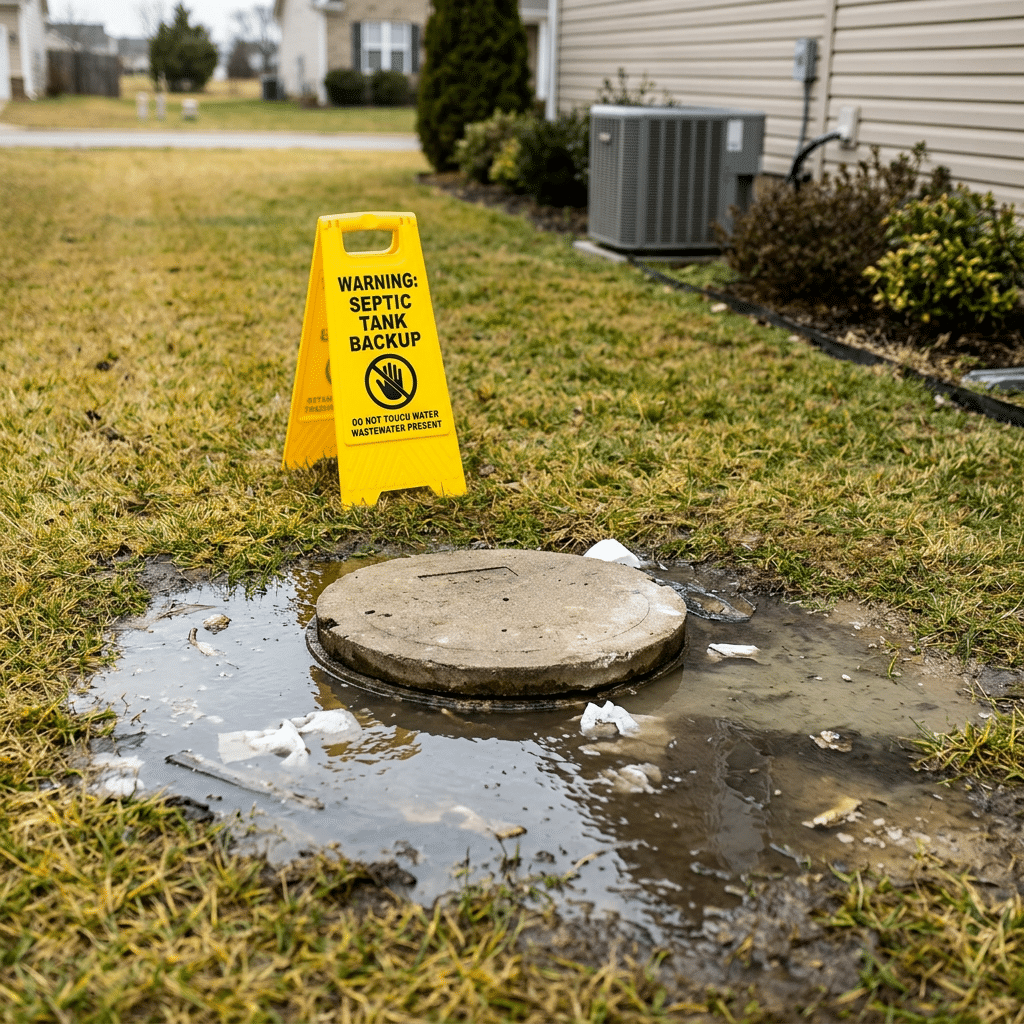
Sewage surfacing is an urgent problem. It may occur when the distribution box is blocked, the drainfield is saturated, or the septic tank is full.
Keep people and pets away from the affected area. Reduce water use and contact a licensed septic professional.
5. Slow drains or recurring backups
Slow drains and sewage backups can result from several problems, including:
- A full septic tank
- A clogged outlet pipe
- A blocked effluent filter
- A damaged distribution box
- A failing drainfield
- Excessive water use
Your existing guide on septic tank backups covers the immediate steps to take when wastewater backs up inside the home.
6. Different drainfield areas look uneven
One part of the drainfield may look wet and green while another part looks dry. Uneven conditions can indicate that wastewater is not being divided properly.
The distribution box may be tilted, blocked, cracked, or installed incorrectly. The drainfield pipes may also be damaged, so the whole system needs to be checked.
7. A septic alarm activates
If your property uses a pump or pressure distribution system, a high-water alarm may activate when wastewater is not moving as expected. The cause may involve the pump, float switch, control panel, pipe, distribution box, or drainfield.
See your guide on what to do when a septic tank alarm goes off for basic emergency steps.
What causes distribution box problems?
Several issues can affect a septic tank distribution box.
Settling soil
The soil around the box can settle over time. This may tilt the box and change the elevation of the outlet pipes.
Poor installation
A box installed on unstable soil may move or sink. Distribution boxes should be level and placed on a stable base. Florida septic rules, for example, require distribution boxes to be watertight, durable, and level.
Cracks or leaks
Concrete boxes can crack because of age, ground movement, freezing conditions, or heavy pressure above the box. A plastic box can also become damaged if it is installed incorrectly or exposed to excessive stress.
A leaking box may allow wastewater to escape before it reaches the drainfield pipes.
Blocked outlets
Solids, roots, debris, or sediment can restrict an outlet. Blockage may cause wastewater to flow through the other outlets instead.
This is one reason septic tanks need proper maintenance. You can learn more in your septic system maintenance checklist.

Damaged drainfield pipes
The distribution box may be working correctly while one or more drainfield lines are crushed, clogged, or disconnected. A full inspection should check both the box and the pipes.
Heavy traffic above the box
Vehicles, sheds, patios, and heavy equipment can damage underground septic components. Keep heavy loads away from the septic tank, distribution box, and drainfield unless the system was specifically designed for that use.
How is a distribution box inspected?
A septic professional may use your septic records to locate the distribution box. If the box is buried deeply, the professional may need to excavate the area carefully.
An inspection may include:
- Checking the cover and access point
- Looking for cracks or signs of leakage
- Confirming the box is level
- Checking the inlet and outlet pipes
- Looking for roots, sludge, or debris
- Inspecting the base beneath the box
- Checking whether each drainfield line receives flow
- Looking for standing water or soil saturation
Some distribution boxes are buried several inches below the surface. Local rules may require a riser to make future inspection and maintenance easier. Massachusetts regulations, for example, address risers for boxes buried more than 9 inches below grade.
Do not enter a septic tank, distribution box, or other underground wastewater component. Septic gases can be dangerous, and underground structures can collapse. Opening a cover should also be left to someone familiar with septic system safety.
Can a distribution box be repaired?
Sometimes. The repair depends on the type and severity of the problem.
A professional may be able to:
- Remove debris from the box
- Clear a blocked outlet
- Reseat or reconnect a pipe
- Relevel the box
- Repair a minor connection
- Add or improve access
- Replace a damaged cover
- Replace the entire box
A cracked, badly tilted, or structurally damaged box usually needs replacement. If the box has caused one drainfield trench to become overloaded for a long time, the drainfield may also need repair.
A distribution box repair should not be treated as a do-it-yourself project unless a qualified professional has already evaluated the system and local regulations allow the work.
Septic tank distribution box replacement cost
There is no single national price for distribution box replacement. The cost depends on access, depth, soil, local labor rates, permits, material, and the condition of the connected pipes.
A rough U.S. guide is:
- Simple cleaning or releveling: about $200 to $800
- Straightforward replacement: about $600 to $2,000 installed
- Difficult excavation or pipe reconnection: about $1,500 to $3,000 or more
These figures are general estimates, not guaranteed prices. The box itself may cost less than the excavation and labor. A contractor may also charge for pumping, permits, inspections, pipe repairs, risers, backfilling, or drainfield work.
For comparison, HomeGuide’s distribution box replacement cost guide separates the cost of the box, labor, and permits. Local estimates may be higher or lower.
Ask the contractor whether the quote includes:
- Excavation
- Pumping
- The replacement box
- Pipe reconnection
- Leveling and base preparation
- Permit fees
- Inspection fees
- Backfilling
- Removal of the old box
- Any drainfield repairs
Get at least two written estimates when possible. A low quote may not include permits, pipe repairs, or restoration of the yard.
How to protect your distribution box
Good septic habits can help protect the distribution box and drainfield.
- Keep vehicles and heavy equipment away from septic components.
- Do not build over the tank, distribution box, or drainfield.
- Direct roof water and sump pump discharge away from the drainfield.
- Fix leaking toilets and faucets.
- Avoid sending grease, wipes, and chemicals into your septic system.
- Pump your septic system according to your household use and local guidance.
- Keep records of inspections, pumps, repairs, and permits.
- Learn where your septic tank and distribution box are located.
If you need help finding the system, see how to find your septic tank without digging up the yard.
You may also want to read how to protect your septic drainfield. Protecting the drainfield helps reduce the risk of costly problems downstream from the distribution box.
Optional septic product note
Some homeowners look for septic products that claim to support septic system performance. If you want to review the SeptiFix product mentioned on this site, you can use this SeptiFix link.
A product should never be presented as a way to repair a cracked, tilted, blocked, or failed distribution box. It also should not replace pumping, inspection, drainfield repair, or professional advice. The safest approach is to identify the actual problem before buying any septic product.
When should you call a septic professional?
Call a qualified septic professional if you notice:
- The sewer line has surfaced in your yard.
- You smell a strong odor of sewage.
- You have experienced multiple plumbing backups.
- There is standing water on the drainfield sometime after it rains.
- Your septic alarm is going off repeatedly (if you have one).
- Water is collecting around the Distribution Box.
- Your Distribution Box cover is missing or broken.
- You suspect a crack or leak either on the house side of the drain field or within the drain field itself.
- Your drainfield’s performance varies greatly.
Do not put anything down drains or toilets until we inspect your system. Do not dig into the ground where you suspect the problem is. Do not open or attempt to fix any underground parts of your septic system yourself.
Final thoughts
A septic tank distribution box may seem insignificant compared to other parts of a wastewater system; however, it does have an important function. The distribution box directs (sends) liquid from the septic tank to the drain field pipes and distributes (spreads) that flow throughout the available treatment area.
It is very important that a distribution box be installed on a stable foundation (e.g., on solid ground with no settling), at-grade (i.e., level), and watertight. An improper or defective installation of a distribution box can result in an uneven distribution of flow through the drainfield which will likely result in problems with the drainfield itself.
Do not assume that a problem you are experiencing is only related to your distribution box if you notice some of the signs below. Your entire system may need to be inspected to determine where the problem lies.
Frequently asked questions
What is the function of a septic tank distribution box?
The primary purpose of a septic tank distribution box is to send liquid waste from the septic tank out through many drain field pipes. This disperses the amount of liquid going down each drain field pipe, thereby preventing one drain field trench from being overwhelmed with liquid waste.
Do all septic systems have a distribution box?
No. While some septic systems are designed to be fed by gravity flow and therefore have a traditional distribution box, others may utilize pumping, manifolding, pressurized distribution, mounds, or drip irrigation systems. If you are unsure about how your system was originally set up, check your records or consult with a professional who specializes in septic systems.
Where is the distribution box located?
It is usually underground between the septic tank and drainfield. The exact location depends on the original septic design and property layout.
How do I know if my distribution box is failing?
Possible signs include wet spots, sewage odors, unusually green grass, standing water, recurring backups, uneven drainfield conditions, or an alarm on a pumped system. These signs can have other causes, so professional diagnosis is important.
Can I clean a septic distribution box myself?
Some minor cleaning may appear simple, but locating, opening, and inspecting the box can involve safety risks and local requirements. A septic professional should handle the work, especially if the box is deep, damaged, or connected to a pressurized system.
How much does it cost to replace a septic distribution box?
A straightforward replacement may cost about $600 to $2,000 installed. Simple releveling may cost less, while difficult excavation, pipe repairs, permits, or drainfield damage can push the cost to $3,000 or more.
Can a distribution box problem damage the drainfield?
Yes. If the box sends too much wastewater into one trench, that section may become overloaded or saturated. Long-term uneven flow can contribute to drainfield failure.
Can I pump my septic tank prior to fixing my distribution box?
Maybe. The contractor will probably say that you should have your tank pumped if the tank is full, if there isn’t much space for him to do his job, or to keep the wastewater from getting in the way. However, whether you need to pump first depends on how your system works and what kind of repairs are being done.
Are a distribution box and effluent filters the same thing?
No. The effluent filter keeps solid materials from coming out of the bottom of your septic tank. The distribution box takes the liquids flowing out of the top of your tank and sends them into the drain field piping. Both systems serve a specific function, and they are two completely different items.
What can I do to help ensure that I don’t run into problems with my distribution boxes?
Do not allow heavy trucks over your drainage system. Do not let surface water flood your drainage system. Fix any leaks in your plumbing. Maintain your septic tank. Don’t put anything in your sewer system that could cause damage to it. Set up regular inspection visits when necessary. Keep records of every time work is done on your septic system. Know exactly where each part of your septic system is.

Sources
- U.S. EPA, Types of Septic Systems
- Penn State Extension, Septic System Basics
- Massachusetts Title 5 Septic Regulations
- Florida Distribution Box Requirements
- HomeGuide, Septic Distribution Box Replacement Cost
Related Posts