
Septic Tank Pumping Guide (When, Why, And What To Expect)
A septic tank is a relatively simple, underground system that stores and processes the “dirty” wastewater from your home. Wastewater enters into the tank; solids (like sludge) sink to the bottom while greasier substances float on top. Eventually, enough sludge accumulates that it needs to be pumped from the tank or it can cause problems.
If you do not pump your tank at the proper times, then you are dealing with all of the things people don’t like about septic tanks, i.e., odors, backed-up drains, sewage backing up into your home, etc. along with costly repairs. In this guide, I provide you with reliable, factual information so that you can have confidence when you contact a service provider to perform maintenance on your septic tank. Herein, you will receive straightforward answers as to how often a septic tank requires pumping without guessing.
I want to provide you with an accurate Septic Tank Pumping Guide so that you will feel assured when contacting a professional and maintaining your septic tank properly.

When Should You Pump Your Septic Tank?
Timing is critical when it comes to maintaining your septic system. Pumping your septic system too frequently will be a waste of money while waiting too long before pumping can cause costly damages that would have been avoided through routine maintenance.
The main goal of this septic tank pumping guide section is to provide information on two items; a standard time frame for regular pumping and what are the warning signs to watch out for so you don’t miss them. By using this Septic Tank Pumping Guide as a simple check list you will be able to be proactive in avoiding potential problems and last minute emergency situations.
How Often Should a Septic Tank Need Pumped?
The general rule for septic tank pumping is to pump every three (3) to five (5) years depending upon your living conditions.
As stated above, there are several factors that can influence how frequently you will have to pump your septic system:
* Household Size:
+ The larger your household, the more water you are using which results in more waste and therefore creates buildup of waste within the septic system.
* Water Use Habits:
+ Taking long showers, washing a lot of clothes at once or running a continuous load in the dishwasher all contribute to increased buildup of waste in the septic system.
* Tank Size:
+ Smaller tanks fill up faster than larger ones because they do not hold as much waste.
* Garbage Disposal:
+ Using a garbage disposal daily can create rapid buildup of solid waste.
Warning Signs Your Septic Tank Is Due for Pumping
Your home may send you some “early warnings” that your tank is filling or that the system is under stress. Listening for early signals is a good idea.
Some common warning signals include:
- Slow draining across the entire house (not just at one sink).
- Gurgling noises coming from the toilet or drain after running water.
- Strong odors coming from the area around the drains, from the tank itself, or from the drainfield.
- Water pooling on the surface of the soil or wet/soft soil over the drainfield during dry conditions.
- Backed-up sewage into a tub/shower, or through the drain.
- A strip of lawn over the drainfield that is significantly greener than the surrounding area of your yard.
The above signals indicate the tank may be full, or the drainfield has exceeded its capacity. At the first sign of one or more of these symptoms, I would recommend contacting a professional so an early warning signal doesn’t become a major issue. Use this section of your Septic Tank Pumping Guide as a quick check list when you feel like something is off.
Why Septic Tank Pumping Is So Important
It is easy to delay septic tank maintenance until there are problems. But the risks build up over time. An effective Septic Tank Pumping Guide provides peace of mind and predictable monthly costs, as well as an environment where your home will be safe for your family.
You will keep your septic system running well by pumping it regularly, and protect your home, your lawn and your finances. You will also provide your family with protection from bacteria that can reside in sewage and be invisible to you.
Protect Your Home, Health, and Wallet
You will have fewer headache episodes when you regularly pump your system. Wastewater isn’t just disgusting, it is unhealthy.
Regularly pumping your system will help you:
1. Prevent sewage backing up into tubs, showers or floors.
2. Reduce bad smells throughout the house and yard.
3. Lessen health hazards due to the presence of harmful bacteria and other pathogens in waste water.
Additionally, regular maintenance will prevent large solids from migrating through your drain field once they leave the tank. Solids that get past the tank and into the drain field can block the pipes and soil. If you damage your drain field, repairing or replacing it could cost you thousands of dollars.
When you follow basic guidelines for how often to have your septic system pumped, and use the information provided by the Septic Tank Pumping Guide for planning, you will be helping to extend the lifespan of your entire system.
What Happens If You Skip Septic Tank Pumping?
As a septic system sits idle (not being pumped) for an extended period of time, solid matter will begin to occupy the space that was once intended to be occupied by liquid waste. The amount of available space to handle incoming wastewater decreases, and therefore the system’s efficiency suffers as well.
Below is a general description of what typically occurs with prolonged neglect of pumping a septic system:
- Solids build-up at the bottom of the tank and eventually extend out of the outlet.
- Water and solids enter the drain field piping simultaneously.
- The piping and surrounding soil become clogged preventing proper flow.
The drain field becomes overloaded and fails. This can result in costly repairs such as excavating parts of your yard, installing new piping, or even having to replace the entire system. I’ve witnessed firsthand how neglecting to pump the tank results in large repair bills that surprise homeowners. Staying on track with the maintenance recommended in this Septic Tank Pumping Guide is much more cost effective and less stressful.
What To Expect During a Septic Tank Pumping Service
The first time many homeowners have a pump truck come out can be quite unsettling. You may envision a total mess and worry about what the crew will do with everything once they are finished.
When you go through this Septic Tank Pumping Guide Section, you will learn exactly how the service technicians at the company will conduct the visit. Once you become familiar with the procedure, having a septic tank pumped will seem much like a typical home maintenance job versus an emergency. You will also be able to find information in this guide as well as other areas of our site on where to ask questions and receive guidance tailored to your home.
Before the Pump Truck Arrives
Preparation will help make the process easier and faster for everyone involved.
Some ways to prepare include:
- Locate the tank lids or other access points to the septic system.
- Remove obstacles from the truck and hose path (cars, toys, etc.), including lawn equipment.
- Secure pets in a separate location, such as the house or yard.
- Also plan to have someone at home when the service provider arrives (if requested).
Additionally, writing down any questions regarding what needs to be done with regards to septic tank pumping, along with your preferred scheduling can be helpful. This section is a check-list for you to use while the professional is present, so you can ask all of your questions before the service technician leaves.
What the Pumping Crew Does on Site
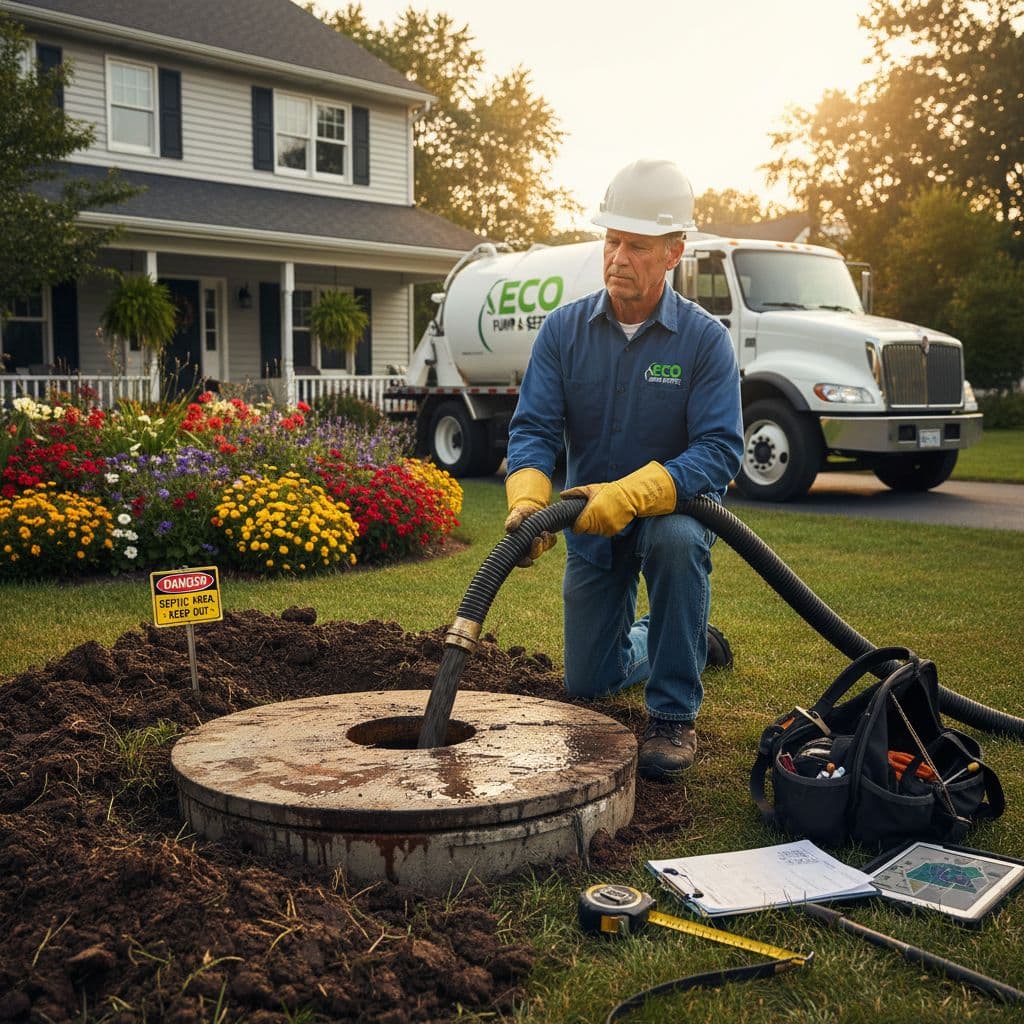
When the crew comes on site, the first thing they do is find the best place to park as close to the tank as possible, then they follow a fairly straightforward routine.
Almost all crews will:
- Locate and remove the top off the tank.
- Inspect the level of the liquid inside the tank.
- Stir the material to ensure the liquids and solids can exit the tank during pumping.
- Continue pumping the tank until the tank is empty.
- Look for cracked areas, worn parts, etc., that indicate a problem with the tank.
- Replace the tank cap and clean up the area where the tank was located.
Typically, most visits last around one hour unless the tank lid is difficult to access or the tank is exceptionally deep. While the crew is at the location, ask them “How often does a septic tank need to be pumped” for your specific setup. Their responses combined with this guide provide you with information needed to create a Septic Tank Pumping Guide for your family. A number of technicians are also happy to explain their findings and how this visit relates to your long-term Septic Tank Pumping Guide.

Key Takeaways
. Routine septic pumping is a form of maintenance that belongs to the homeowner – it is not an additional obligation.
.Typically, most homes require pumping at 3- to 5-year intervals depending upon tank capacity, household population, and amount of water usage.
.Pumping will prevent solids (sludge) and liquids (scum) from traveling through the piping to the drainfield and causing clogs.
.Warning signs of poor performance include slow draining, odors from the sewer system, wet or green grass in the area of the drainfield, and backup in the house.
.As a homeowner, it would be best to set up and keep record of when you have service performed on your septic system, however, it is highly recommended that this be done by a licensed technician.
.A local, reliable contractor that understands the needs of your system can identify problems early enough to make repairs prior to damage occurring to the system.
.At each time you have your septic system pumped, it is also being inspected for proper operation and function and many times the drainfield.
.Your daily practices regarding flushing and using water determine how frequently you will need to pump your septic system.
.Products claiming to be “septic additives” are not a substitute for routine pumping and some may actually cause harm to your system.
.Keeping accurate, simple records of date, company name, and inspection results will eliminate much of the guess work associated with making decisions about service.
.Proper surface care to protect the drainfield will increase the longevity of your entire system.
.Planned, regular pumping will cost you significantly less than unplanned, emergency drainfield or system repair.
.You don’t have to know everything there is to know about septic systems; you simply need to maintain a regular schedule and pay attention.
Conclusion
Your Septic Tank Pumping Guide is ready with basic information about when to pump, how important regular pumping will be, and what occurs during a service call. A new septic tank’s lifespan will likely be extended by keeping odors, back-ups, and very large repair bills at bay. Next, it would be wise to select an ideal date for the next service and add that to a calendar.
In addition, a log can be kept with some space for notes and dates of the crew visits and phone calls made to a local trusted professional if any red flags appear. I hope this Septic Tank Pumping Guide makes your next pumping visit simple and stress free.

Affiliate Disclosure
This article may contain affiliate links. If you click a link and make a purchase, we may earn a small commission at no extra cost to you.
We only recommend septic tank pumping products and services that we believe may be useful to our readers. Our opinions are our own, and affiliate relationships do not influence our recommendations. For major septic issues, contact a licensed septic professional.
Related Posts



2 thoughts on “Septic Tank Pumping Guide (When, Why, And What To Expect)”