Aerobic Septic Tank Treatment: Cleaner Water, Fewer Smells, Real-World Results
Bad smells near the tank, wet spots in your yard, a slow drain field, or county regulations requiring you to do something different? You must be in the right spot.
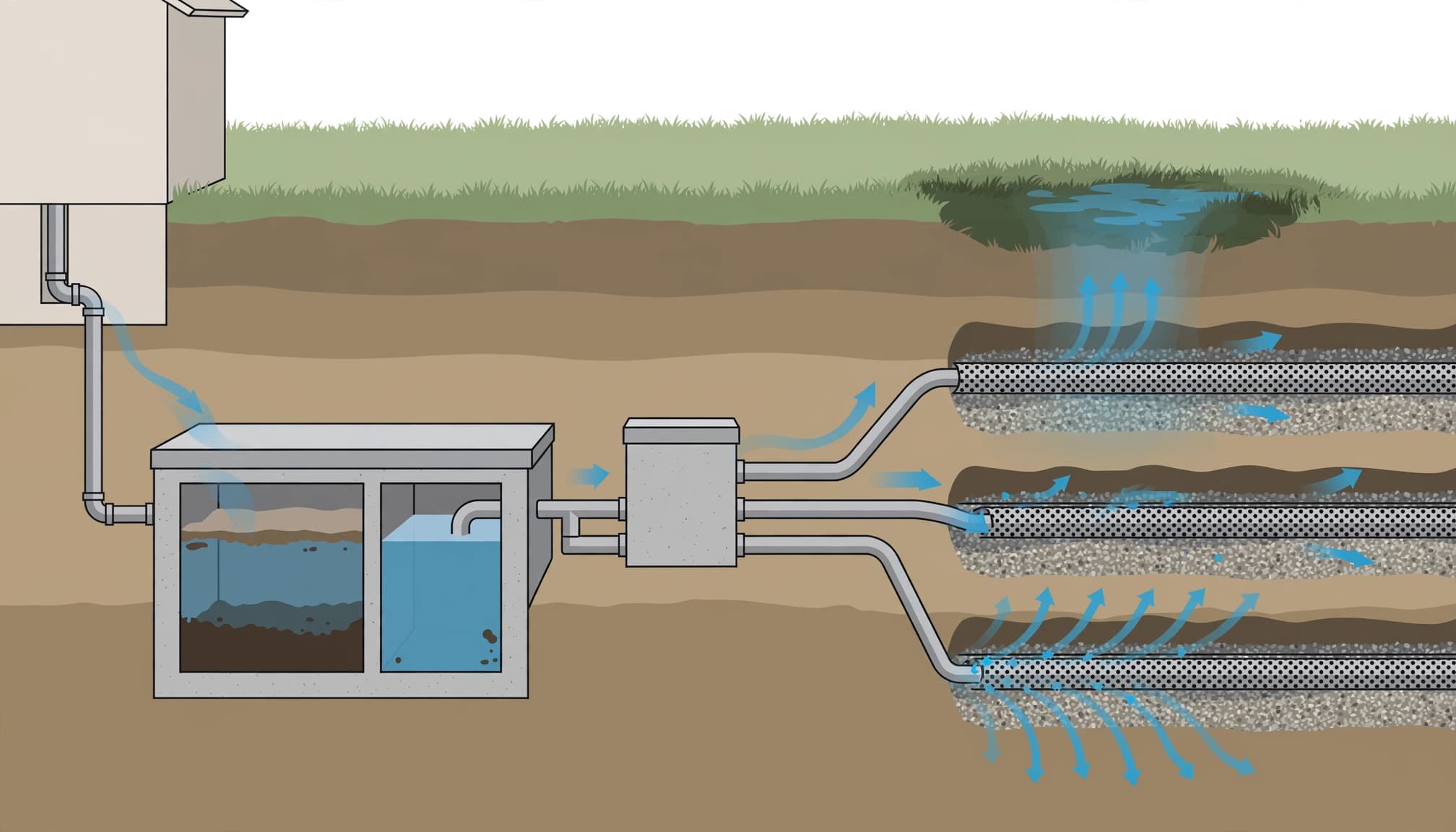
Aerobic septic tank treatment is simply adding air and good bacteria to waste water in order to make a more efficient and effective cleaning than a standard tank. Aerobic systems use an air pump to supply oxygen to microorganisms that break down waste and reduce bad smells.
You will learn what an aerobic septic tank is, how it works, how to maintain it, what problems to look for and what it costs. This homeowner’s guide is suitable for homeowners, home buyers, landlords, and owners of a property in the country. You receive step by step instruction, simple tips and easy to follow take aways that you can take home and implement.

Key Takeaways
- There are two types of aerobic septic systems that utilize beneficial bacteria and oxygen to treat wastewater better than a traditional system.
- These systems tend to produce cleaner effluent, reduced odors, and are best suited for smaller lot sizes or those with poor soils.
- Regular inspections, electrical usage, and continued maintenance is required for an aerobic system to function properly.
- Components include (in order) a pre-treatment holding tank, an aeration chamber, an air blower unit, clarifier, disinfectant unit, pump tank, and alarm panel.
- Before you install your aerobic treatment unit, contact your local health department to determine what local regulations apply regarding installation permits, soil conditions, and setback requirements.
- In addition to regular maintenance of the aerator and cleaning of all air intake filters as needed; it is also recommended to maintain regular checks of the alarm and to inspect the entire system at least once per year.
- Never dispose of wipes, grease, or any chemical (harsh chemicals, paint, pesticides etc.) into the septic system, as they will damage it.
- During power failures, limit household water use until power is restored. If excessive odors persist, continuous alarm activation occurs, wet areas develop under the system cover, or effluent remains cloudy after several days contact a licensed professional.
- Keep permits, pumping receipts, service records, and warranty information in a safe place.
What Is an Aerobic Septic Tank and Why Would You Choose One?
An aerobic septic tank, also called an aerobic treatment unit (ATU) is a small on-site waste treatment system that injects air into the process. The air supplies friendly microbes that break down the waste more rapidly and more completely.
Aerobic units produce cleaner water, reduce odor, and are often suitable for small lots or poor soils compared to basic septic systems. They do require electricity and periodic maintenance.
You may require one if your site has a high water table, clay or shallow soils, is regulated by spray irrigation, has a failed drain field requiring replacement, or health codes require advanced treatment.
Quick pros and cons:
- Pros: cleaner effluent, better odor control, smaller footprint, flexible dispersal options.
- Cons: higher upfront cost, power use, more maintenance and inspections.
Myth to bust: pouring additives into a regular septic tank will not turn it into an aerobic system. You need a real aeration process with air supply and mixing.
Aerobic vs. Anaerobic: The Key Differences You Can See
- Oxygen: present in aerobic units, absent in standard septic tanks.
- Effluent clarity: clearer from aerobic systems, cloudier from anaerobic systems.
- Odor levels: much lower with aerobic treatment, stronger with anaerobic.
- Footprint: aerobic systems can use smaller dispersal areas.
- Best use: aerobic for tight lots or poor soils, anaerobic for larger lots with good soils.
Because the water is cleaner, aerobic systems often allow spray or drip dispersal. Plan for power, and expect a service contract as part of ownership.
The Main Parts of an Aerobic Treatment Unit (ATU)
- Pretreatment tank: holds incoming wastewater, lets heavy solids settle first.
- Aeration chamber: the heart of the unit where air and microbes mix with waste.
- Air pump or blower: supplies steady air, which keeps microbes active.
- Diffusers: make small bubbles so oxygen spreads through the water.
- Clarifier: slows the flow so remaining solids can settle before discharge.
- Disinfection stage: uses chlorine tablets or UV to kill germs if required by code.
- Pump tank: stores treated water and sends it to spray, drip, or subsurface lines.
- Control panel and alarms: manage timers, pumps, and alert you to problems.
Lids, risers, and clear access points make service safer and faster. Ask for risers to grade so you can see and reach components without digging.
Who Should Choose an Aerobic System?
- Local codes require advanced treatment or surface spray.
- Small lots or tricky soils make a standard drain field hard to permit.
- You need to fix or replace a failed system.
- Your home uses more water, or you plan to add bedrooms.
- You want spray or drip irrigation from treated effluent.
Check county health rules and any HOA policies before you decide. A site evaluation and soil test will confirm the right system for your property.
How Aerobic Septic Tanks Work: From Flush to Clean Effluent
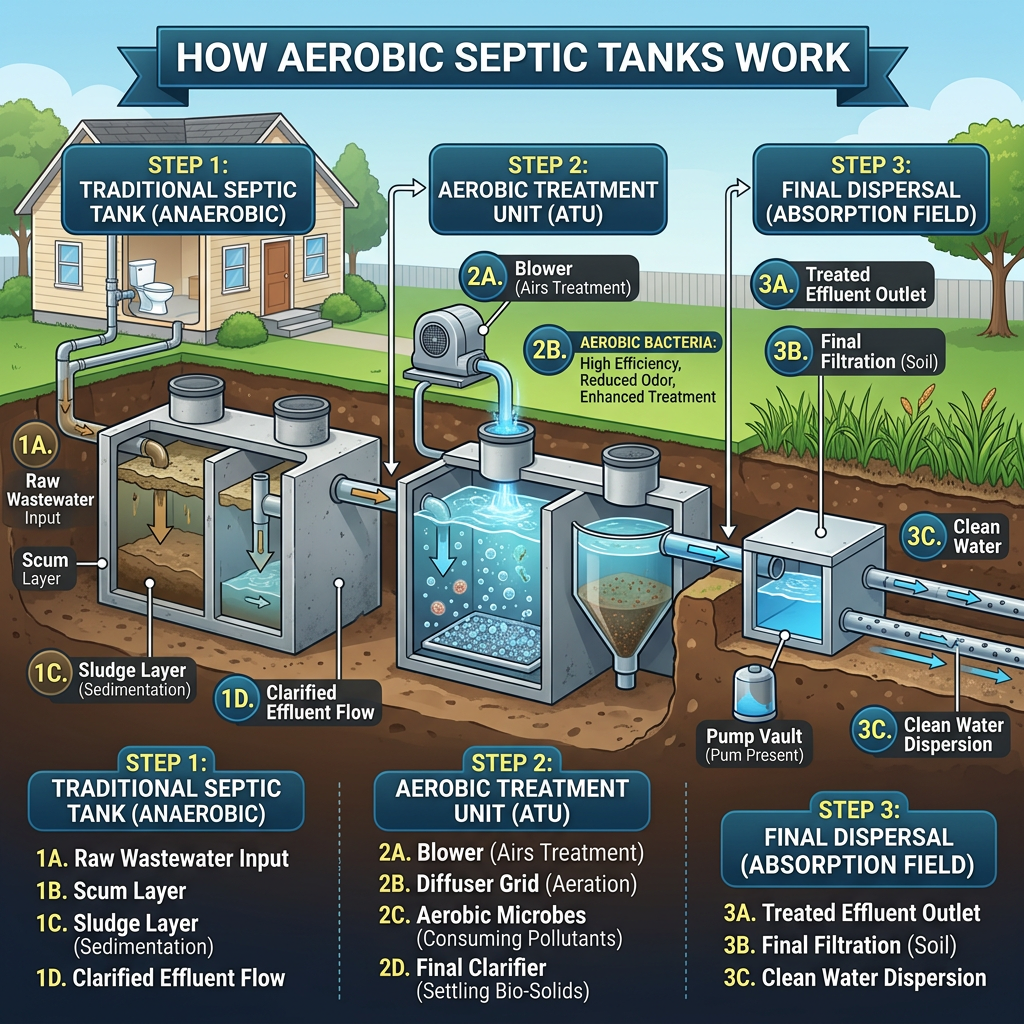
Visualize the passage from your bathroom to the garden. The wastewater enters a pretreatment chamber, wherein the heavy solids settle. Thereafter air is introduced into the next chamber, the microbes awaken and resume their feeding. The water becomes clear, due to the breakdown of the solids with the attendant settling. In some systems a final step of disinfection of the water occurs before it is passed to the garden.
Sustained air flow and energy keep this process flow strong. With oxygen available rapidly bacteria work faster and eliminate odors. That is why the water appears clearer and the garden does not smell.
The Treatment Steps, Made Simple
- Pretreatment: heavy solids settle, lighter scum floats, flow calms down.
- Aeration: diffusers add air, microbes digest waste more completely.
- Clarification: remaining particles settle and are kept from the outlet.
- Disinfection (if used): chlorine or UV knocks down bacteria and viruses.
- Pump and dispersal: treated water goes to spray, drip, or subsurface lines.
Some compact systems combine several stages in one tank using baffles and timers.
How Air and Helpful Bacteria Do the Heavy Lifting
Oxygen is the juice that makes the biology thrive. With air bubbles the aerobic bugs thrive and eat more waste faster. Less waste left means less odor.
Diffusers make fine air bubbles to dissolve more oxygen in water. Brady, if the power goes out or if the blower is out, the oxygen goes down and the treatment operation slows down. Long outages cause odors and cloudy water until the air comes back and the biology recovers.
What Changes in Your Yard and Home
- Clearer effluent and cleaner dispersal lines.
- Less odor near tanks and spray heads.
- Smaller dispersal area compared to many standard drain fields.
- Spray or drip options when codes allow.
- Better performance in heavy clay or shallow soils.
Trade-offs include a faint hum from the blower, the cost of chlorine tablets if required, and regular service visits to keep things tuned.
Costs, Permits, and Safety: Plan Before You Install or Upgrade
You’ll need some approvals before you start the work. You will have to expect a review of the site, the design, permits and inspections. Start budgeting for the unit, excavation, electrical work, and the startup costs. Don’t forget to put in yearly costs for electricity and maintenance.
The permits and inspections are for your protection, your well’s protection and for the protection of your neighbors. A safe system will help prevent any pathogens from getting into the ground and drinking water from streams and lakes. Good records will help if you decide to sell the home at a later time.
Permits and Local Rules You Need to Know
- Site evaluation and soil test by a licensed pro.
- System design that fits your soil, lot size, and home load.
- Health department permit before installation.
- Setbacks from wells, property lines, buildings, and streams.
- Spray zones must avoid neighbors, play areas, and gardens. Signs may be required.
Keep copies of permits, designs, pumping receipts, and service logs. They help with warranty claims and home sales.
What Installation Looks Like, Start to Finish
The first point adopted is the design and permits. When this is complete the trenches are opened, and tanks and lines put in place. After this the electrician puts in the circuit for a blower, and control panel. From this time on the installer proceeds with the installation of machinery, tests the air flows and pumps, and of course sets up an inspection date. Instructions on the alarm, tablets and simple maintenance are taught.
On the electrical side, the system requires a dedicated circuit, weatherproof connections, and an alarm system which is operational. For future work easy access is also necessary. Service will be required as in all contracts. The risers are provided with covers and locking fastenings for kiddies’ safety.
Budget, Energy Use, and Warranty Tips
- Upfront cost: about $8,000 to $20,000 based on region, size, soil, and dispersal.
- Power use: many blowers run 24 hours, often $10 to $30 per month.
- Ongoing service: typical contracts run $200 to $500 per year, plus pumping every few years.
Ways to save:
- Fix leaks fast. A dripping toilet can flood the system.
- Spread laundry through the week.
- Keep air filters and effluent filters clean.
- Schedule service before problems grow.
Register your system for warranty coverage. Follow the maker’s maintenance rules, or you may lose that protection.
Weather and Power Outages: Keep Treatment Stable
When power stops, air stops, and treatment slows. Limit water use until power returns. Avoid bleach and heavy cleaners during that time. If allowed, a small backup power source can keep the blower and critical pumps running.
Cold snaps call for insulation on exposed lines and lids closed tight. In hot spells, check air filters more often, since dust and pollen can clog them faster.
Aerobic Septic Tank Treatment and Maintenance: Keep It Working
Daily habits for aerobic septic tank treatment matter. Good care keeps biology strong, protects pumps and lines, and saves you money. A simple schedule helps you catch small issues before they turn into big repairs. This is where your approach to aerobic septic tank treatment pays off.
Your Simple Care Schedule
- Monthly: listen for the blower, check alarm lights, and walk the yard for wet or smelly spots.
- Quarterly: clean or replace air filters, check diffusers and chlorine tablets if used, and look for kinked lines.
- Twice a year: schedule a licensed tech to check sludge levels, airflow, timers, floats, and pumps.
- Every 2 to 5 years: pump tanks when solids reach limits set by code or the maker.
- Always: keep a log of service dates, parts replaced, alarm events, and who you called.
Additives and Bacteria Boosters: What Helps and What to Skip
A healthy aerobic system already has the right microbes. You only need boosters after a hard hit, like heavy bleach use, antibiotics, long vacations with no flow, or a restart after repairs.
Avoid pouring bleach, quats, drain openers, paint, pesticides, or non septic safe wipes into the system. Enzymes cannot fix broken pumps, clogged diffusers, or a dead blower.
If you use an additive, match it to your system brand and follow local rules. Ask your service provider before you buy.
Troubleshooting Odors, Alarms, and Wet Spots
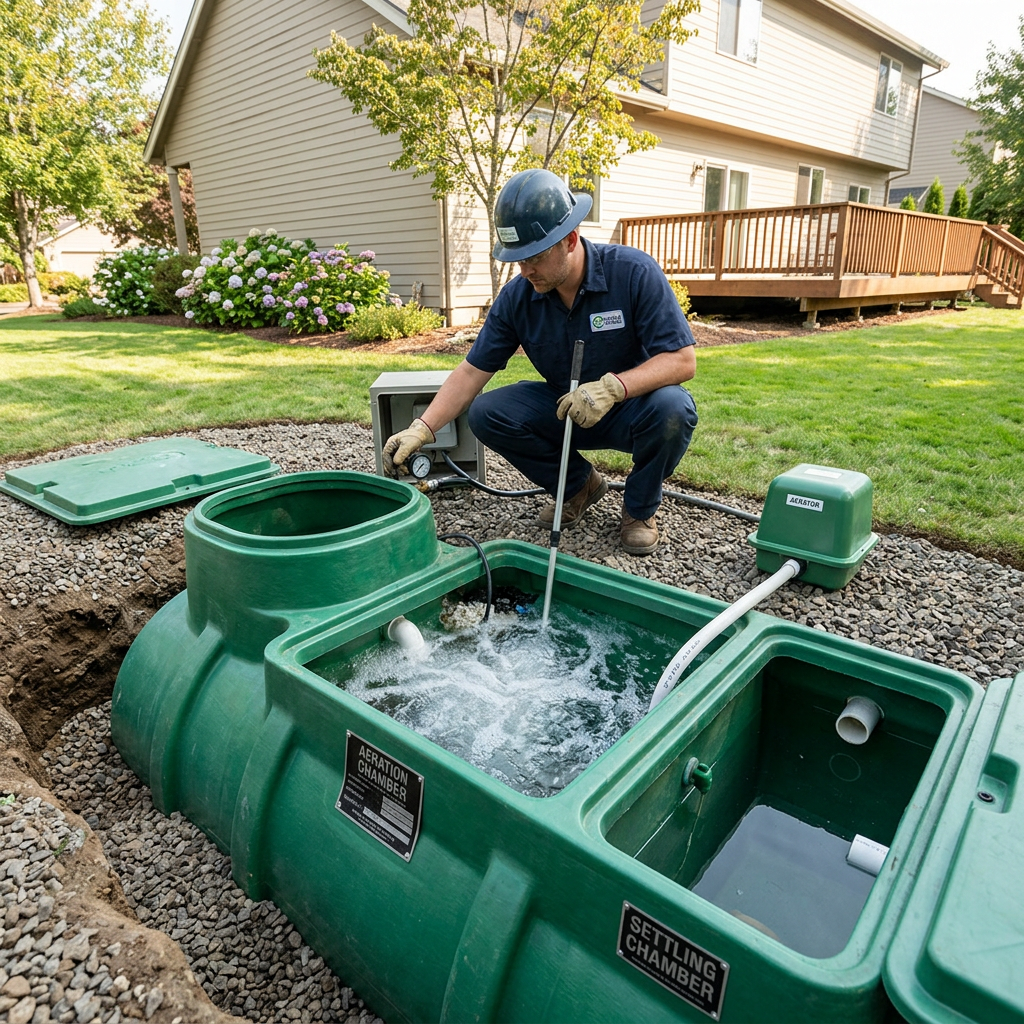
- Odor: make sure the blower runs, clean the air filter, check chlorine tablets or a UV lamp, and confirm venting is clear. If the smell stays, call for service.
- Alarm: look at the control panel, check breakers and floats, listen for the pump, and cut water use until a tech checks it.
- Foam or churning: often means too much detergent or grease. Switch to septic safe soaps and reduce softener discharge if possible.
- Wet yard or clogged spray heads: look for broken lines or a failed pump. Pause irrigation and call a pro.
Do not open a tank without training. Gases can be dangerous, and lids can be heavy.
Safe Use and Smart Habits That Protect Your System
- What not to flush: wipes, floss, feminine products, condoms, and paper towels.
- Kitchen tips: scrape plates, limit fats and oils, and use a sink strainer.
- Laundry tips: spread loads through the week and use low phosphate, low suds products.
- Landscaping: keep deep roots and heavy vehicles off tanks and lines. Keep lids accessible for service.
- Storm prep: plan for power loss and high water. Limit water use until power returns.
A Quick Comparison You Can Scan
Aerobic Treatment Units (ATU) and conventional septic tanks do not treat sewage in the same way. The ATU works by blowing in air through aerators and a diffuser. This added air creates an environment that helps bacteria to work at a faster rate than they would under natural conditions. Conventional septic systems do not introduce this air to the environment. The result is that effluent from aerobic treatment units has less odor and is much clearer, while that from conventional systems is cloudier and gives off more odor.
Aerobic treatment units can dispense with a smaller area for amending the waste, while larger drain fields are necessary for conventional systems. Aerobic treatment units require constant power 24 hours a day, but conventional systems need none. Maintenance of aerobic systems is continuous by way of service contracts, while conventional tanks require only periodic pumping.
Aerobic septic tank treatment units are more suitable to small lots or poor type soils, while the conventional system is better where there are larger lots of good type soil. With aerobic treatment units, the amendment of the waste will usually permit a spray or drip distribution system, while conventional systems utilize only subsurface drain fields.
Conclusion
By using aerobic septic tank treatment, purer water supply, less odor, and better performance on difficult sites are the major improvements. It gives a flexibility of spray or drip coupling, and less disturbance in the yard. The price paid for these improvements is the necessity of easy maintenance, and dependable performance.
Keep the blower running; follow a simple routine maintenance schedule; take care of all minor troubles at once. The course is now plain: Know your local ordinances, arrange for a service contract, begin your maintenance record and use septic-safe products. If alarms go off, or odors stay, notify your licensed professional. The system will give you many years of prosperous and noiseless service.
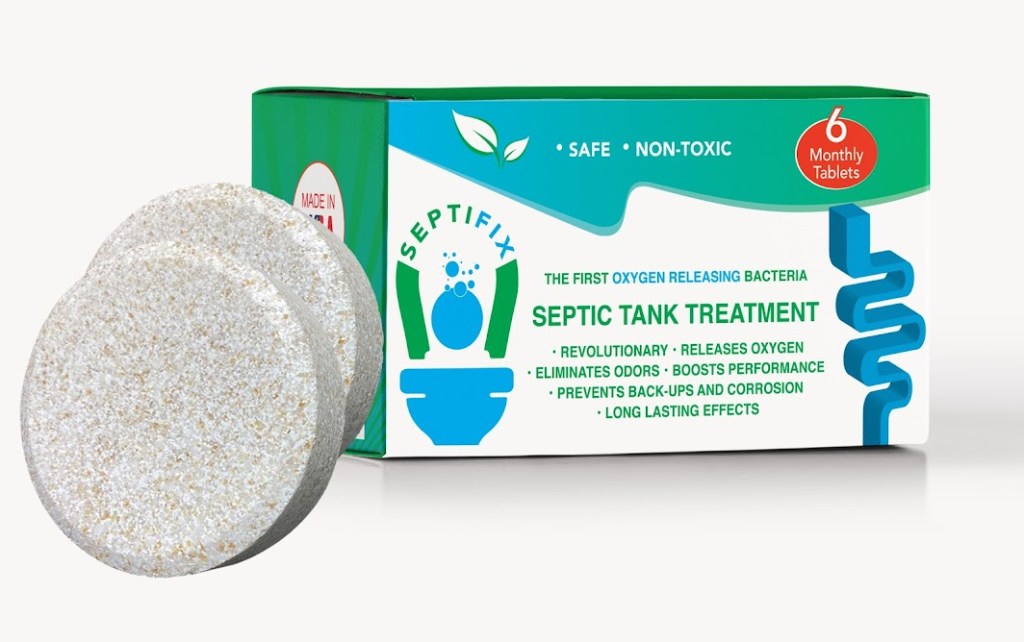
Give your septic system extra support with SeptiFix, an easy-to-use monthly tablet designed to help maintain a cleaner, healthier tank between professional inspections.
Affiliate Disclaimer
Some links in this article may be affiliate links. If you click a link and make a purchase, we may earn a small commission at no additional cost to you.
We only recommend products and services that may be useful for septic system maintenance and care. Affiliate relationships do not affect the information or recommendations in this article.
Additional Resources
From This Blog
- Septic Tank Treatment: Simple, Safe Care for Your Home
Learn how septic treatment works and which daily habits support a healthy system. - Anaerobic Septic Tank Treatment: How Your Tank Really Works
Compare aerobic and conventional anaerobic septic systems. - Septic Tank Care and Maintenance Made Simple
Review routine maintenance steps that help prevent backups and costly repairs. - Septic Tank Inspection: Checklist, Cost, and What to Expect
Find out what a professional inspection may include and when to schedule one. - How Often Should You Pump a Septic Tank?
Learn about inspection and pumping schedules for residential septic systems. - How to Protect Your Septic Drainfield
Get practical tips for protecting the soil and dispersal area around your system.
Official U.S. Government Resources
- Septic Systems, U.S. Environmental Protection Agency
Use this EPA resource hub to learn about septic-system care, maintenance, wastewater treatment, and environmental health. - SepticSmart, U.S. Environmental Protection Agency
Review EPA guidance on reducing water use, protecting the drainfield, keeping harmful products out of drains, and scheduling inspections. - Do Your Part, Be SepticSmart: A Homeowner’s Guide
Download the EPA homeowner guide for advice about inspections, pumping, water efficiency, drainfield care, and wastewater safety. - EPA Septic System Homeowner Guide
Read more about septic maintenance schedules. Alternative systems with pumps, electrical controls, or mechanical parts may need more frequent inspections than standard systems. - EPA Septic System Resources
Find additional homeowner materials, maintenance reminders, and SepticSmart educational resources.
Important: Septic-system requirements differ by state, county, and local health department. Contact your local permitting authority before installing, repairing, replacing, or changing an aerobic treatment system.
Related Posts