Septic Drainfield Repair: Inspection, Options, Costs, and Next Steps
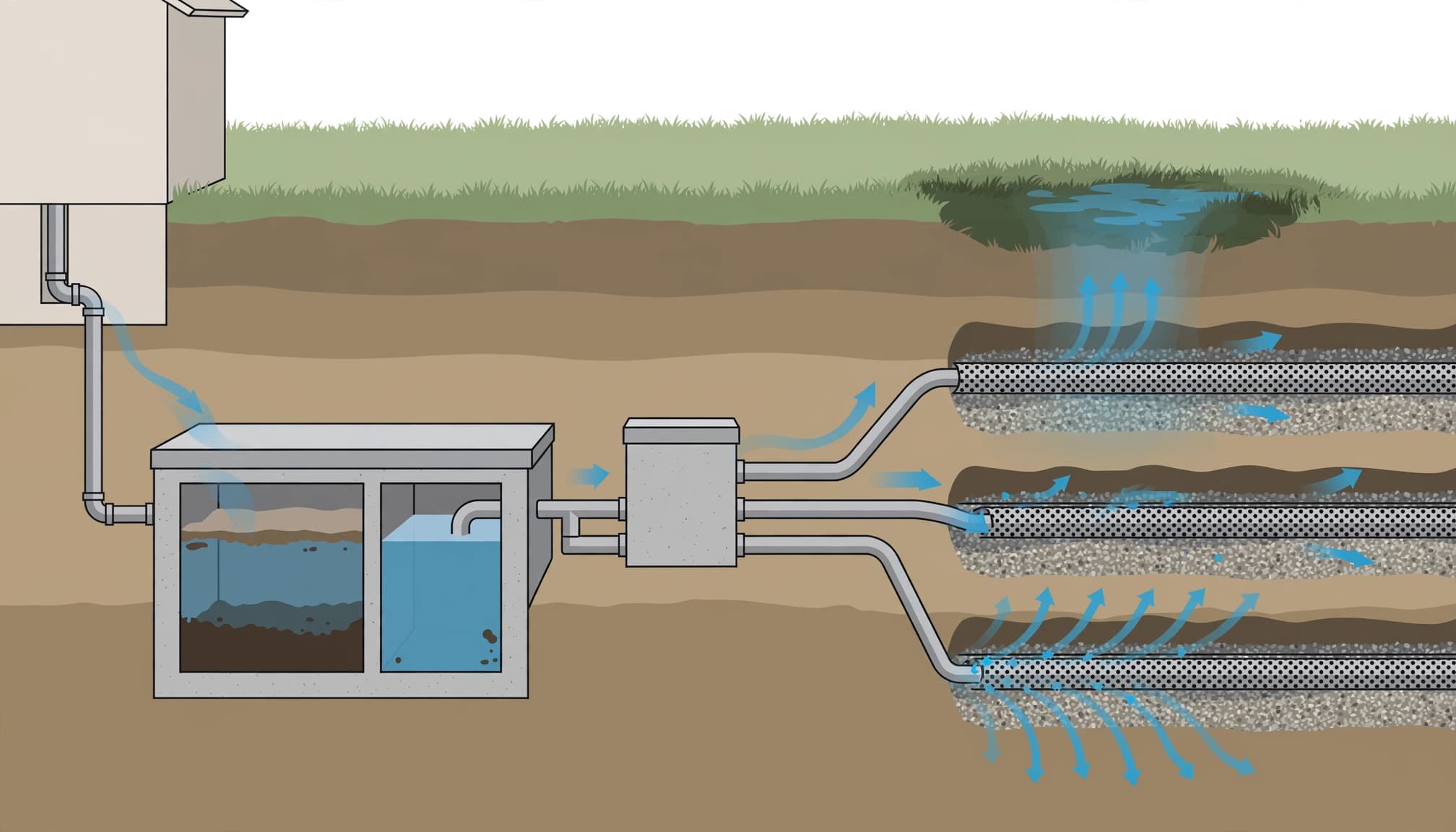
More than just a path for water to flow out of your home, a septic drainfield allows wastewater to percolate through the soil where it can be filtered and treated.
If a drain field is overworked (overloaded), if it has become clogged or damaged or if the soil within the drain field has been compacted, then there will be improper movement of wastewater. Examples include slow draining toilets, odors from the drainfield area, soggy areas of the lawn near the drainfield or “sewage surfacing” on the ground near the drainfield.
Just because you have a problem with your drainfield doesn’t mean that you need to replace your entire septic system. Many times problems are located in one part of the system such as the septic tank, the outlet pipe, an effluent filter, a distribution box, a pump or the surface drainage. Often these parts can be repaired.
To begin solving this type of problem you will need to identify what is causing it.
Affiliate Disclosure: This article may contain affiliate links. If you purchase a product or service through one of these links, we may earn a commission at no extra cost to you. We only recommend products and services that we believe may be useful to our readers.
Key Takeaways
- There are some instances where a failing drainfield does NOT have to be completely replaced.
- Firstly, the drainfield itself has to be confirmed by a professional as being the root cause of your problems.
- In many cases, problems with the system can also be in other parts such as the septic tank, outlet pipe, filter, pump, distribution box, etc., OR even just the way water is draining away from the area.
- Severe soil damage, extreme cloggage, major structural failures, and ongoing surface sewage will likely require either all or part of the original field to be totally or partially replaced.
- However, pumping out a tank (even multiple times) WILL NOT repair a failed drainfield.
- The most common self destructive practices for a homeowner include digging up their drainfield as an attempt at DIY repair, driving over their drainfield while trying to “fix” it, using large machinery on top of the drainfield while attempting to repair it, and adding chemicals to try to “fix” it.
- Additionally, local health agencies often require permits and/or inspections prior to performing any type of repairs.
- Finally, due to the wide range of possible costs associated with repair of drainfields, homeowners would do well to obtain a written quote which outlines what each component of cost includes – i.e. LABOR COSTS, MATERIALS COSTS, PERMIT FEES & INSPECTIONS COSTS & TESTING COSTS.
Can a Septic Drainfield Be Repaired?
Sometimes, yes.
The right repair depends on the type and severity of the problem. A drainfield may appear to be failing when the actual problem is a full septic tank, blocked effluent filter, broken outlet pipe, damaged distribution box, failed pump, or surface water entering the field.
For example, repairing a clogged filter may restore normal flow without disturbing the drainfield. Redirecting a downspout may also reduce excess water entering the soil.
More serious problems may involve clogged soil, broken pipes, soil compaction, root intrusion, or a drainfield that has received untreated solids for a long time. These problems may require more extensive work.
The U.S. Environmental Protection Agency’s guidance on septic system malfunctions recommends contacting a qualified septic service provider, local health department, or onsite wastewater authority when a malfunction is suspected.
First, Confirm the Drainfield Is the Problem
Before approving drainfield work, ask the contractor to inspect the complete septic system.
A professional may check:
- Liquid level in the septic tank itself
- Level of sludge and scum in the tank
- Inlet and outlet piping to/from the tank
- The sides and top (lid) of the tank along with baffle or other obstructions.
- Effluent filter, if installed
- Pump chamber area, if the system is pressurized (i.e. has a pump)
- Electrical control panel and alarm system, if installed
- Distribution box for multiple drain field lines.
- Individual drainfield lines themselves
- Condition of soil beneath the drainfield.
- Presence of surface water (e.g. rainwater runoff) or groundwater near the drainfield.
- Visible signs of sewage on the ground or visible evidence that the sewage is coming up through some means (i.e. a pipe).
- Obstruction within the home’s plumbing line.
This matters because several septic problems create similar symptoms.
For example, slow drains can result from a house sewer blockage, a full tank, a damaged baffle, or a saturated drainfield. A pump failure can cause wastewater to back up even when the drainfield itself is still usable.
Your existing article, Septic Tank Inspection: Checklist, Cost, and What to Expect, explains what a full inspection may include.
A good contractor should explain what was checked and what was not checked. Ask for photos, measurements, test results, and a written report before agreeing to major repairs.
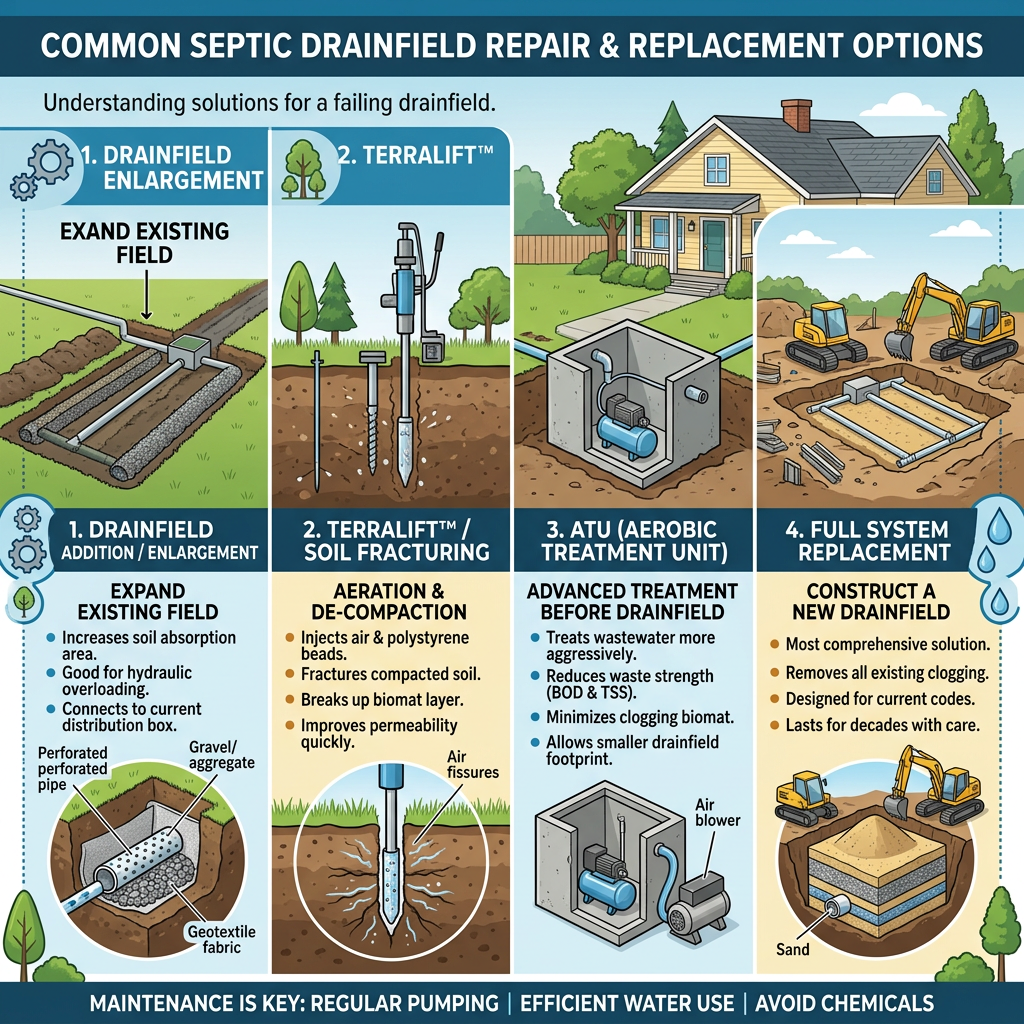
Common Septic Drainfield Repair Options
There is no single repair that works for every property. The possible solution depends on the failure source.
1. Pumping the Septic Tank
Pumping may be necessary if the tank contains too much sludge or scum.
A full tank can allow solids to move toward the drainfield. Those solids may clog the soil and reduce its ability to absorb effluent.
However, pumping is not a drainfield repair. It only removes accumulated solids from the tank.
Pumping may solve the problem when the tank was the main cause of the backup. It will not restore soil that has become severely clogged or compacted.
The University of Maryland Extension reports that septic tank pumping commonly costs about $250 to $400, depending on tank size and location. Local prices may be higher.
Read How Often Should You Pump a Septic Tank? for more information about pumping schedules.
2. Cleaning or Replacing the Effluent Filter
Many septic tanks have an effluent filter near the outlet. This filter helps keep solids from entering the drainfield.
A dirty filter can slow the movement of wastewater. In some cases, cleaning or replacing it may restore normal flow.
This repair is usually less invasive than digging up a drainfield. Still, the filter should be handled by someone familiar with septic systems. A damaged filter or outlet assembly may need replacement.
Do not assume a clean filter proves that the drainfield is healthy. The contractor should continue checking the rest of the system.
3. Repairing the Outlet Pipe
The pipe between the septic tank and distribution box may crack, break, shift, or become blocked.
A damaged outlet pipe can send too much wastewater to one area or stop wastewater from reaching the drainfield. Repair may involve clearing the blockage, replacing a damaged section, or correcting the pipe slope.
The contractor may need to excavate part of the line. Ask whether the estimate includes digging, soil removal, replacement materials, backfilling, and lawn restoration.
4. Repairing the Distribution Box
A distribution box divides effluent between different drainfield lines.
If the box is not level, damaged, or blocked, one part of the field may receive too much wastewater while another part receives too little. This uneven flow can create wet areas and shorten the life of the field.
A professional may be able to:
- Clean the box
- Repair a crack
- Replace the box
- Level the box
- Repair connecting pipes
- Adjust flow between drainfield lines
This type of repair may correct the problem without replacing the entire absorption area.
5. Repairing a Pump or Control System
Some septic systems use pumps to move effluent to the drainfield. These systems may also include floats, alarms, control panels, and electrical components.
A failed pump can cause wastewater to remain in the pump chamber. A damaged float or control may prevent the pump from turning on or off correctly.
Possible repairs include:
- Replacing the pump
- Replacing a float switch
- Repairing wiring
- Replacing an alarm
- Cleaning the pump intake
- Repairing discharge piping
Do not open electrical components or enter a pump chamber yourself. Have the system checked by a qualified professional.
6. Correcting Surface Drainage
Rainwater and other surface water can overload a drainfield.
Common sources include:
- Roof downspouts
- Sump pump discharge
- Irrigation systems
- Driveway runoff
- Poor yard grading
- Pool drainage
- Foundation drainage
A contractor may recommend directing water away from the septic area. This could involve extending downspouts, changing a shallow drainage path, or correcting a small grading problem.
The EPA’s septic care guidance recommends keeping roof drains, sump pumps, and other drainage systems away from the drainfield.
Do not reshape the field or add large amounts of soil without professional advice. Changing the soil depth or slope may damage pipes or reduce treatment performance.
7. Addressing Roots or Soil Compaction
Tree and shrub roots can interfere with drainfield pipes. Heavy vehicles and equipment can also compact the soil.
In some cases, a contractor may repair damaged pipes or remove vegetation that is causing a problem. Root removal alone may not be enough if the pipes or soil are already damaged.
Compacted soil is more difficult to correct. The contractor may recommend site-specific restoration, an alternate drainfield area, or replacement of part of the field.
Be cautious when a product promises to restore a failed drainfield quickly. No additive can repair a broken pipe, crushed line, damaged distribution box, or severe structural problem.
When Is Drainfield Replacement More Likely?
Replacement becomes more likely when the field can no longer accept or treat wastewater safely.
A contractor may recommend replacement when:
- There is repeated surface sewage in your back yard
- Your home is experiencing backed-up wastewater
- During normal dry periods, the soil in your drainfield is continuously wet
- There is either pipe failure (broken/collapsed) to the drainfield
- There is severe clogging of the soil in your drainfield
- You’ve over-loaded your drainfield with too much flow for an extended period of time.
- You don’t have sufficient land that can be used as absorption space on your property
- Your system is structurally damaged.
- All previous fixes you’ve had were just temporary and didn’t fix the problem.
- Local regulations require a new design
- The original field was installed in unsuitable soil
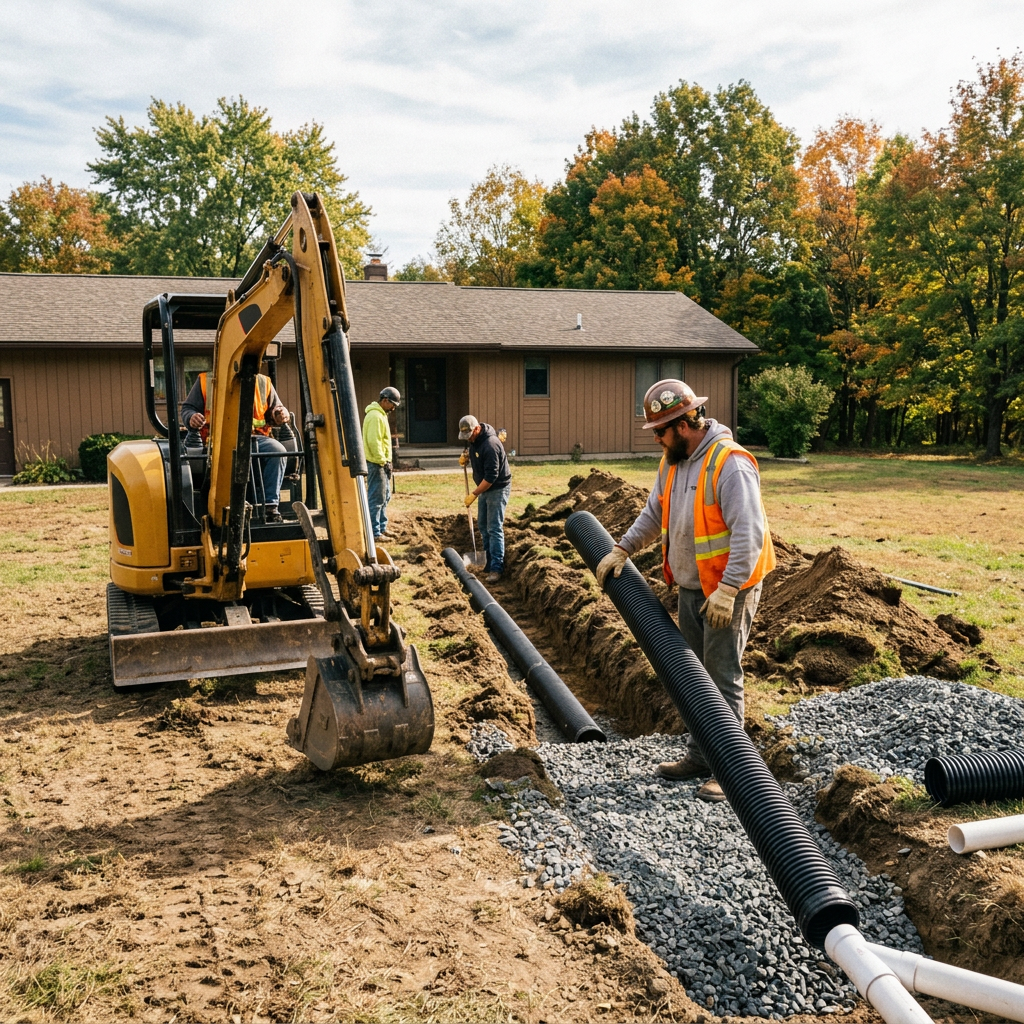
Replacement does not always mean replacing every part of the septic system. A professional may recommend a partial repair, a new trench, an expanded field, or a completely new treatment and dispersal system.
Your local health department may require a permit, soil evaluation, design approval, or final inspection. Rules vary by state and county.
Septic Drainfield Repair or Replacement?
Use this table as a general guide:
| Situation | Repair may be possible | Replacement may be more likely |
|---|---|---|
| Full septic tank | Yes, pumping may correct the immediate issue | Not usually |
| Clogged effluent filter | Often, clean or replace the filter | Only if other damage exists |
| Broken outlet pipe | Often, replace the damaged section | If the field has also failed |
| Damaged distribution box | Often, repair or replace the box | If the field is saturated or clogged |
| Failed pump | Often, replace the pump or controls | If the field has also been damaged |
| Surface water entering the field | Often, correct drainage | If long-term saturation caused failure |
| Root intrusion | Sometimes, repair pipes and remove the cause | If widespread pipe and soil damage exists |
| Repeated sewage surfacing | Sometimes, depending on the cause | More likely if treatment has failed |
| Severe soil clogging | Site-specific restoration may help | Often considered when the field cannot recover |
| Structural failure | Depends on the damaged component | More likely if the tank or field cannot be repaired safely |
This is only a starting point. A site inspection is necessary before choosing a repair or replacement plan.
How Much Does Septic Drainfield Repair Cost?
There is no reliable national price for drainfield repair. The total cost depends on the cause, property access, soil, labor rates, permits, equipment, system design, and the size of the affected area.
The final bill may include:
- Inspection and testing
- Tank pumping
- Excavation
- Pipe or box replacement
- Pump or control repairs
- Soil testing
- Engineering or design work
- Permit fees
- Replacement materials
- Backfilling
- Landscaping or lawn repair
- Follow-up inspection
Ask for an itemized estimate. It should explain whether the contractor is repairing the source of the problem or only providing temporary relief.
Before authorizing work, ask:
- What led to the drainfield failure?
- What evidence supports this diagnosis?
- Will the repair provide long-term relief (or is it short term)?
- Are all areas of the septic system going to be evaluated?
- Do you need a permit for this job?
- Has your estimated cost included digging up and restoring your yard?
- If this fix doesn’t resolve the issue, what’s next?
- Will I receive an itemized list with my written guarantee on this work?
- Have you budgeted in additional testing after completing the repairs?
- Can another contractor review your recommendation?
Be careful with a quote that recommends complete replacement without explaining the inspection results.
What Homeowners Should Not Do
Do not try to fix a failing drainfield by:
- Drinking, Parking, or driving on the grass area.
- Digging in the ground.
- The use of Heavy Equipment.
- Plants (Trees/Shrubs) being planted in the yard.
- Applying Top Soil to wet spots.
- Downspout Drain Cleaner is poured down the Sewage System.
- Using Additives instead of making repairs.
- A flooded system has been pumped out by a non-professional.
- A Patio, Shed, Pool, or Driveway built over the Grass Area.
- Children/Pets are allowed to be close to Standing Wastewater/Sewage
Flooded conditions require extra care. The EPA’s post-flood septic guidance warns that pumping or using heavy equipment while the soil is saturated can worsen damage. In some situations, pumping too early can cause a tank to float or damage connected pipes.
If your drainfield is flooded, wait for instructions from a qualified professional or local health authority.
What to Do While Waiting for an Inspection
If you suspect a drainfield problem:
- REDUCE WATER USE RIGHT AWAY
- Use less water than normal by washing clothes in cold water and/or hand-washing dishes; avoid taking long showers; try to flush as little as possible.
- Do not let anyone (including children and pets) walk through wet areas or contaminated soil.
- Do not drive on top of your tank or drainfield.
- Redirect rainwater and other surface water away from the affected area.
- Document all symptoms that you are experiencing, along with how long you have experienced them.
- Locate your septic permit and maintenance documents.
- Hire an appropriately trained septic contractor.
- Notify your local health authority if you see sewage coming up into your yard or contaminating nearby bodies of water.
- Require a written assessment from a professional prior to authorizing costly repairs.
If sewage has backed up into the home, stop using the plumbing until you receive professional advice. Avoid direct contact with wastewater.
Michigan’s septic system guidance lists sewage backups, surface discharge, wet areas, odors, and unusually green grass as possible signs of system failure.

How to Protect the Drainfield After Repair
Once the repair is complete, protect the work.
- Keep vehicles and structures away from the septic field.
- Spread laundry across the week to prevent a burst of water use on any given day.
- Repair leaking toilets and faucets in your home or business.
- Keep roof runoff and sump pump water away from the septic tank.
- Plant only grass or approved shallow-rooted ground cover over your septic system.
- Keep grease, wipe products, chemicals out of your plumbing.
- Follow the schedule for regular pumping and inspections recommended by local codes and your contractor.
- Keep the lid to your septic tank accessible at all times.
- Save all permits, invoices, inspection reports, and repair records.
For more detailed maintenance advice, read How to Protect Your Septic Drainfield.
You can also review 9 Signs Your Septic System Is Failing if you need help separating a drainfield problem from another septic issue.
Frequently Asked Questions
Can pumping fix a failing drainfield?
Usually, no. Pumping removes sludge and scum from the septic tank. It does not repair broken pipes, compacted soil, a damaged distribution box, or a drainfield that can no longer absorb wastewater.
Pumping may help when the full tank caused the backup and the drainfield has not been damaged.
How do I know if the tank or drainfield is the problem?
You usually cannot know from symptoms alone. A full tank, blocked filter, failed pump, damaged pipe, and saturated drainfield can cause similar problems.
A professional should inspect the complete system before recommending major work.
Can septic additives repair a drainfield?
No. Additives cannot repair broken pipes, structural damage, compacted soil, or a failed pump. They should not delay a professional inspection.
Should I use heavy equipment during a drainfield repair?
Only the contractor and equipment needed for the approved repair should enter the area. Heavy equipment can compact soil and damage underground pipes, especially when the ground is wet.
How long does septic drainfield repair take?
Minor repairs may take a day or less. Larger projects may require soil testing, permits, design work, excavation, inspections, and landscaping. Ask the contractor for a written timeline based on your property.
Is drainfield repair covered by insurance?
Coverage depends on your policy and the cause of damage. Many policies exclude normal wear, poor maintenance, or gradual failure. Ask your insurance provider before assuming a repair is covered.
When should I replace the entire septic system?
Replacement may be necessary when the tank, pipes, soil absorption area, or treatment process cannot be restored safely. Get a written diagnosis and check local requirements before approving a full replacement.
Final Thoughts
Septic drainfield repairs are generally not single jobs. Generally, the best way to solve each of these problems will depend upon how they were created.
Some common issues that could potentially be repaired include a clogged filter, cracked or broken outlet pipes, non-functioning pumps, malfunctioning distribution boxes (uneven), and surface water collection. More severe issues with the ground’s ability to absorb the waste, extensive structural damage, repetitive sewage surface appearance and/or prolonged periods of saturated soils may need to be addressed in a more comprehensive manner.
Don’t assume it has something to do with just where you see a wet spot, smell odors, etc., or simply assume there is a slow drain. Have the entire system evaluated. Get all of this in writing and obtain an estimated cost breakdown of parts and materials as well as details regarding necessary permits and post-construction testing requirements.
In many cases early intervention can help prevent what would otherwise become a total drainfield replacement due to what started out as a minor component failure.
Give your septic system extra support with SeptiFix, an easy-to-use monthly tablet designed to help maintain a cleaner, healthier tank between professional inspections.

Related Posts