Septic Easement: What It Means for Your Property and Drainfield
Septic easements can allow another individual to use a portion of your property for their septic system. Alternatively, they can grant access to your septic system to view, pump, fix, or replace pieces of the system. This will all depend on your recorded documents and what laws are in place in your area. Find out what document controls and see what it allows for access, pumping, repairs, etc. Don’t just assume because you were given a map or told by your seller.
I would suggest getting a copy of the recorded agreement, plat map, and your septic information. Then, review all of it together. You will be able to identify what you may need to ask your permit office, title company, or local property attorney.

Key Takeaways
- It will be defined by the recorded instrument, not by what you call an easement.
- Make sure you have a good survey and plat, and know where the septic system is located.
- Does it allow for entry, driving of vehicles or equipment onto the property, inspection, pumping, repair, and restoration?
- Who is responsible for upkeep and repairs? It may not always fall on the homeowner or the person next door.
- As a buyer, make sure you read all documentation and have a proper septic inspection done. If anything is vague, ask your title company and local real estate attorney.
- You can contact your permit office for information on septic systems and ask your title company for any recorded documents or exceptions. Your local realtor can also answer questions regarding what you can do with the property.
What does a septic easement mean?
An easement allows someone to have the ability to use another person’s property. They do not own the property that the easement allows them to use. The documents can state that they can have a common septic system on someone else’s property, or allow someone to access their tank/drain field.
It’s what your document states that will be allowed. You may be able to allow them to access and pump a current tank, allow them to make repairs, or even install new parts. Your document could limit access to certain ways or times, how long notice is required, what type of vehicles can be used, or if the ground needs to be made as it was prior to work.
Your property can be deeded to allow access to someone, an individual or business. It can follow future owners of that property. Some property rights can become more complicated than what the title says. If you don’t have a document, don’t think someone cannot access your property. Speak with your title company or an attorney that deals with property.
There can be rights to property even if it’s on your lot. Someone may be deeded to use a septic tank/drain field. Talk to your title company or attorney.
| Record | What it may help establish | What it may not establish by itself |
|---|---|---|
| Recorded easement or agreement | The stated use, benefited and burdened land, route, and conditions | Whether later amendments or other legal rights exist |
| Plat or survey | Parcel boundaries and any easement shown on that map | The full rights or duties created by the agreement |
| Septic permit or as-built plan | The permitted system layout and components | Who has legal access or who pays for work |
Affiliate disclosure: This article contains an affiliate link. If you buy through it, we may earn a commission at no extra cost to you.
CTA: Once you have confirmed the system’s legal access and maintenance arrangements, you can review Septifix product details as one option for routine septic care. A product cannot create property rights, replace a qualified inspection, or resolve an access or cost dispute.
Locating the Recorded Agreement and Map of the Property
Begin by reviewing the property records and matching them with your system’s local records. There will not be one map or document that can cover all aspects of the property.
- Inquire of the owner or seller what they may have on file. You should ask to see their deed, title commitment or preliminary title report, any recorded easements, survey, septic permit, as-built, inspection, and maintenance records. Do they have any agreement regarding shared usage, access, repair, or expenses? If applicable, ask if they have any agreement with a neighboring property or association.
- Search your local county records. Reach out to your local county records office. You will want to pull records under the owner’s name and possibly past owners of record. This could be at the county recorder’s office or register of deeds, depending on your location. You can search for an easement as its own recorded document or look through deeds, plats, or other documents pertaining to title. Write down any document number and the date it was recorded. Also, write down any books and pages listed. If you have trouble locating your documents, speak to your title company or records office to find out what they can pull.
- Once you have found the recorded instrument, you will want to obtain a legal description and map. Sometimes the recorded document will give you directions and distance or a path to follow to locate the easement. Or they may reference another document. You will want to match this description with a survey or recorded plat of the property. Do not use hand-drawn sketches or aerial views of your property or a highlighted easement to determine where the easement is located. They can be helpful when searching for your documents.
- Ask your local health department for any records they may have. Your local system may be permitted and have records from your local health department or local permitting office. The EPA recommends you pull all records you can and inquire with your local office what they may have on your system. Many of their common questions regarding septic systems address what you should know about your system’s permit and as-built.
- Once you have all your records, try to understand why there may be discrepancies. Your property documents and as-built may not always agree. Ask your surveyor or local office if they can provide any more information. If you still can’t determine what path is to be used to access your system, have an attorney look into your documents. Do not assume that if there is a path across the property you can cross it just because it has been done in the past.
See our blog article about the drainfield to better understand the physical aspects of the system.

Things to know about access to inspect pumps and make repairs
Know what each one says about being able to come on your property. Do not assume that if they have the ability to come on your property to inspect, that they can come to dig, replace, or build. This will depend on the language used and laws in your area.
Look at the access. Will there be a certain path they can take or just an area? Know if it allows them to get to the tank, distribution box, drain field, pumps, and any controls. Does the path cross over a driveway, gate, yard space, or another person’s property? Make sure this description fits with what’s shown on the map and where everything is located.
Who can access? It could be the owner, neighbor, contractor, or whoever they allow to come on your property. Find out if there is notice they must give you, what hours they can come on your property, or if there are emergencies. Do you need to leave a gate open or unlock it? What kind of vehicles can they use? There may be more that you can find out from your local attorney if it’s not stated.
What can they do? Can they come on your property to inspect and pump? Will they be allowed to do any maintenance, dig, replace, or gain access to put in a new system? If the system were to fail, would they be allowed to come on your property to fix the drain field? You may only allow them to maintain what they have, not move it or gain more access.
Damage. Can they come on your property and leave ruts? How do you want them to fix your grass and/or fence? Remove dirt from your property, etc. Are they required to notify you if they need to come on your property? Who pays if there is damage to your property, driveway, sprinkler line, etc.?
Have your home inspected if you’re purchasing a home with a septic system. Your inspector should know what they have access to and what they don’t. They can give you information on the system, but that doesn’t mean they can walk on someone’s property. The blog’s article on what a septic inspection covers explains the inspection process, which is separate from the legal right to reach the system.
Where maintenance and payment responsibilities are documented
See if there is information on responsibilities. Look in the instrument, possibly a separate maintenance agreement/shared system agreement, association documents, and local permit requirements. There may be instructions on who will need to schedule maintenance, keep records, and what to do if something fails. An agreement could have been put in place after the fact that explains this. Have your title company look for an amendment or other instruments.
Costs could fall on one party or multiple parties. You may see reference to each parcel paying costs, each person that uses the system paying, or costs being approved by… Make sure you know if it covers emergency repair, pump-outs, inspection, replacement, or damages to the property. If something just states “maintain,” you may want to ask what that includes.
Does it state that these responsibilities will follow future owners? Will each person have to pay if they ask for service? Just because you have a service agreement/invoice doesn’t mean that will override your agreement.
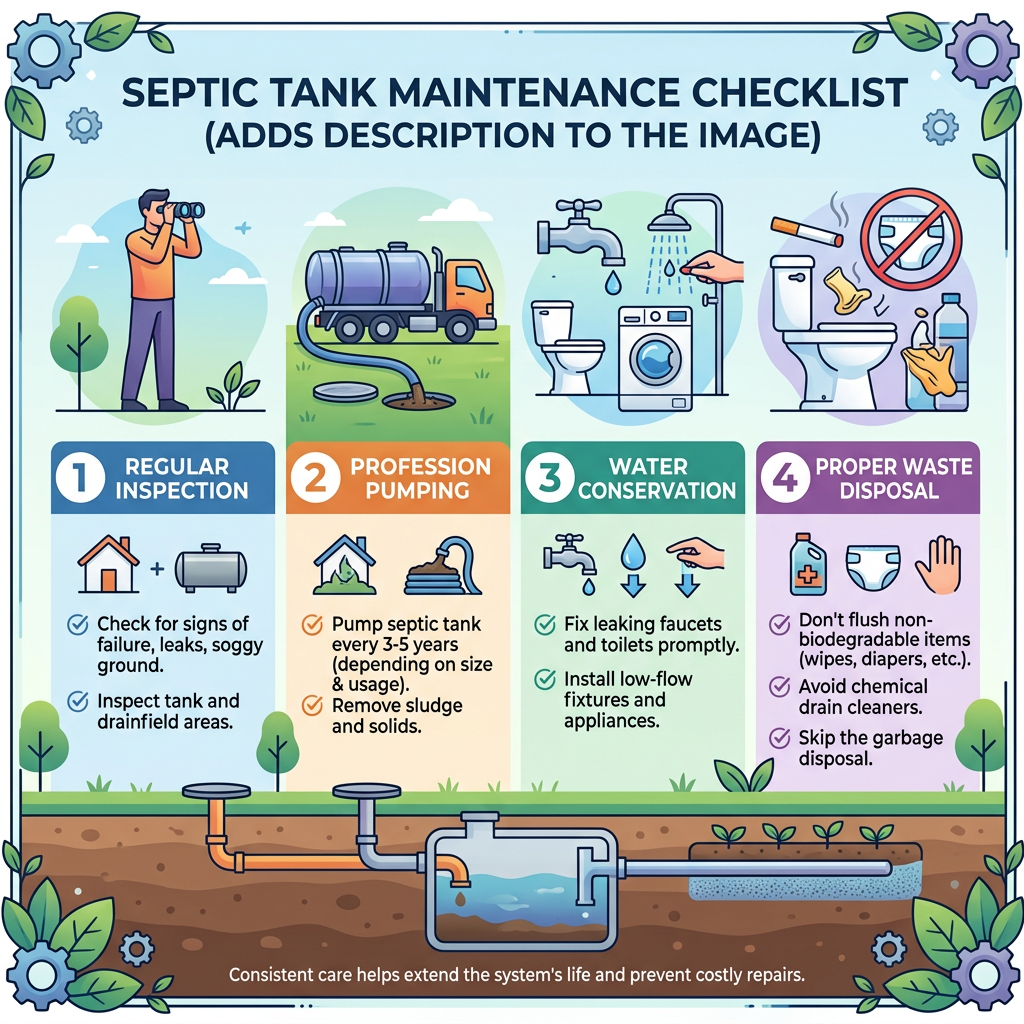
Someone will have to maintain and operate the system. Whether that’s the property owner or a management company will be determined by the agreement. Again, don’t assume it’s the person who has the system in their yard that will have to pay. Here is some information from the EPA about keeping your septic system running. Below is a list from our blog post about what you should do to maintain your septic system.
Make sure you have all of your documentation together: recorded agreement, map, permit requirements, inspections, pump-outs, etc. As mentioned before, you should be having your system inspected every 1-3 years and pumped every 3-5 years. But who has access and who will pay is determined by your agreement.

What buyers should verify before purchasing
Make sure to add this to your list of things to check on the house. Even if the seller tells you it has been working fine for years, you should still ask for documentation. Get the information soon enough to look it over before your deadlines run out.
- List all parcels that have a piece of the system. Figure out which parcel the tank and field are on. Which parcel benefits from it, and if there are any other owners that may be using it. Make sure all the names and parcel info listed match up with your property.
- Ask for all documents that have been recorded: easements and any exhibits, amendments, or maintenance agreements. It may show on your title that there is an instrument, but make sure you get a copy of it and read through it. If your title shows something you don’t know about, have the title company pull that information for you and tell you what it is about. Here is a good article that explains what title insurance covers for the owner, but please remember that this will not give you all the information you need on your property. Always consult with your attorney.
- See what you can find on your property. Have a survey done if needed. Ask for a copy of your as-built and any permits from the seller or local office. A professional can come out and mark your system for you, but they are not a surveyor.
- Have someone inspect your septic. Ask them to look over the system and see what information is available to you: how it’s been maintained and if there are any restrictions. EPA has some helpful information here that you should know when purchasing a home with a septic system. Your local office may have more information as well.
- Who has access to the system and who pays for what? Know who is able to come on your property, what they can do, how much notice they need, who calls them out, and who pays. If there isn’t an agreement in place or it’s not clear, ask your title company and attorney.
- Will there be access if I need to replace my system? Ask if the system will fail at some point; do you have access to repair or replace? Will there be enough room on that piece of property for machinery to come in? Is there any language about restoring the land back to its original condition? You may have access today, but tomorrow there could be a gate, fence or home on the way to your system.
Here is an article by the EPA about your septic system and what you should know when purchasing a home. Always make sure you have information on your system when it comes time to buy, but again, these are not going to answer all of your questions about the agreement between the two parcels.
Who to call when you need more information
Local office that issues septic permits: If you need to know if there is a permit in place, want a copy of your as-built, or information about your system, ask them what you should know about replacing or repairing your system. They most likely will not be able to help you with any issues between two properties.
Your title company: If you need a copy of an instrument or want more information about what’s on your title, ask them to pull that information for you. They may not be able to help you figure out what an agreement states, but they can give you that information.
Attorney: If there is no agreement or you have any questions about what you can and cannot do, if someone is blocking you from accessing your system, or won’t pay their share, there may be more to the agreement than what it states if your system fails. Always hire an attorney in the state that the property is located.
If you have an issue with your system, contact your local septic professional and your local health department/regulator. Keep this separate from who owes you money or has access to your property. Do not go onto someone else’s property and start digging because someone told you you could.
Conclusion
Always make sure you know what you’re buying. There may be a septic system on your property, or a piece of it may be. Make sure you have all the information that’s available to you and compare them. Know what you can and cannot do and who will pay for it. Always ask your title company and attorney when buying a home or if you have an issue.
FAQ
If there is an easement on my property, does that mean my neighbor owns it?
Not always. There may be an easement that allows someone to cross your property, or it could allow them to dig up your property for repairs. Look into what type of easement it is.
Where can I find information on my septic system agreement?
You can go to the recorder’s office and look up the information. You may want to have your title company help you with this. Ask your local office that permits septic systems for any permits that may have been issued.
If there is an agreement that allows someone to pump my system, do they have access to repair it?
It may state that on the agreement, but it could only allow them to pump it. Talk to your local attorney that knows what’s on the property.
Who is responsible for paying for a septic system that is shared by multiple properties?
There may be an agreement in place that tells you who has to pay. It may also be on the recorded documents, or you may have to pay for your portion of the system.
Can I build on my easement?
There may be restrictions on what you can do with your easement. Make sure you know what your local office will allow you to do. If you’re not sure, ask them and your local attorney.
What should I ask when buying a home that has a shared septic system?
Ask to see all documents that have been recorded. Know who has access to your system and who pays for what. If you need to replace your system, do you have access to do so?
Final tip when purchasing a property: Always request these documents sooner than you think you will need them. This allows you to know what your access is and how much it may cost you.

Related Posts