Perc Test for Septic: What It Is, What Results Mean, and What Happens If You Fail
The perc test for septic is used to see how fast water will percolate through the soil. The test can be an indication of whether a soil may allow for a septic system to be placed on your property. But just because the perc test is good doesn’t mean you can build on the property. Some areas will call for more than just a perc test. They may ask for a site and soil analysis.
If you’re buying land, ask the permit office about their requirements for a septic. What kind of test will they need you to have, and will your home fit on that lot with the test they require?
If I were thinking about buying land, I wouldn’t take one test result as permission to construct. I’d want to know where on the land was tested, what that test actually proves, and if my local office will honor it for what I intend to build. Asking those questions upfront could save you a very expensive surprise later.
Key takeaways
- A perc test determines how fast water will percolate through the soil. It does not take into consideration every possible condition when approving a septic system.
- Your local regulations will dictate how testing is done, what is considered a passing score, who can do the evaluation, and how to apply for approval.
- In addition to perc testing, your soil evaluation may include considerations such as soil layers, groundwater depth, bedrock depth, slope, setbacks, and size of area allowable for system placement.
- Even if you get a passing score, you are still not officially approved for your septic system design or installation.
- Should your perc test come back denying the ability to install a conventional system, inquire with the permitting office if additional soil evaluation can be done or an alternative approved method can be used.
- If you are purchasing land, make sure you get all the requirements and the results in writing before buying, and verify that they would apply to your intended building plans.
What is a perc test for septic?
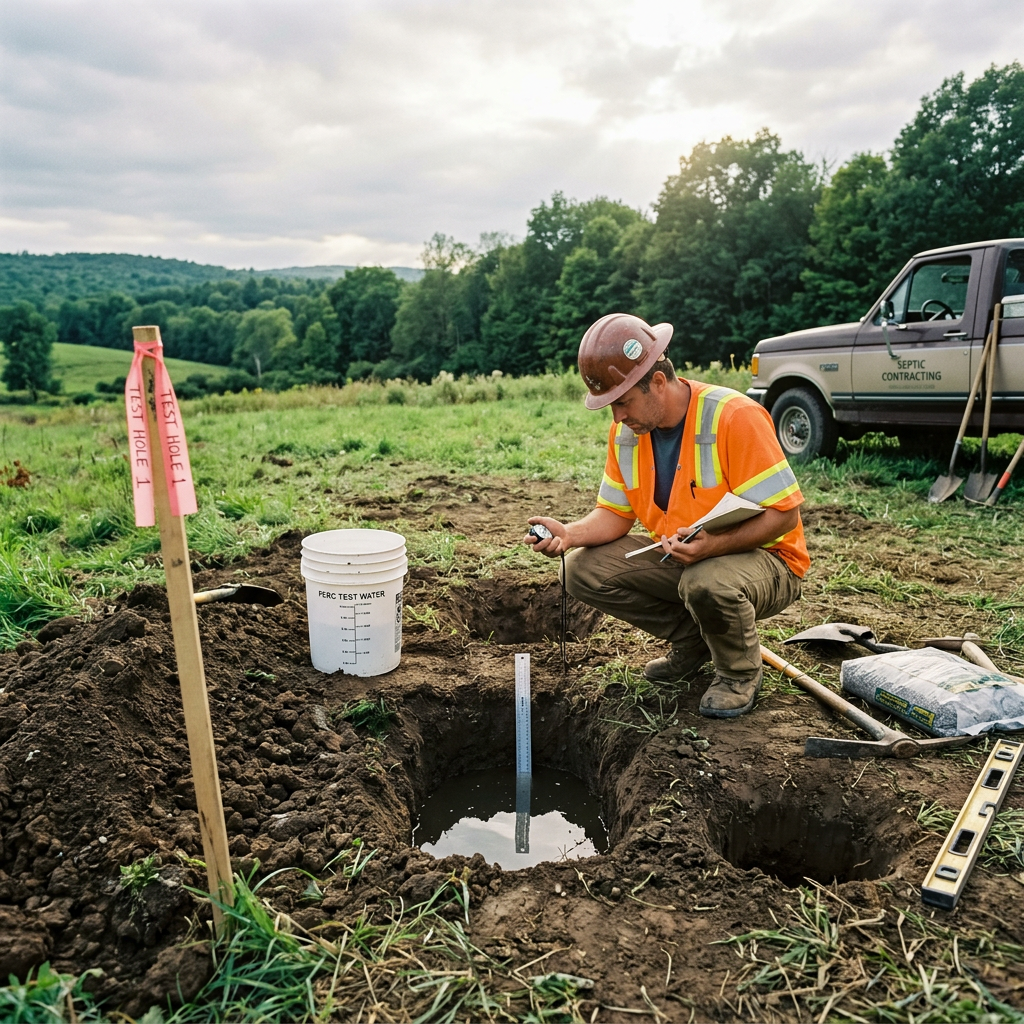
A perc test, also known as a percolation test, is used to determine the rate at which water will travel through the ground at a specific location. A qualified individual prepares the test site by filling a hole with water and observing the water level as it drops. The method used may vary depending on the area.
The results may be expressed as the amount of time it took for the water to fall, or as a rate of so many minutes per inch. You should not compare perc test results between properties and assume there is a set number that indicates a pass or fail. It is up to your local health department to determine if your test was accepted.
A perc test only provides data on how fast water will move through the ground at a given location. It does not provide all the information needed to determine if there is a viable area on your property for a septic system. There may be a soil layer that restricts how far down the soil will go, a seasonal high water table, rock, or even setbacks from a well.
Perc test vs. a full soil evaluation
As you can see, there are many types of soil tests. Your site and soil test may consist of more than just a perc test, depending on your area and property. There may be test pits or holes drilled to identify existing soil layers. They may observe your property for signs of water and examine the proposed system area.
| A perc test can help assess | A broader site evaluation may also assess |
|---|---|
| How quickly water moves through soil at a test location | Soil layers and restrictive horizons |
| Whether the tested soil may be suitable for wastewater dispersal | Seasonal groundwater and depth to bedrock |
| Information needed for a local septic review | Slope, drainage, usable area, and required setbacks |
These terms are not used the same way everywhere. Ask the permitting office what the required evaluation is called in your area and what it must cover. For example, Kansas Department of Health and Environment guidance describes site and soil evaluations, while local rules elsewhere may specify different procedures.
When should you arrange a perc test?
Before buying land
You may find that your property looks great, but there may not be space for a septic system. Many factors can come into play when finding a suitable location for your septic system. Soil and ground conditions can affect this, as well as the proximity of a well, pond, house, property line, easements, and setbacks.
Call your local health department or permitting agency prior to purchasing a lot. Determine if they require a perc test and/or a full soil evaluation. If so, does the authority require that they approve the test plan or the individual completing the test?
When making your offer, try to include the ability to pass a septic test or receive written permission to install one. Many factors that affect your property may not be identified by just looking at it. Listings may have information about nearby septic systems, past test results, or just a soil map. None of these will verify that your build lot will pass.
Before designing or installing a new system
Testing is often part of the approval process for a new septic system. The local authority can tell you what needs to happen before a design is submitted and which professional must complete each step.
If you are replacing a failed system, adding a bedroom, or changing the proposed building site, check whether the existing records are still enough for review. The authority may require updated testing or a fresh evaluation.
Who Can Test My Property and Who Will Approve It?
This depends on your state and local authorities. In some areas, the authority will do or supervise the evaluation of your property. Others will allow a licensed soil scientist, engineer, or septic designer to complete the evaluation.
There are many companies that advertise perc tests or septic tests. Not all of them are approved by your local authority. Here are some questions to ask before you schedule a test:
- Can any contractor do a perc test or soil evaluation for me?
- Will the authority require seeing where I plan to place the test or require approval of a test plan?
- Does anyone need to be on-site from the authority?
- What information will I need to supply, such as plats or a property description?
- Who do I give the test results to?
- Will the evaluator give the results to the authority?
Whoever does your evaluation may not be the one that approves your septic permit. Make sure you know both parties before spending money on an evaluation.

How is a perc test done?
This will depend on what area you live in and your soil. Most times, they will find a proposed area and prepare test site(s). They will then follow their local procedure to percolate water and get readings.
Some may require:
- Site Evaluation: An evaluator will evaluate the area where you want to install and any site conditions.
- Test Site Preparation: Depending on your area, you may need multiple test holes or just one.
- Soil Preparation: Some areas require you to soak your soil before you can get readings.
- Readings: Your evaluator will obtain readings depending on your area.
- Record Keeping: Location of test site(s), site conditions, readings, and any disclaimers you may have to use when testing.
Do not try to dig your own test holes. Some permitting offices may tell you to, but it’s always better to have someone who knows what they are doing. Make sure you have proper test sites and procedures when getting your test done. Stay out of the ditches and open holes.
Weather and soil moisture can matter. Some jurisdictions require tests during a particular season or under specified conditions. Carroll County, Maryland, for example, provides guidance on percolation and wet-weather testing. That is a local example, not a rule for every jurisdiction.
What do perc test results mean?
There is no single perc test result that will pass all properties nationwide. Each locality decides what is acceptable and how it will be used.
Generally, the evaluator and local authority will want to know if the ground can drain water at an acceptable rate for the intended use. If the ground drains too slowly, you may run into issues with standing water. If the water drains too fast, the ground may not be able to treat the water properly. Your local authority will inform you of their assessment based on their guidelines.
The report can indicate that your results are sufficient to proceed with your application. Alternatively, it can state that your results are not acceptable for your design, or that they are inconclusive and require more testing or a different type of evaluation. Ask your local authority what your results mean for your property and your building plans.
Make sure you understand what a perc test does not tell you. It may not tell you that:
- Your entire lot is suitable for a septic system.
- Your design will be approved.
- Your property meets all requirements.
- You have room for a reserve area.
- The results will pass for your desired location on the lot.
- The results are valid indefinitely or transfer to new ownership.
Have your local authority provide you with written confirmation of what your results mean and if there are any restrictions.
What if the test does not pass?
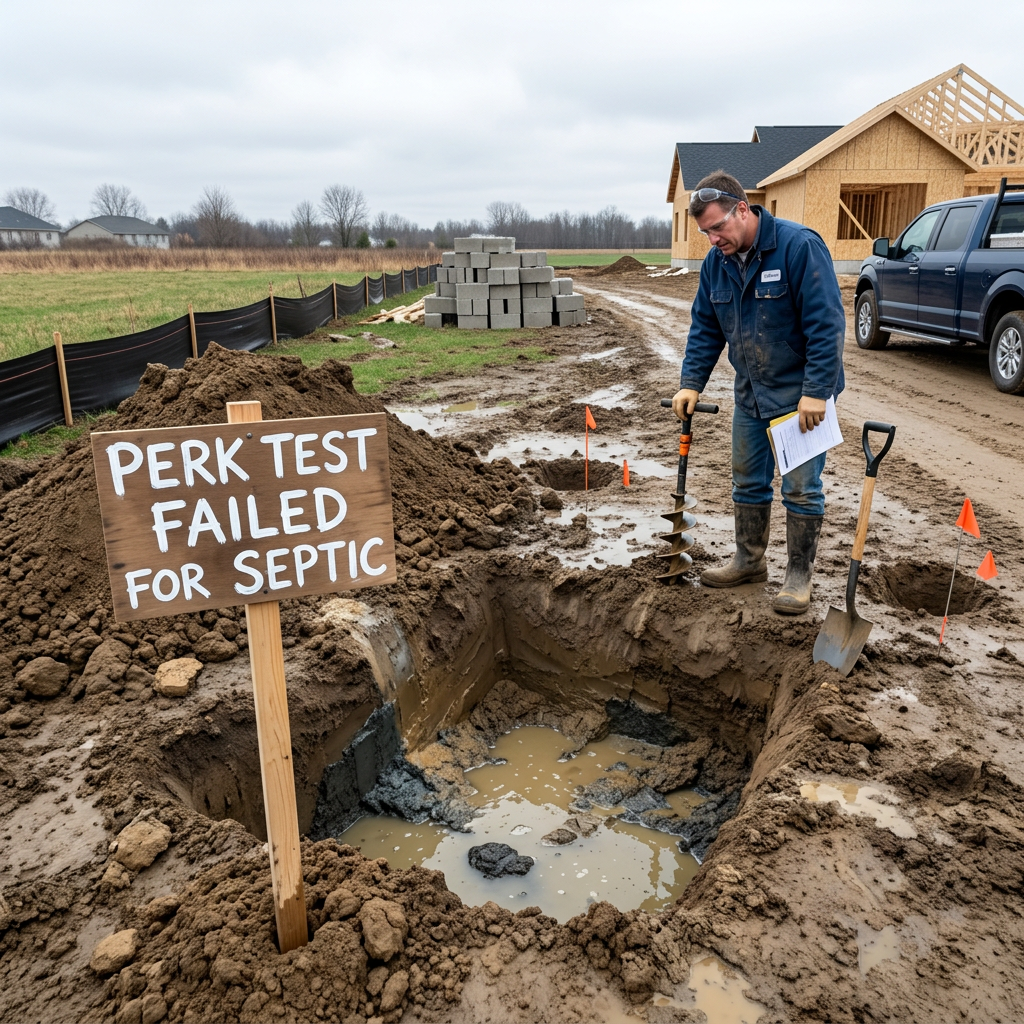
Just because you received unfavorable results doesn’t mean you can never have an onsite wastewater system. However, it also doesn’t guarantee you’ll be able to have an alternative system.
Talk to your evaluator or local authority to find out what your options are:
- What part of your perc test or site evaluation was not acceptable?
- Will your local authority require any additional testing or evaluations?
- Can another part of your lot be tested?
- Are any alternative systems allowed on your property?
- Will your system require additional design or permitting? What about maintenance and operation?
- Do you have enough space on your property for a system and a reserve area?
- Can your local authority provide you with an answer and next steps in writing?
If you have your designer look at your property, perhaps an alternative system approved in your locality is possible. This depends on many factors, including your soil, site conditions, regulations, and space. Don’t buy land thinking you’ll automatically be able to have a mound system or advanced treatment system. Find out from your local authority.
What to check before buying land
When it comes to getting your septic system approved, make sure you’re informed before you buy.
Verify that the home is going to meet the evaluation.
Inform them what kind and how large of a home you are wanting. If you want to know if the number of bedrooms will play into the evaluation, or if you plan to add on, etc.
Verify the entire property, not just one test spot.
Find out where your system can be placed and any reserve space. Will your home, drive, well, etc., allow you to build on the property as far as regulations?
Have everything documented:
Test results, evaluation, permits, plot plan, and communication with the agency. Do results expire? Will they be used on your proposed location? What if you sell your property?
Make sure you know what’s next.
You may need more than just a test result. Find out if you need a design, plot plan, permit, or anything else before building.
Cost of test:
The cost depends on the location, evaluator, number of test points, access, and whether additional evaluation or design work is needed. The site’s existing septic installation cost guide lists a broad planning estimate for soil or percolation testing. Treat any general range as an early budgeting reference, not a quote for your property.
Questions to ask your local health department
Make sure you ask these questions when calling or visiting your local health department:
- What type of test or soil evaluation will my property need?
- Who can perform this test?
- Do I need to get permission to do the test?
- Is there a certain time of year or weather condition that I need to do my test?
- What can I do with my results if they pass?
- Will my whole lot pass, or just where the test was done?
- How long are my results valid for?
- Do I need to have a design of my system before I apply for a permit?
- Do I need a reserve area?
- What if my results don’t allow for a standard system? Can I use an alternative?
- Can I receive my results in writing?
The Arkansas Department of Health’s onsite wastewater FAQs illustrate why it helps to check state and local requirements directly. Use your own jurisdiction’s guidance for decisions about your property.
Frequently asked questions
- Is a perc test the same as a septic inspection?
No. A perc test is used to determine how water moves through the ground. A septic inspection is used to inspect your current septic system and its components. - Can I build on my property if I pass a perc test?
Maybe. Your local authority may require more than just your perc test to approve your property for a septic system. - Can I test my own soil?
Your local authority may not accept that as your official perc test. Make sure you check with them first. - How long are perc test results good for?
It will depend on your local authority and your perc test results. Check with your local authority. - Can you retest your perc test if it fails?
Maybe. Talk to your local authority or someone who can help you with your perc test. - Can I get a septic system if my perc test fails?
Depending on your local authority, they may require more information about your site or allow you to use a different type of septic system.
Conclusion
Your Perc Test for Septic will tell you how fast water moves through the ground. It is one factor when determining if your property can have a septic system. Many things go into whether you can have a septic system on your property. Make sure you ask your local health department what they require to build a septic system on your property.
Before you buy land or plan a build, contact your local septic permitting office. Ask which soil evaluation is required, who must perform it, and whether the results can support your intended home.
If I were considering a property for a future home, I’d want a clear answer from the local permitting office before getting attached to my plans. A little patience at this stage can save a lot of uncertainty later.
Related Posts