Septic Water Quality: Protect Your Well and Groundwater
Septic Water Quality. If you have a well for drinking water, it’s possible that you’ll need to worry about the quality of your septic system as well. Having an adjacent septic system does not automatically mean that your drinking water has been contaminated. However, risk depends upon how the septic system is maintained, where the well is located in comparison to the system, the type of soil surrounding the septic system (and/or well), if flood conditions exist near or around the system, and whether the groundwater flows under your property.
Routine maintenance of both your well and septic systems, combined with regular testing and analysis of your well’s water quality, can assist in catching potential problems before they develop into serious issues. To begin to determine the quality of your household water, start by figuring out where all of the water from your home goes.
| Component | What it does | Why it matters to water quality |
|---|---|---|
| Septic tank | Separates solids and scum from wastewater | A damaged tank or blocked outlet can disrupt treatment |
| Drain field and soil | Disperses and filters septic effluent | Flooding, poor soil permeability, or clogging can limit treatment |
| Drinking water well | Draws water from underground | Well construction, groundwater flow, and nearby contamination sources affect risk |
Considering a septic care product? Review Septifix product details. Products do not replace inspections, septic tank pumping, repairs, or well water testing. This is an affiliate link. We may earn a commission if you purchase through it, at no extra cost to you.
Key Takeaways
- Your septic tank (waste separation) is in addition to the treatments provided by both the drain field and the surrounding soil.
- Even if your well water appears clear, tastes normal, and looks like good drinking water, it could be contaminated with bacteria or nitrates. Instead, test it.
- Keep all traffic as well as excess water away from the dispersal area. Schedule regular inspections and pump-outs for your system.
- The Centers for Disease Control (CDC) suggests that private well owners should have their water tested at least once per year for total coliform bacteria, nitrates, total dissolved solids, and pH.
- If you believe your water has become contaminated, seek out a safe water source immediately. Contact your local health officials and ask them how to properly disinfect the well prior to using the disinfected water.
How Septic Water Quality Can Affect Your Well and Groundwater
Household waste from sinks, showers, and toilets flows into the septic tank. Heavy solids settle as sludge, while grease and other light materials form a scum layer. Liquid in the middle, called septic effluent, flows to the drain field. The surrounding soil then provides further wastewater treatment.
A septic tank does not remove every contaminant. If solids escape, they can contribute to drainfield clogging. A septic system failure caused by damage, overloading, or flooding may allow untreated wastewater to reach groundwater without enough treatment. This can lead to groundwater contamination.
The EPA’s septic and drinking water guidance explains how a malfunctioning or poorly sited system may affect a nearby well. The risk depends on factors such as the soil, system condition, groundwater flow, and well construction. A well’s distance from a septic system matters, but distance alone cannot show whether its water is safe.
What Can Move From a Septic System Into a Well?
Untreated wastewater may contain pathogenic bacteria, viruses, and nutrients such as nitrate. These disease-causing organisms are biological pathogens. Fecal contamination can be a warning that germs have reached the water. Some types of E. coli can cause illness, although not all types do.
Nitrate also deserves attention, especially when infants drink formula made with well water. If nitrate is present at a concerning level, boiling is not a fix. Boiling does not remove nitrate and can increase its concentration as water evaporates. Ask your health department about safe water and next steps.
A septic system is only one possible source of well contamination. Fertilizers, animal waste, fuel, flooding, and other land uses may also contribute to environmental contamination. A lab test can show whether certain contaminants are present, but it usually cannot identify their source. Local health or environmental officials can help with follow-up.
Nutrients, Surface Water, and Coastal Waters
Nutrients from wastewater can contribute to nutrient pollution. Nitrogen and phosphorus can move through soil and groundwater toward nearby surface water. In some conditions, excess nutrients contribute to algal blooms and eutrophication, a process that can reduce oxygen in the water and harm aquatic life.
Phosphorus pollution is a concern in some freshwater environments. Nitrogen contamination can be especially important in some coastal waters. Septic systems are not the only possible source of these nutrients, so their presence does not prove a septic system caused the problem.
Warning Signs to Take Seriously
Notice an unusual smell, color, cloudy appearance, or taste in your tap water? Arrange water quality testing. Staining around fixtures can also be a reason to check the water, but staining by itself does not point to a septic problem.
Outside, watch for sewage odors, standing water near the drain field, damaged components, or a patch of ground that stays unusually wet. Repeated stomach illness is another reason to contact a health professional and ask your health department about testing. Illness can have many causes, so these signs do not prove that a septic system is the source.
Clear, normal-tasting water can still contain contaminants. Do not rely on your senses to decide whether well water is safe.
Map Your Well’s Risk Without Guessing
The first step is to identify the location of the septic tank, drain field, and drinking water well. This can be done by contacting the owner’s association, county assessor’s office, or local government permitting office to review property documents. Additionally, a septic professional can assist in locating any hidden components of the septic system that are below ground. It is recommended to mark these areas (well, septic tank, and drain field) on an illustration of the house/property to avoid damaging any part of this system during yard maintenance.
When assessing the risk of contamination between the well and septic tank, it is important to consider many factors other than just the physical distance between them. The type of soil in which the well and/or septic system was installed will greatly impact how fast contaminants travel through the soil. Shallow groundwater levels, flooding, and groundwater flow direction also impact the potential for contamination. Be aware that groundwater does not always follow the natural slope of the land. The local health department can provide assistance regarding locating any available well documentation, along with providing insight into common issues present in the local area.
Additionally, it is essential to inspect the top portion of the well. The cap covering the top of the well should be securely closed, and no water should run off towards the well casing. Never attempt to open or modify the well yourself if you suspect a problem exists. Provide any relevant information about the suspected issue to a competent well contractor and ensure they have enough data to assess what is occurring without creating a pathway for surface water to enter the well.
Protect Your Well With Smart Septic Care
Keep cars, trucks, sheds, and heavy equipment off the tank and drain field. Traffic can compact soil and damage buried parts. Direct roof runoff away from the dispersal area so heavy rain does not add more water to soil that is already saturated.
Inside, fix leaks and spread out heavy water use when possible. Keep wipes, grease, and unsuitable chemicals out of drains. These habits support wastewater treatment and may reduce excess solids that contribute to drainfield clogging. They cannot repair a broken pipe or failing field.
For more routine care tips, see this septic system maintenance checklist. You can also read the site’s guide to protecting your septic drainfield.
If a property has difficult soil, limited space, or other site challenges, local officials may allow alternative septic technologies. These systems need a suitable design, approval, and ongoing system maintenance. Ask your local permitting office or a qualified professional what options fit your property.

Keep Up With Inspections, Pumping, and Service Records
The EPA recommends that most residential septic systems have their tanks inspected once every one to three years and pumped approximately every three to five years. Depending on the factors mentioned above, your inspection and pumping schedule could vary.
You can ask a septic professional what time frame would be best for having your tank pumped next, but in addition to that, you will want to have them inspect the baffles (if they exist) and effluent filter (if it exists). In addition, document your septic inspections, tank pumpings, repairs, and any other observations you make over time.
While additives may improve digestion or kill bacteria or other pathogens within your tank, no additive will ever remove built-up solids or repair a damaged part of your septic system. If your drainfield becomes saturated/wet or there is a backup into your drains, purchasing an additive will not resolve the underlying issue.
Take Extra Care After Heavy Rain or Flooding
If the dispersal area is waterlogged, reduce laundry, long showers, and other heavy water use. Keep children and pets away from wet areas. Do not open the tank or handle flooded electrical parts.
Call a septic professional if untreated wastewater surfaces, drains back up, or you suspect septic system failure. Do not pump a tank while the surrounding soil is flooded unless a professional advises you to do so. Pumping under saturated conditions may cause the tank to shift or damage pipes.
The EPA’s flood guidance for septic systems advises homeowners to have a damaged system checked by a professional. If flooding may have reached your well, contact your local health department and test the water before using it.
Test Your Well Water and Act on the Results
The CDC recommends testing private well water at least once a year for total coliform bacteria, nitrate, total dissolved solids, and pH. Use a state-certified laboratory and follow its instructions for collecting the sample. A poorly collected sample can be difficult to interpret.
Do not wait for your annual test if flooding reaches your property, the well is repaired, nearby construction disturbs the area, or the water changes in smell, color, or taste. Tell the lab and your local health department what happened. They can help you choose the right tests.
Choose Tests That Match Local Risks
Annual Standard Testing is just the beginning – it does not cover all contaminants. Find out from your local Health Department what additional testing may be applicable to your situation. Factors such as local geology, nearby land use, and previous test data will help the Health Department determine its recommendations.
If you reside in close proximity to large-scale agricultural activities, inquire about the possibility of testing for nitrates, nitrites, pesticides, and/or bacteria. Nitrates may be an indicator of nitrogen-based contamination. If contamination is suspected, also inquire about testing for E. coli or other bacterial forms. Be sure to inform officials of any recent repairs to your well system, including flooding (if applicable).
What to Do if You Suspect Contamination
If you suspect that untreated wastewater may have contaminated your drinking water, do not drink from it until you receive further instruction from your local officials. In addition to not consuming the water, use an alternative source such as bottled water. Also, contact your local health official and schedule a test for the bacteria by a certified laboratory in your state. Provide information regarding flooding, odor of sewage, etc., or if there has been recent septic system maintenance.
Only allow trained professionals to inspect both the well and septic system. Do NOT attempt to treat the well with a disinfection agent prior to locating the source of contamination. Follow the recommended procedures from those who will be performing the repairs and/or treatment as well as the subsequent retesting before resuming consumption of this water.

Read Your Well Results Before Choosing a Fix
A lab report tells you what was found, but it does not automatically identify the source. Total coliform bacteria can point to a possible contamination route, but a positive result alone cannot show whether untreated wastewater, septic effluent, or another source caused it.
Read nitrate results carefully because labs may use different units. If a result concerns you, ask the lab or health department to explain it rather than comparing it with a limit shown in different units. Total dissolved solids and pH describe aspects of water chemistry. Neither one alone diagnoses septic system failure.
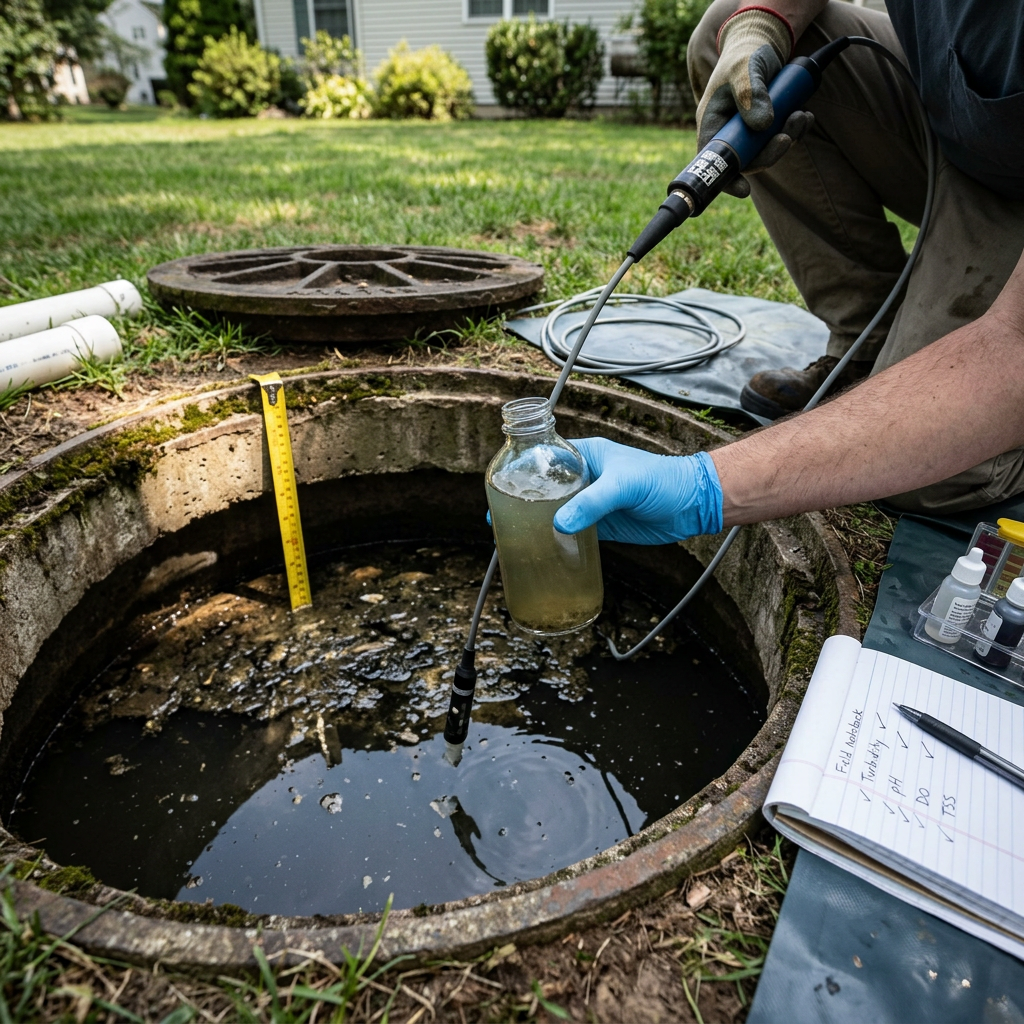
Keep past reports together. Changes in your results can help a well contractor or health department investigate possible environmental contamination. Septic water quality, in practical terms, means checking the water you drink and maintaining the system that treats your household wastewater. It does not mean sampling the septic tank yourself.
Frequently Asked Questions
Can a septic system affect a well that is uphill from it?
Yes, it can. The slope of your yard does not reliably show which way groundwater moves below ground. Well depth, soil, and other underground conditions matter. Use testing and local information rather than assuming an uphill well is protected.
Will boiling well water make it safe if septic contamination is suspected?
Boiling can address some germs when health officials recommend it, but it does not remove nitrate. It may make nitrate more concentrated as water evaporates. Until you know what is in your water, use a safe alternative for drinking and cooking.
Can a countertop filter remove septic-related contaminants?
Do not assume it can. Filters are made to address different substances. A device that improves taste may not remove bacteria, viruses, or nitrate. Test the water first, then ask your health department or a qualified water-treatment professional which treatment matches the results.
Does a tight well cap protect against contamination?
A sound cap helps keep surface water, insects, and debris out of the well. It cannot stop contaminants that have already reached the groundwater the well draws from. Keep the cap in good condition, but continue testing the water and maintaining the septic system.
Can a lab tell which septic system caused a bad result?
A routine water test usually identifies contaminants, not the property they came from. Your health department and qualified contractors may need to review well construction, septic conditions, and local groundwater information to investigate possible sources.
Keep the Plan Simple
A nearby septic system is not proof that your drinking water is unsafe. But a neglected system or an untested well can leave you guessing. Know where both systems are, maintain the drain field, and test your well on a regular schedule.
If warning signs appear, use a safe water source and contact the right professionals early. You do not have to solve an underground problem on your own.
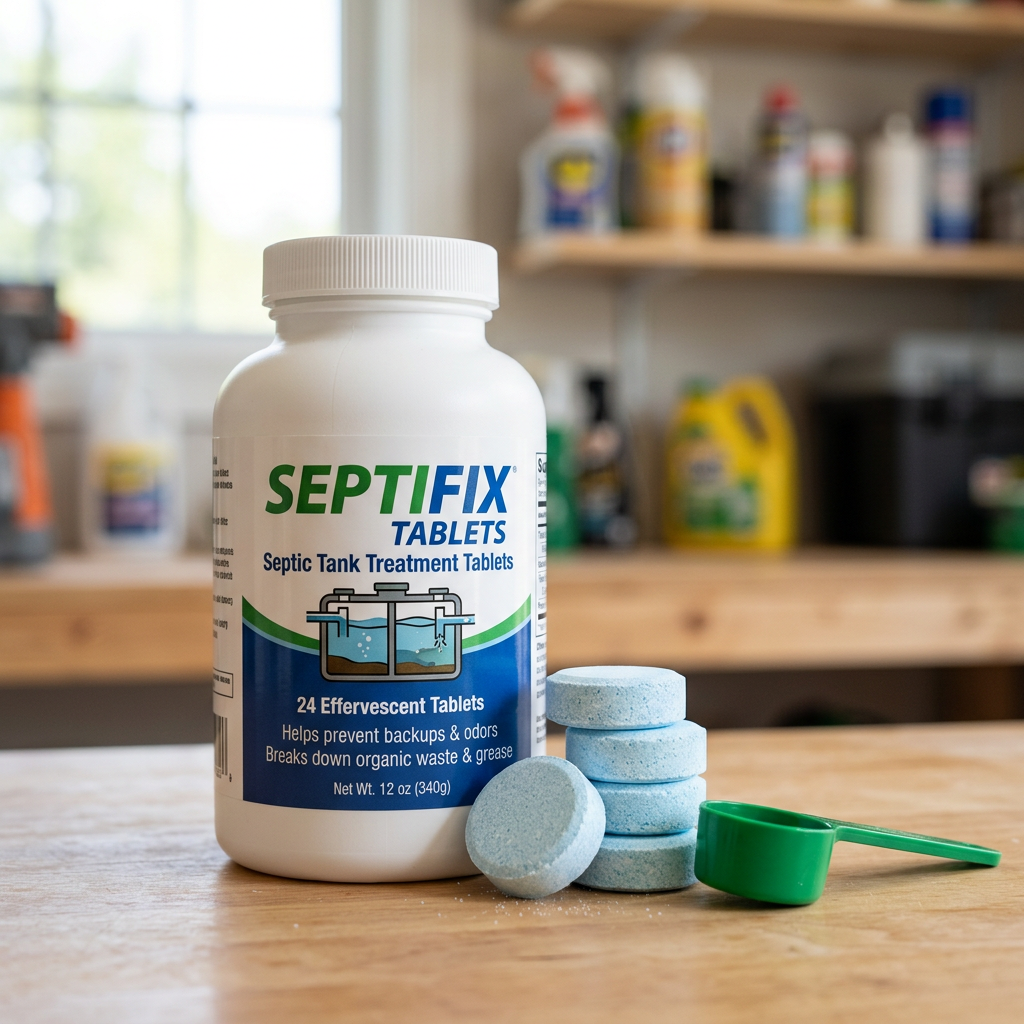
Looking for another option to explore? The banner below features Septifix, a septic tank treatment product you can review alongside the practical maintenance tips in this guide. Read the product information carefully, follow the directions, and decide whether it is appropriate for your septic system.
Related Posts