Minimum Distance Between Well and Septic Tank
Minimum distance between well and septic tank requirements vary across the United States. Rules will vary depending on the type of well, conditions at the particular location, and various aspects of the septic system.
For example, there may be different distances from the tank and the drainfield. You should contact your local health or permit authority regarding these distances and their method of measurement. It is advisable to know this before constructing any structure, installing a new system, or altering an existing one.
What stands out to me is that this question sounds like it should have one simple answer, but the right distance depends on local rules and the details of the property. Checking with the local health department is a better first step than relying on a number from a general online guide.
Key Takeaways
- There is no universal distance applicable to all properties.
- There may be various distances applicable to the tank, drainfield, and other features.
- The appropriate health department will be able to advise you as to applicable distances at your property.
- Plans and, where applicable, a site evaluation should be used to determine locations.
- Distances applicable to an existing installation may differ from those for a new system.
- Consider requesting water testing from the appropriate authorities if there is concern about your well quality.
What Is the Minimum Distance Between Well and Septic Tank: What the Rules Say
As noted above, this will vary according to various state and local requirements, the particular well and type of septic system, and other site conditions. There are several features to consider, so it is somewhat imprecise to refer simply to “the distance between the well and the septic tank.”
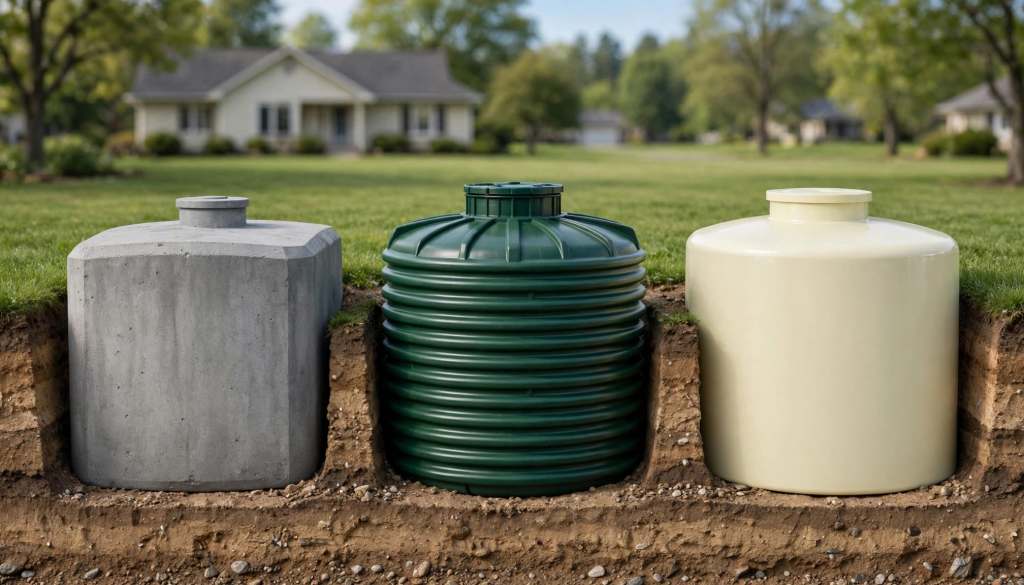
Most commonly there will also be a drainfield (leach field, soil absorption area) to receive effluent from the tank. After solids settle out in the tank, the remaining liquid percolates downwards through the drainfield. As implied above, the distance from each of these features to the well may be specified.
There may be other features, such as a pump, additional treatment device, and various configurations of dispersal fields. It is advisable to check with the permit office about all features to which the distance requirements apply.
For example, Texas’s 30 TAC §285.91(10), Table X lists different setbacks for different system components and well categories. In the table, the row labeled “Wells and underground cisterns” lists 50 feet from a tank and 100 feet from a soil absorption system or an unlined evapotranspiration bed. The table has a separate row for public water wells, with different distances. These figures are Texas-specific, tied to the table’s categories, and not a nationwide rule. Confirm the current rule and your well’s classification with the local authority before applying either number.
The U.S. Environmental Protection Agency (EPA) notes that septic-system requirements and setbacks are generally handled by state and local authorities. A number from a general online article may not be the legal requirement for your address.
Identify the well and each septic component, then confirm the local rule before relying on a distance.
Why Must Wells Be Kept Away From Septic Systems?
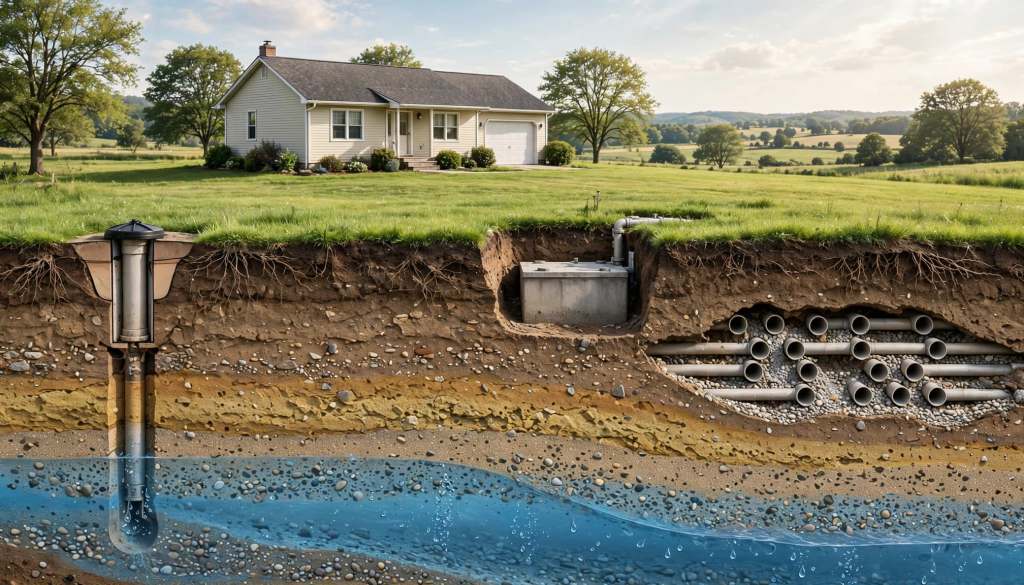
While a septic tank and drainfield will remove many pollutants from domestic waste, they will not eliminate all pollutants. Some settlement of solids occurs in the tank, and additional purification occurs in the soil below the drainfield. Obviously, if the septic system is located in an unsuitable area, malfunctioning, overloaded, or subject to flooding, there may be insufficient treatment of wastes prior to their passage into the groundwater.
All wells obtain their water from below ground surface and would therefore be subject to any pollutants migrating to the groundwater. These could include pathogens or elevated levels of nutrients, such as nitrate. Of course, the extent of any potential problem will be variable; merely having a septic system in the vicinity of a well will not necessarily mean that it is polluted.
Obviously, greater distances will tend to minimize any problem, but many other factors will determine if well water is affected, including soil characteristics, depth to and direction of travel of groundwater, and well and septic system design and integrity. It should also be noted that groundwater may travel in directions unrelated to topography.
The EPA’s septic systems and drinking water guidance explains how a malfunctioning or poorly located septic system may affect drinking water. For an overview of septic-system requirements, see the EPA’s frequently asked questions about septic systems.
What Setbacks Should You Check?
Ask about each relevant separation, not just the distance from the well to the septic tank.
| What to check | Why it matters |
|---|---|
| Well to septic tank | The tank may have its own required setback. |
| Well to drainfield or leach field | The soil absorption area may have a separate setback. |
| Well to other system parts | Treatment units, pumps, or other components may be covered by local rules. |
| System to property lines, buildings, or water | Local codes may set additional distances from these features. |
| Private well or public water supply | Different rules or agencies may apply. |
Local rules determine which measurements apply and how to make them.
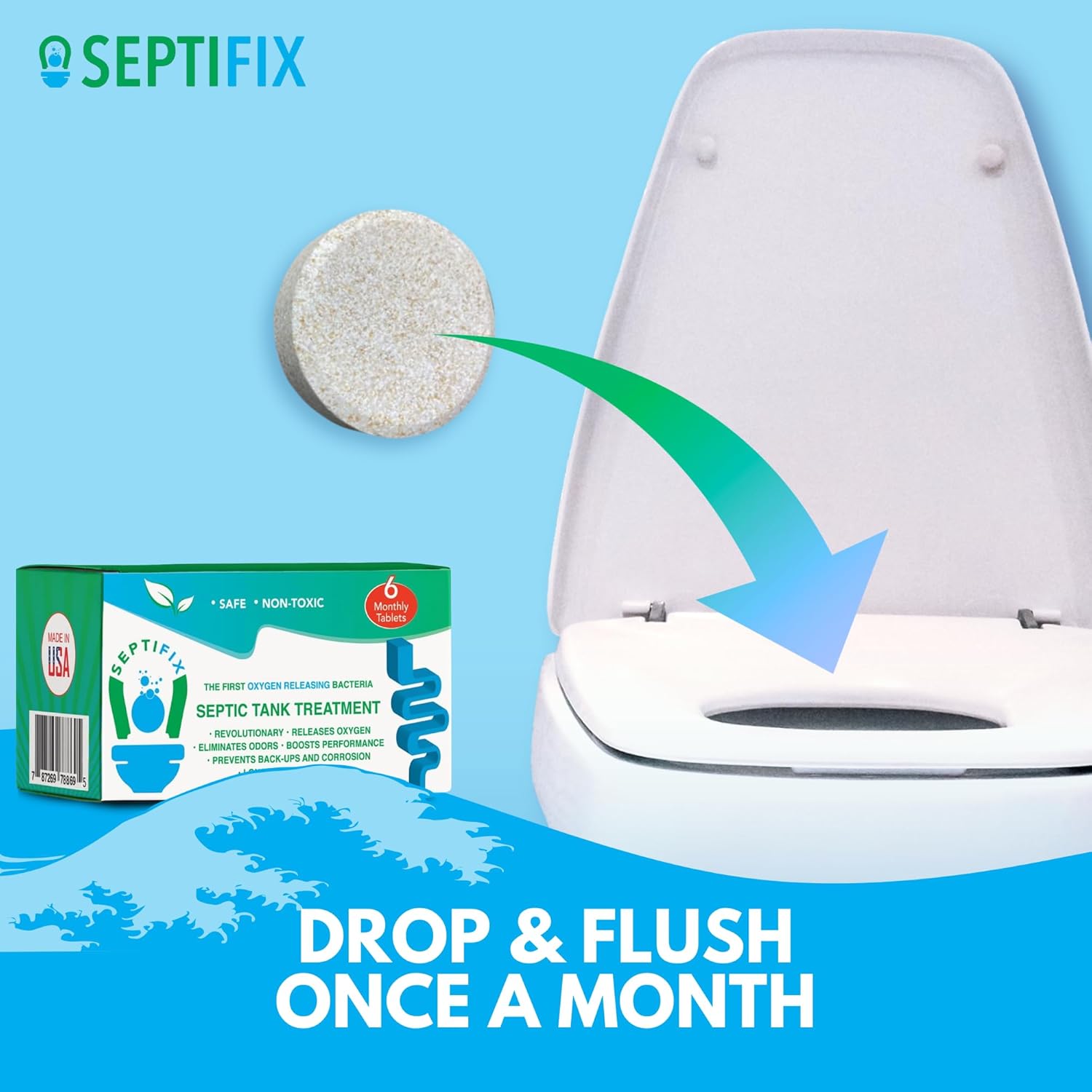
Considering a septic care product? Review Septifix product details as one product option. Products do not replace required setbacks, inspections, repairs, pumping, or well-water testing. Read product information and follow its directions.
Rules may differ for a private household well and a public water supply. Public systems can be subject to additional oversight. Private well owners generally have responsibility for maintaining and testing their own water. Ask your local health or drinking-water office which requirements apply to your water source.
If the property has more than one well, tank, or dispersal area, ask whether the rules apply to each one. Plans may show an old well, an abandoned tank, or a system that was moved. Confirm the status and location of each feature with officials or a qualified professional.

How to Find the Rule for Your Property
Begin with your local health office or other office which may issue permits for septic systems and wells. This could be at the municipal, county, or other level, and may be an Environmental Health office. You want the applicable regulations for your property. Provide all information available to you, such as address, parcel number, type of well, drawings, and any existing permits. You will want to ask:
- Setback from well to septic tank?
- To or from drainfield or other appurtenances?
- Variation for private, community, or public wells?
- Measured from what points?
- Is there a difference if new, repaired, or existing?
- Would any evaluation or tests of soils be necessary?
You should also ask where you can obtain the applicable State code for septic systems and wells. Of course, the State may prescribe certain minimum distances or other criteria, with permitting done locally. Or there may be other local variations. Obviously, the general information published at a State level may not be specific enough to apply to all situations.
Particular care should be taken with existing installations. They may well comply with regulations in force when installed or last repaired, which may be more or less restrictive than those now applicable to new work. This is no guarantee that they would be acceptable if newly installed today, nor of course will it indicate requirements around a new system. So you need to ask about policies applying to existing systems, and about new work or substantial repairs.
How to Measure the Distance
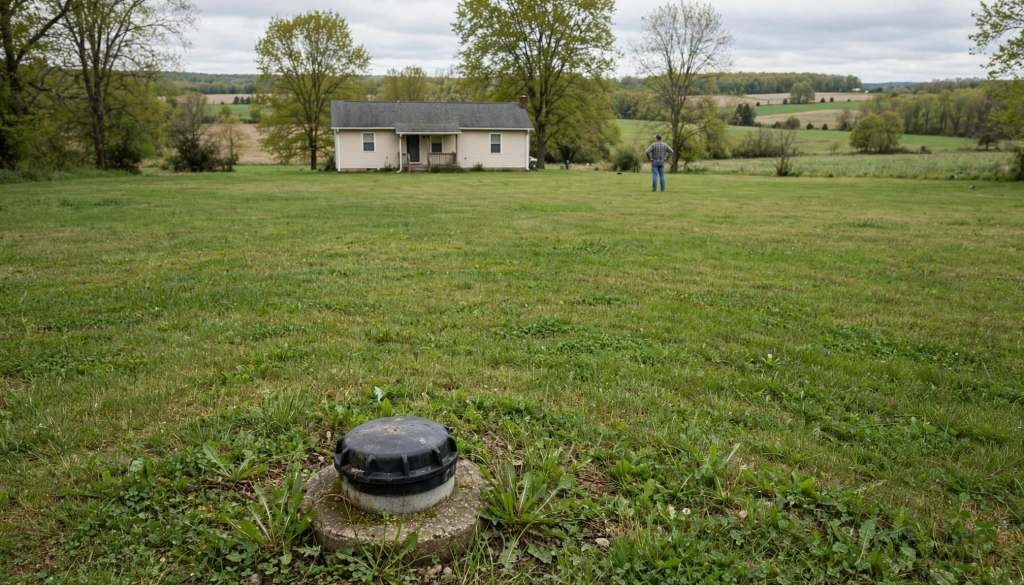
Start by trying to determine the location of the well and various parts of the septic system. There may be a variety of drawings, permits, well information, inspection records, and so on which can be obtained. Depending on the age of these, information may be lacking from the office that issues these permits. Of course, a survey would identify the various structures, but not any below-ground installations.
A site visit by an appropriate professional is worth considering, if necessary. In addition to available information, there are a number of aids available to them, or other means of identification. Of course, one should not start digging for any part of a system without first knowing about other underground utilities.
As mentioned above, check with your local authorities as to what distances apply. There may be specific details regarding, for example, what area of the well or what particular part of the septic system applies. It would be wrong to automatically assume center-to-center, for example.
It will obviously be useful to know an approximate distance, using a tape or from a map. However, where works are proposed, this should be verified by reference to plans, a surveyor, or other suitable means. Ground fall and other factors may mean the distance is very different.
Obviously, all applicable distances around both the well and septic system should be known prior to constructing any addition, outbuilding, deck, swimming pool, or other structure. Various areas may need to remain accessible for repairs, and structures may interfere with parts of the system, irrespective of any prescribed distance.
What Can Affect the Required Setback?
Soil type and drainage: Soil affects how wastewater moves and receives treatment. Highly permeable soil, restrictive layers, or poor drainage can affect a site review. Soil that looks dry or sandy does not automatically provide adequate protection.
Groundwater depth and direction: A shallow water table, seasonal high groundwater, or groundwater moving toward a well may affect the review. The direction of groundwater flow is not always obvious from the land’s slope.
Well construction and depth: Well depth, casing, seals, and construction quality can affect how the well draws water and how well it is protected from surface contamination. A deeper well is not automatically safe from every contamination source.
Septic-system design and condition: A conventional system and an alternative treatment or dispersal design may have different site requirements. A damaged, poorly maintained, or failing system may raise different concerns from a properly operating one.
Local geology and public-health rules: Rock, fractures, karst terrain, flood-prone areas, and other local features may affect how officials review a site. Requirements can vary between nearby jurisdictions because local codes account for different conditions.
These factors explain why it is unreliable to copy a distance from another state, county, or property. A number from an online discussion or neighbor’s permit may involve a different code, well type, system design, or measurement method.
What If the Well and Septic System Are Too Close?
Do not disturb either system if it appears to be within the minimum separation. It may be necessary to repair or replace a system, and this could adversely impact water supply quality or involve permitting requirements. Of course, the separation may only be apparent as a result of erroneous drawings or uncertainty as to the point from which separations are measured.
You should contact your health department or other permit authority. Find out if there are any records on file for the system and if any requirements would apply to an existing situation. If necessary, have a competent septic and well contractor investigate. You should have available any relevant permits, inspections, water quality analyses, and records of repairs.
Of course, if you wish to construct anything on your property, this activity should be deferred pending advice from the appropriate authority or authorities as to all applicable requirements, such as permits, plans, repairs, and so on. There may be alternatives available, which a competent contractor can advise you of, subject to approval of the local authority.
If you believe there may be pollution, telephone the appropriate authority and inquire as to suitable analyses. Obviously, you cannot judge the quality by sight, odor, or taste. The CDC recommends a number of routine analyses be undertaken periodically on all private supply wells, and local authority staff will be able to recommend others if there are any local considerations. Sample collection should be carried out in accordance with instructions provided by the laboratory.
A Property-Checking List for Buyers and Homeowners
Use this list before buying a property, planning construction, or addressing an existing system:
- Locate the well, septic tank, drainfield, and other system components. Use permits and approved plans when available.
- Find out which office handles well and septic rules. Save its contact details.
- Confirm the setback for each component. Ask which points the measurement connects.
- Ask how existing systems are treated. Find out what rules apply to service, repairs, replacement, and new construction.
- Check the available records. Request permits, inspections, repair details, and water-test results from the owner or relevant office.
- Get professional help if locations or conditions are uncertain. Avoid guessing or digging around buried infrastructure.
- Keep the information with your property records. Update plans after approved repairs or changes.
For a buyer, an inspection or water test can provide useful information, but it does not replace a local code review. Ask for documentation and clarify who will resolve unanswered questions. For a homeowner, keep the site plan accessible so contractors can avoid damaging the well, tank, or drainfield.
Frequently Asked Questions
Is there a standard distance between a well and a septic tank?
There isn’t one set answer for all situations around the country. It will depend on many factors, including the type of well and various parts of a septic system. Your local health department should be able to advise you.
Does the drainfield need a greater setback than the tank?
The drainfield may be required to be farther away, as there are various aspects of a septic system performing different functions. Legislation may require varying distances. Find out from your local office to what and from what these distances refer.
Can an existing well and septic system be closer than current rules allow?
Perhaps it predates current legislation. This is no guarantee that it is acceptable now, nor does it indicate the legislation that would apply to any repairs or replacements. Your local permitting office should be able to advise after checking their files.
Who can confirm the setback for my property?
Your local health department or other permitting office would be the best place to start. An appropriate contractor may be useful to identify locations of various components on site. The relevant local office would be able to advise what may be acceptable.
Should I test well water if a septic system is nearby?
There may be reasons to want to test, as outlined above. You should follow recommended testing as advised by your local health authority and inquire whether more tests would be prudent if, for example, there were problems with the septic system or periods of flooding. Of course, water should never be judged fit or otherwise by sight, odor, or taste.
My main takeaway is to verify the locations and local requirements before making changes. A careful check can help homeowners avoid guesswork and protect access to both the well and septic system.
Conclusion
The minimum distance between a well and a septic tank depends on local rules and site conditions. It could depend on the tank and drainfield configuration, type of well, and how the distance was determined. All components should be located prior to any construction or repair work on either, and the relevant local health department should advise on minimum distances. If distances appear small, or there is any doubt about water quality, seek advice from appropriate professionals.

Related Posts